Forensic accounting in Python
Using Python to reverse engineer data analysis by enumerating possibilities with itertools.product.
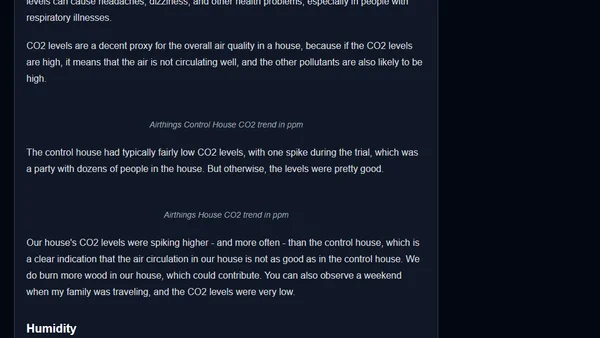
A data-driven home air quality comparison between a 1950s house and a modern house using IoT sensors.
Explores agentic analytics, an AI-driven approach that replaces passive BI dashboards with autonomous agents for goal-directed data investigation.
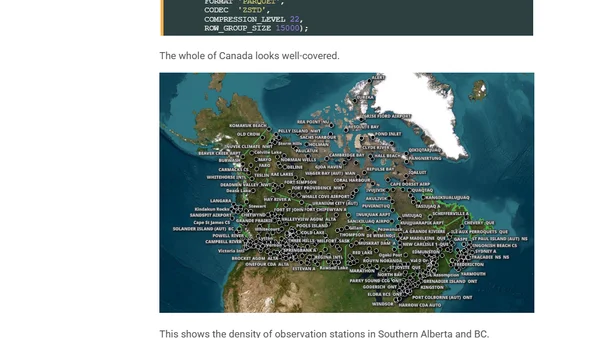
Analysis of a 1.75B-record airport weather dataset using DuckDB and QGIS on a high-end workstation.
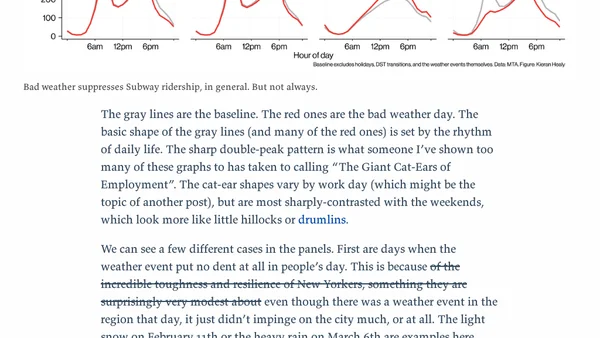
Analyzes NYC subway ridership data to see how bad weather affects travel patterns, revealing when people stay home or brave the elements.
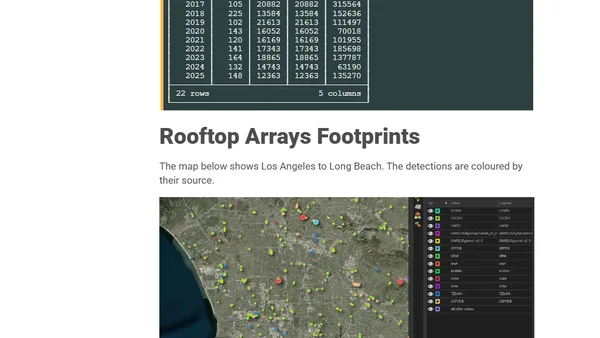
Review of the updated GM-SEUS dataset v2 with 3.4M solar panels and new rooftop arrays, including technical setup and analysis tools.
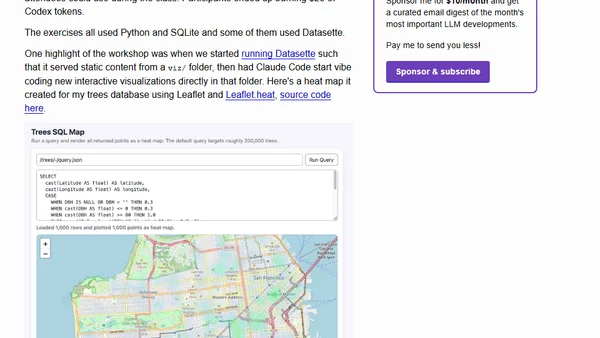
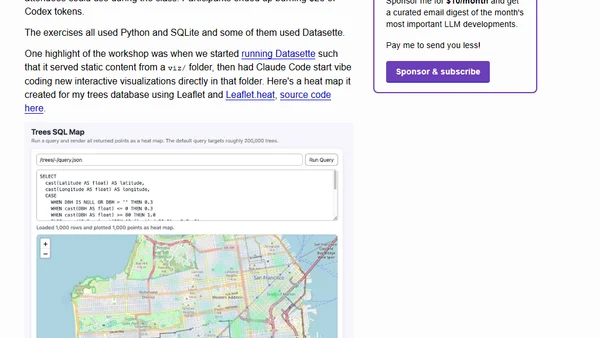
A workshop handout on using AI coding agents like Claude Code and OpenAI Codex for data analysis, visualization, and cleaning tasks.
An R function to find palindrome dates across multiple international date formats within a specified range.
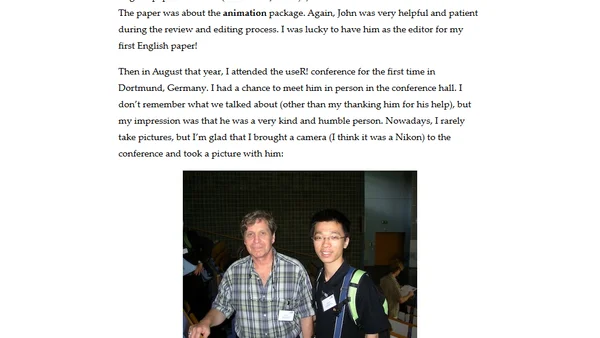
A personal tribute to statistician John Fox, recalling his mentorship and impact on the R community through tools like Rcmdr and car.
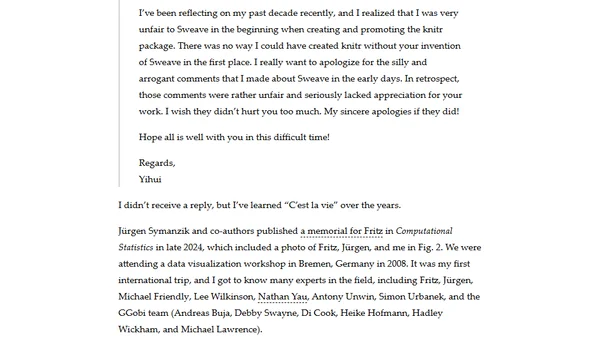
A personal tribute to Fritz Leisch, creator of Sweave, reflecting on his impact on reproducible research and the R ecosystem.
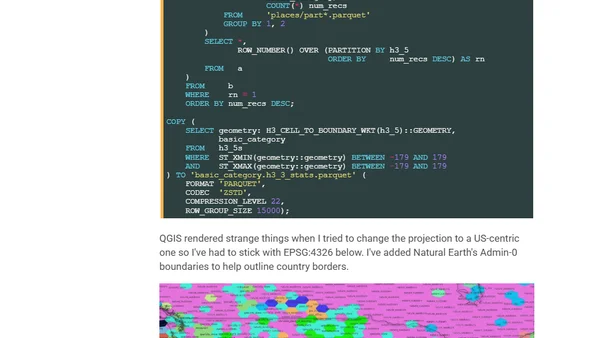
A technical analysis of Overture Maps' latest Places dataset, covering over 72 million global points of interest, including setup and tools used.
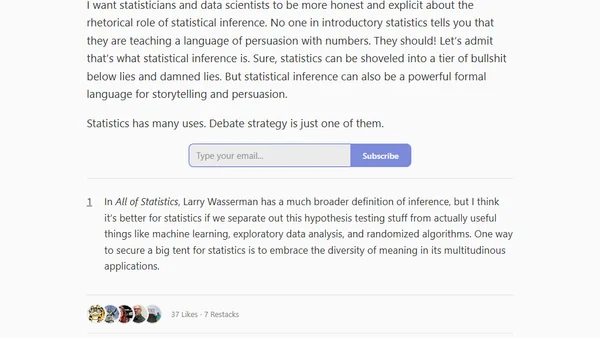
A blog post arguing that statistical inference is often used as a tool of rhetoric and persuasion, rather than pure objective science.
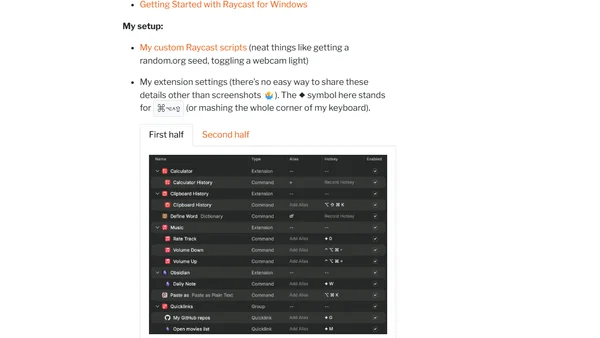
A data scientist shares workflow automation tools and custom settings for Positron, Raycast, and Espanso to streamline data analysis tasks.
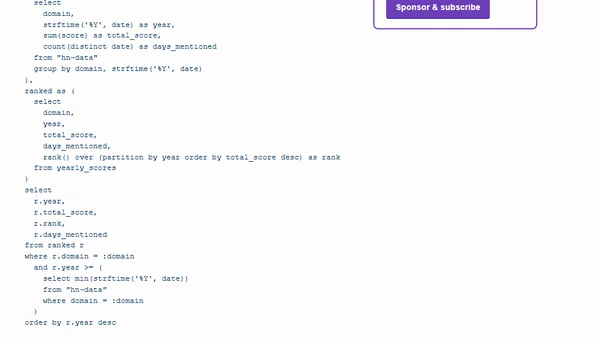
Analysis of the most popular personal blogs on Hacker News in 2025, based on a tracking project that ranks domains by their performance on the platform.
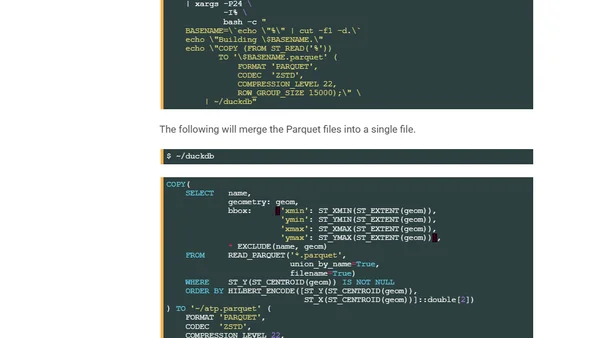
Analyzing All The Places' open-source location data project, detailing the technical setup and process for downloading and examining millions of brand locations.
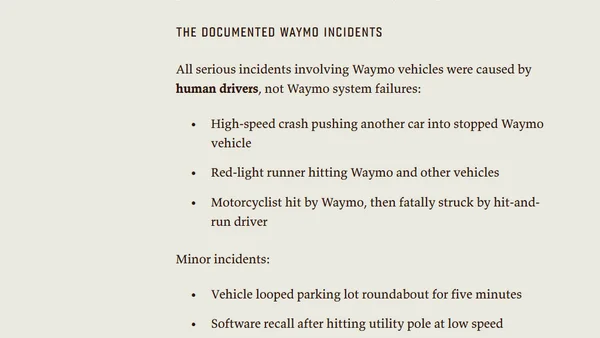
Analyzes data showing autonomous vehicles significantly reduce crashes and injuries compared to human drivers, based on Waymo's safety performance.
A technical analysis and comparison of various administrative boundary datasets, including OpenStreetMap, using Python, DuckDB, and QGIS.
Introduces dremioframe, a Python DataFrame library for querying Dremio with a pandas-like API, generating SQL under the hood.
Analyzing Business Insider's dataset on US data center locations, ownership, and resource consumption using Python, DuckDB, and QGIS.