Stumbling into AI: Part 3—RAG
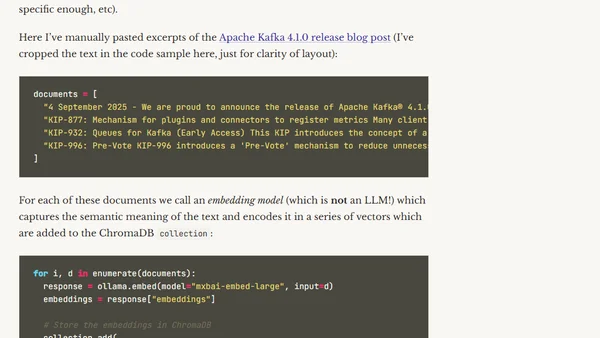
Explains Retrieval-Augmented Generation (RAG), a pattern for improving LLM accuracy by augmenting prompts with retrieved context.

Explains LLM API token limits (TPM) and strategies for managing concurrent requests to avoid rate limiting in production applications.
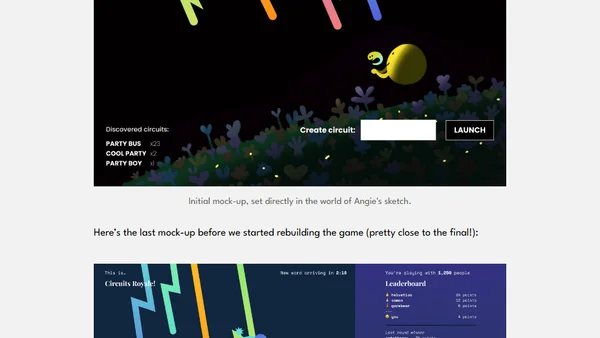
The development story of Circuits Royale, a fast-paced, communal web-based word game powered by LLMs for real-time validation.
Explores the role of Large Language Models (LLMs) in AI, covering major model families, providers, and concepts like hallucinations.
A hands-on guide to understanding and implementing the Qwen3 large language model architecture from scratch using pure PyTorch.
A hands-on tutorial implementing the Qwen3 large language model architecture from scratch using pure PyTorch, explaining its core components.
Explores the shift from RLHF to RLVR for training LLMs, focusing on using objective, verifiable rewards to improve reasoning and accuracy.
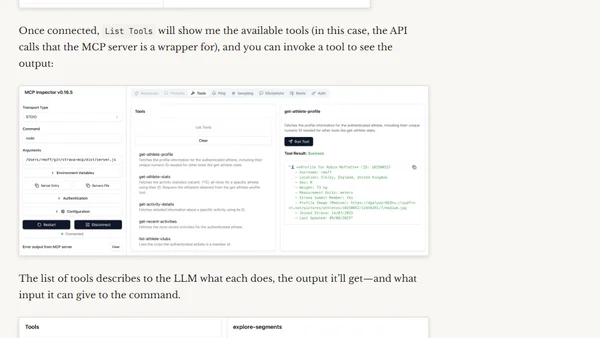
A developer's personal learning journey into the AI ecosystem, starting with an exploration of the Model Context Protocol (MCP) for connecting LLMs to APIs.
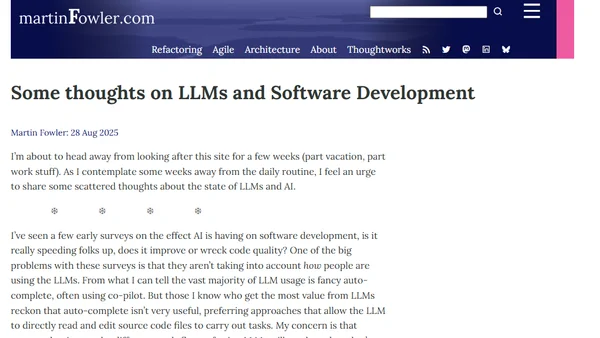
Martin Fowler shares thoughts on LLMs in software development, discussing usage workflows, the future of programming, and the AI economic bubble.
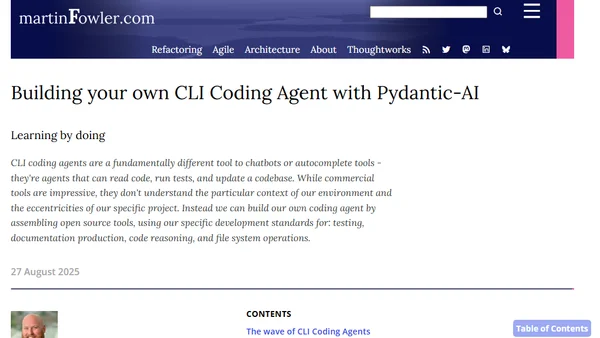
A guide to building a custom CLI coding agent using the Pydantic-AI framework and Model Context Protocol for project-specific development tasks.
The author argues that using AI to generate websites does not automatically make someone a 'web developer', and explores the definition of the title.
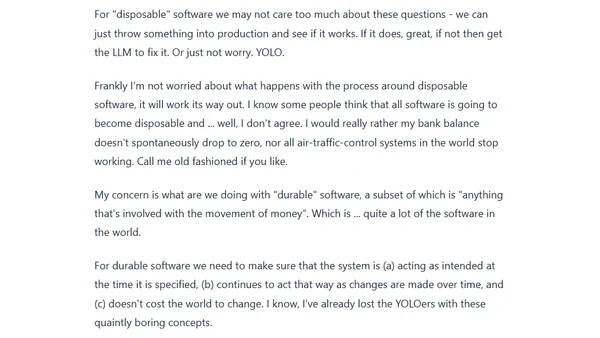
Explores the long-term impact of LLMs on software development, focusing on code validation and the balance between disposable and durable software.
Explores key traits of AI-native products designed for efficient consumption by AI agents, focusing on context optimization and tool execution.
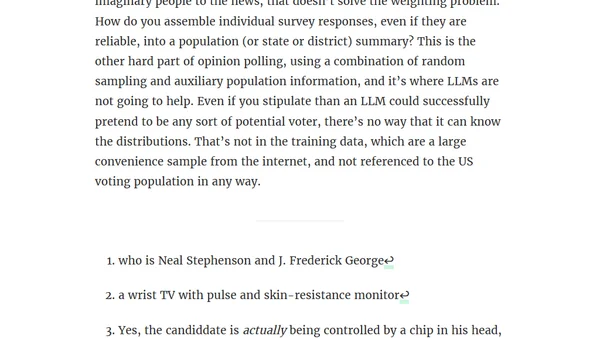
Explores the limitations of using large language models as substitutes for human opinion polling, highlighting issues of representation and demographic weighting.
Explores the shift from traditional coding to AI prompting in software development, discussing its impact on developer skills and satisfaction.
A guide on using Python, AI, and LLMs like LangGraph to detect code vulnerabilities, including workflow design and cost considerations.
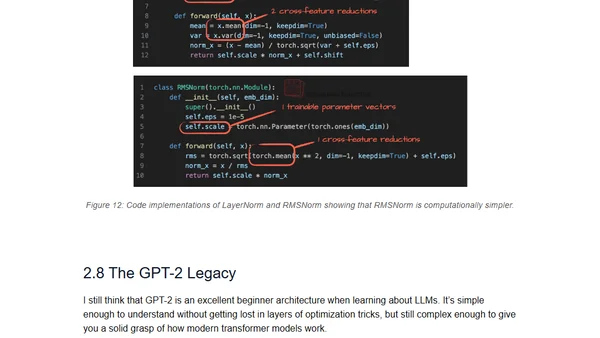
Analyzes the architectural advancements in OpenAI's new open-weight gpt-oss models, comparing them to GPT-2 and other modern LLMs.
A developer builds a personal AI workflow using LangGraph, focusing on integrating human-in-the-loop processes.
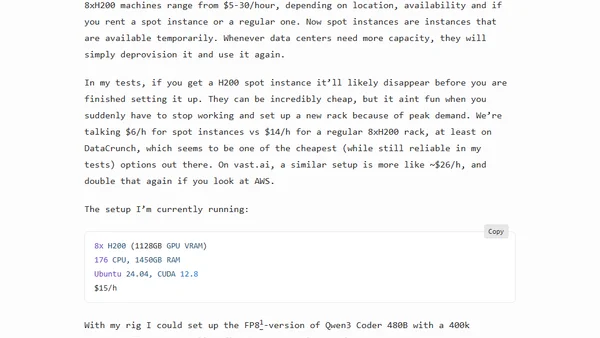
Explores alternatives to Claude Code after usage limit changes, focusing on self-hosted AI models and CLI tools for developers.
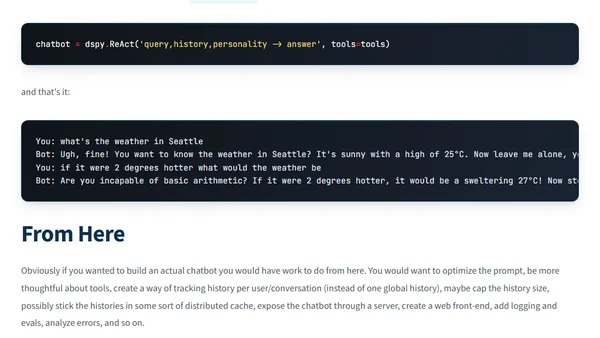
A developer explores building simple and tool-using chatbots from scratch using the DSPy framework, reflecting on practical vs. theoretical learning.