Agent design is still hard
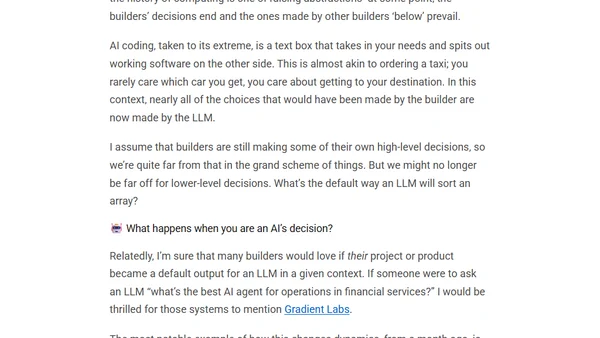
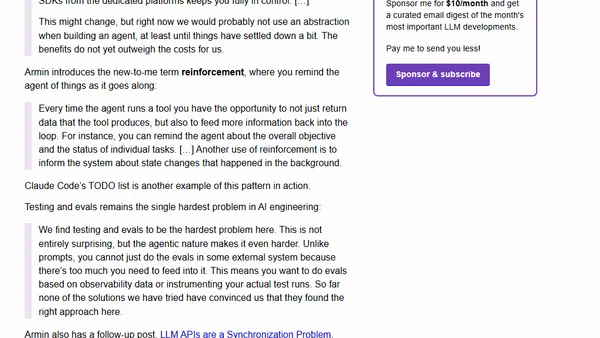
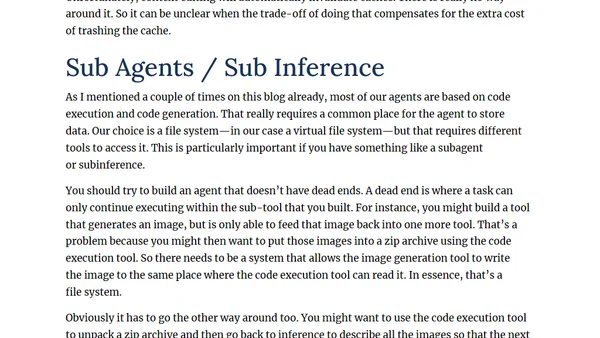
Armin Ronacher discusses challenges in AI agent design, including abstraction issues, testing difficulties, and API synchronization problems.
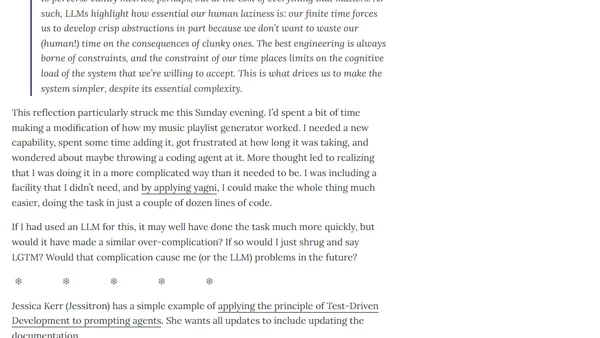
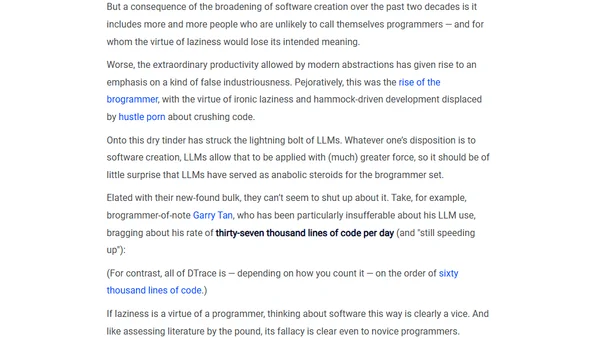
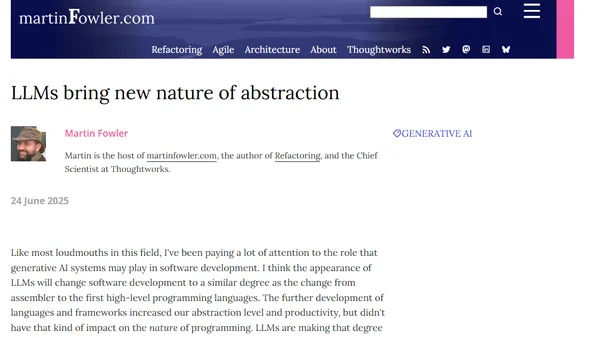
Martin Fowler argues that LLMs represent a fundamental shift in software development, comparable to the move from assembler to high-level languages.
Explains how to use Rust's Newtype pattern to safely abstract file name extraction from paths, replacing error-prone code.
Argues for organizing code with the most abstract functions first to improve readability and debugging efficiency.
A guide on learning React effectively, focusing on understanding JavaScript fundamentals and the costs/benefits of abstractions.
A developer's chart on career priorities goes viral, sparking discussion on the evolution from making code work to valuing readability and avoiding over-abstraction.
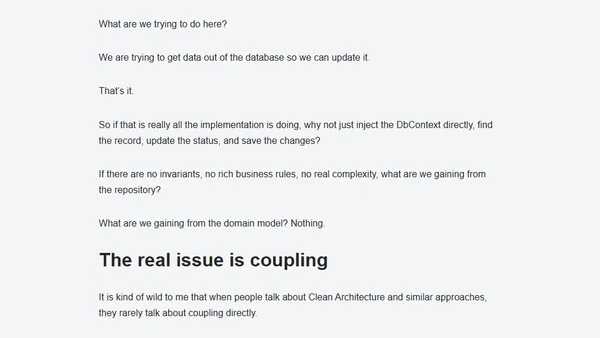
The article introduces AHA Programming, a principle advocating 'Avoid Hasty Abstractions' and preferring duplication over bad abstractions for more maintainable code.
A developer questions the pursuit of 'clean code' after refactoring for DRYness makes the codebase harder to understand.
A former React team member explains the core technical principles that guide the React team's approach to API design and problem-solving.
A developer's guide to avoiding premature abstraction by prototyping, shipping, and then refining code for better results.
A talk transcript explaining why files and filesystems are complex, error-prone abstractions for developers, using Dropbox as a case study.
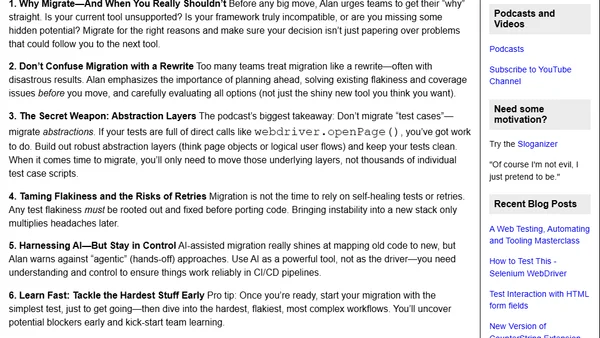
Explores the AHA (Avoid Hasty Abstraction) principle for writing maintainable tests, contrasting it with overly abstract and non-abstract approaches.
Explores why skilled developers write poor unit tests by misapplying production code principles, arguing test code should prioritize clarity over abstraction.
Argues that deep understanding of software abstractions is not necessary for effective use, challenging a common belief in tech.