Write It First, Then Let AI Drive
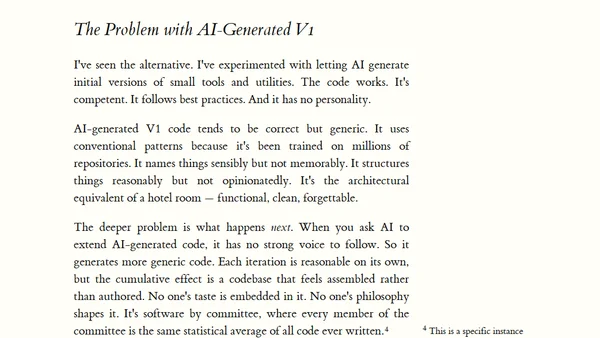
A developer argues that writing code by hand first, then using AI for maintenance, is more effective than AI generating initial drafts.
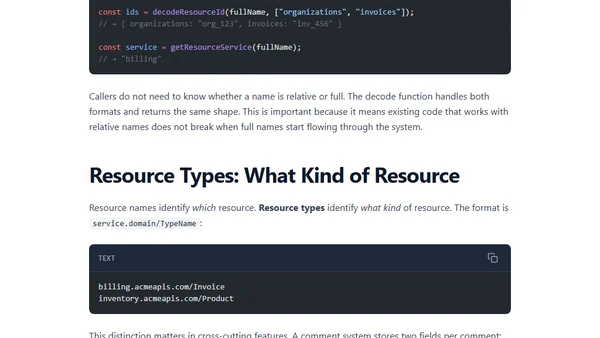
How to standardize resource naming in TypeScript monorepos using Google's API Design Guide convention.
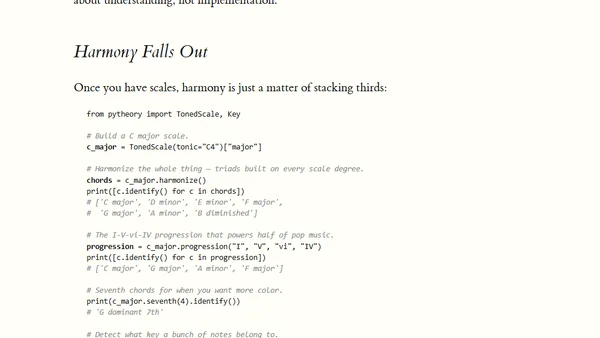
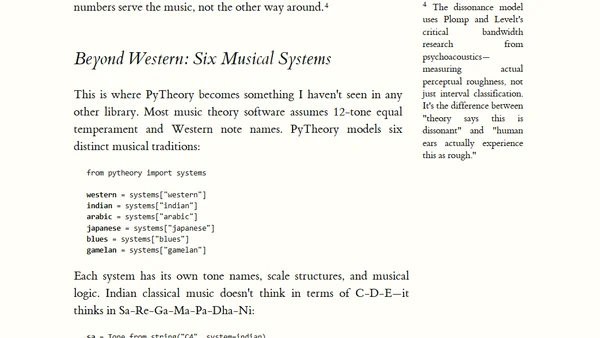
PyTheory is a Python library for music theory, enabling chord identification from fret positions on any stringed instrument.
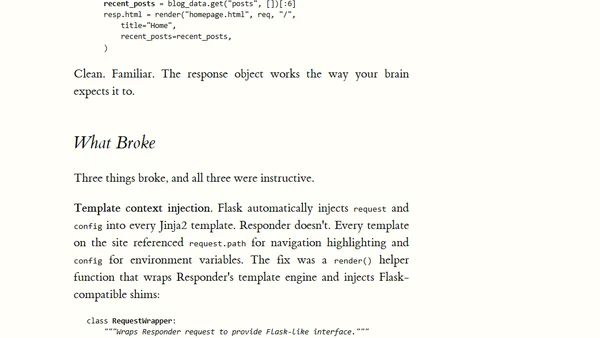
Kenneth Reitz ports his personal site from Flask to his own web framework Responder, discussing the process and philosophy behind dogfooding.
PyTheory is a Python music theory library built with a 'for humans' philosophy, overcoming a five-year creative block through human-AI collaboration.
Article discusses the true purpose of code review beyond bug-finding, emphasizing judgment, communication, and codebase health.
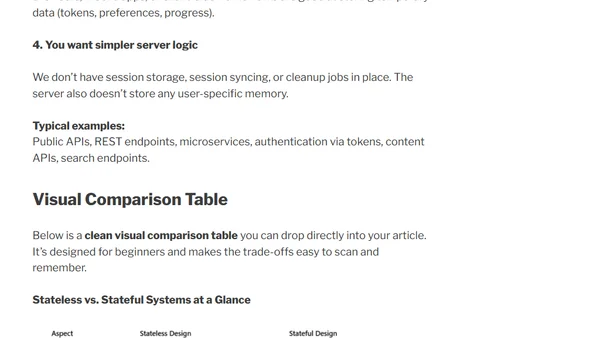
Explores when to choose stateless vs. stateful system design, discussing trade-offs for scalability, complexity, and use cases like shopping carts.
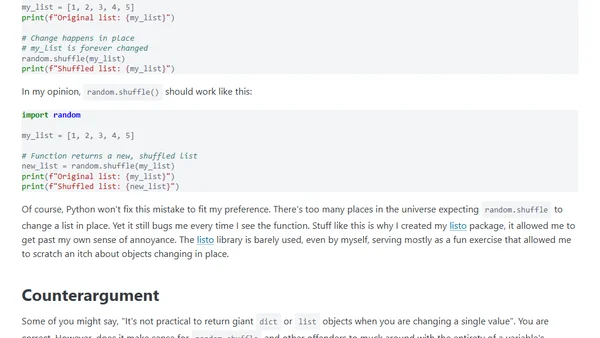
Argues that functions which modify data, like Python's random.shuffle(), should return new values instead of changing them in-place.
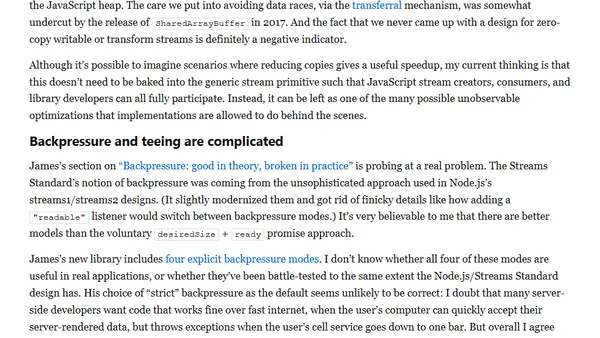
A response to critiques of the JavaScript Streams Standard, discussing its design philosophy, performance, and role as a web platform primitive.
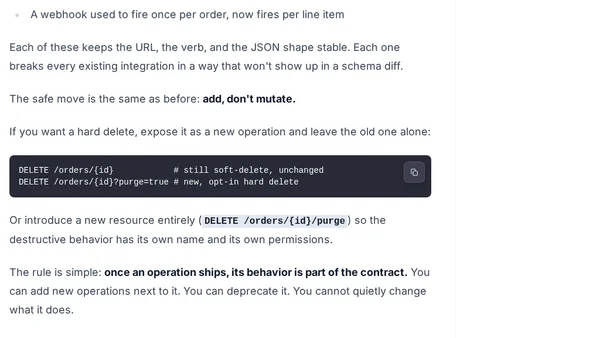
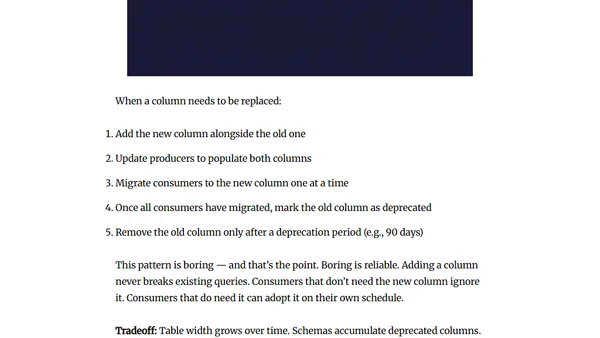
Explains how to safely evolve data schemas using API-like discipline to prevent breaking downstream systems like dashboards and ML pipelines.
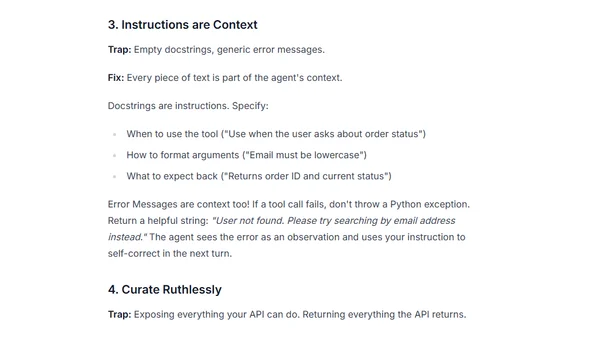
Explains why MCP servers often fail and provides best practices for building effective MCP servers by treating them as AI agent interfaces, not REST API wrappers.
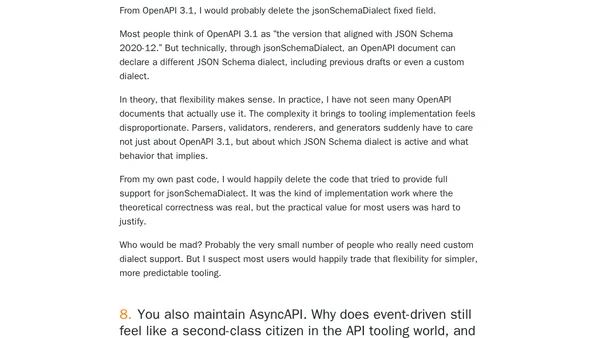
Explains the concept of statelessness in REST APIs, contrasting it with stateful systems and detailing its benefits for scalability.
Key insights on API design and compatibility from Addy Osmani's lessons at Google, emphasizing that compatibility is a core product feature.
A weekly link dump covering API design comparisons, software development philosophy, Maven 4 updates, leadership insights, and AI's impact on coding.
Explores the design and type-safety of compound components in React, discussing when they are and aren't the right pattern.
A developer's perspective on building effective design systems, focusing on API design, developer experience, and team collaboration.
The author refactors libdav to use a new Requests API with a builder pattern and updates vstorage to use a streaming API for synchronization.
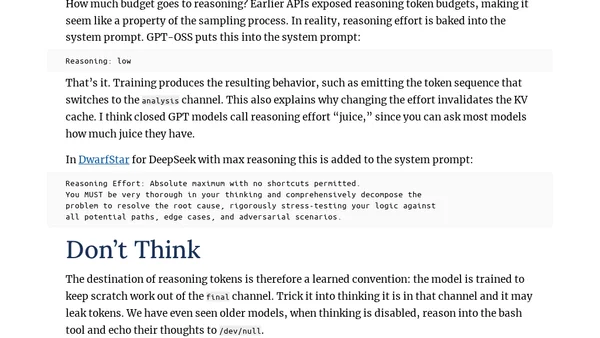
Analyzes LLM APIs as a distributed state synchronization problem, critiquing their abstraction and proposing a mental model based on token and cache state.
C# 14 introduces extension members, allowing developers to add properties and static members to existing types, not just methods.
Argues that generic Tooltip components in design systems are flawed and proposes better, more accessible alternatives for web development.