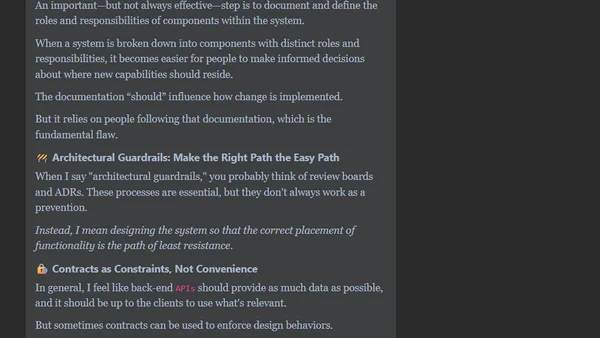
I follow an architecture principle I call The Law of Collective Amnesia
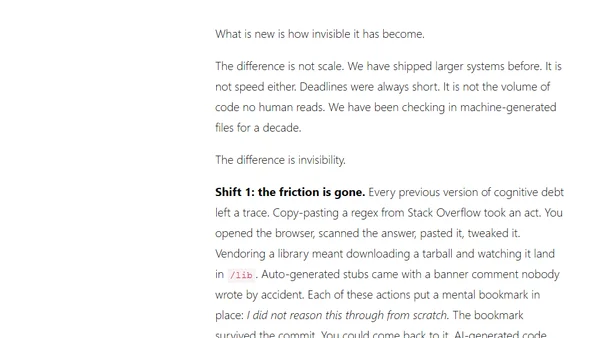
A software architect introduces 'The Law of Collective Amnesia' to explain how system design intent fades over time and offers strategies to defend architecture.
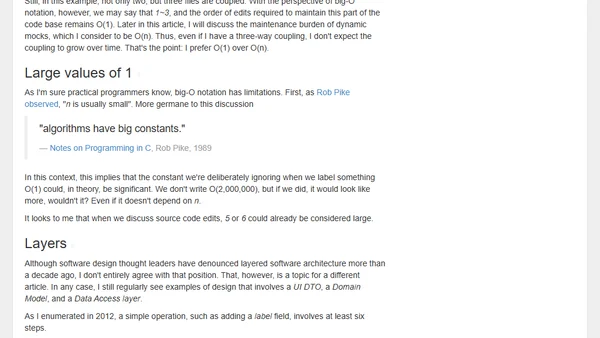
Explores software coupling and the DRY principle through the lens of big-O notation, analyzing the number of code edits needed for changes.
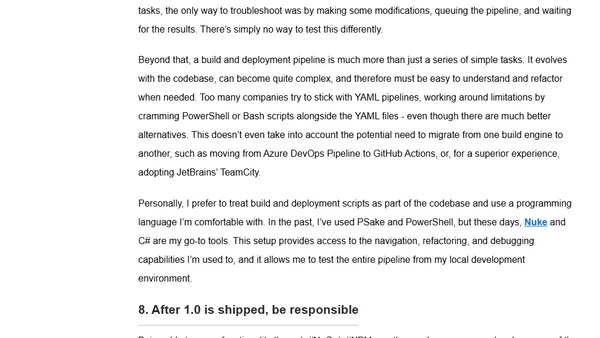
A senior developer shares key lessons on software quality, automated testing, and bridging the gap between technical and non-technical stakeholders.
Explores why AI-assisted development has hit a productivity ceiling, arguing that software's human-centric nature limits AI's current impact.
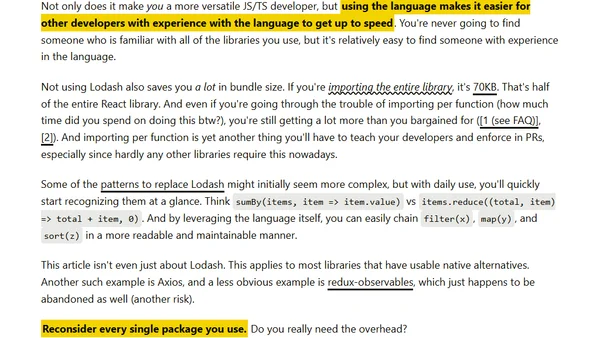
Argues against using Lodash in JavaScript projects, advocating for native ES6+ methods to reduce bundle size and improve developer versatility.
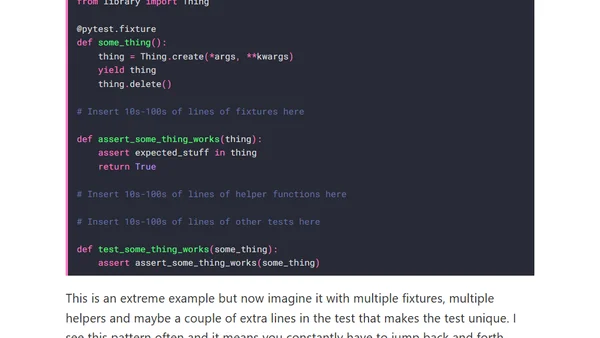
Argues that test code should prioritize readability and avoid excessive indirection, even at the cost of code duplication, to simplify debugging.
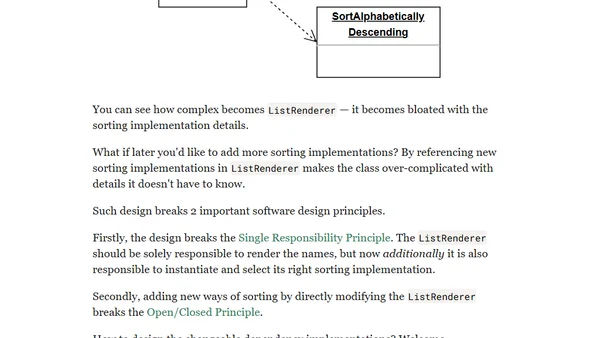
Explains the software design principle of programming to an interface vs. implementation, using a TypeScript list renderer example to show benefits for maintainable code.
A developer's chart on career priorities goes viral, sparking discussion on the evolution from making code work to valuing readability and avoiding over-abstraction.
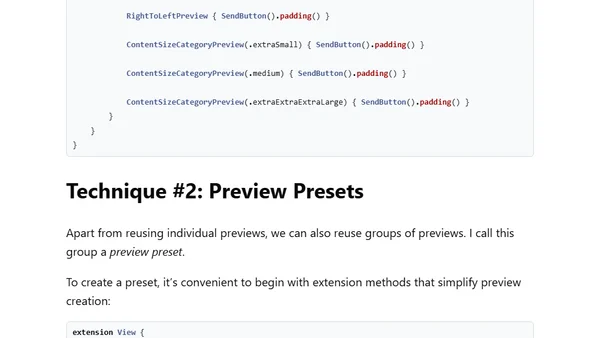
Three techniques to manage SwiftUI previews effectively in large iOS projects, addressing code bloat and maintainability issues.
Article argues that code quality directly impacts user experience by enabling faster feature delivery and fewer bugs.
A guide on when to split a large React component into smaller ones, focusing on solving real problems rather than premature abstraction.
PSPDFKit shares insights on maintaining a large, cross-platform SDK, focusing on API evolution, proposal-based development, and long-term code maintainability.
Explores the importance of designing APIs that are not just readable but also optimized for how code evolves and changes over time.
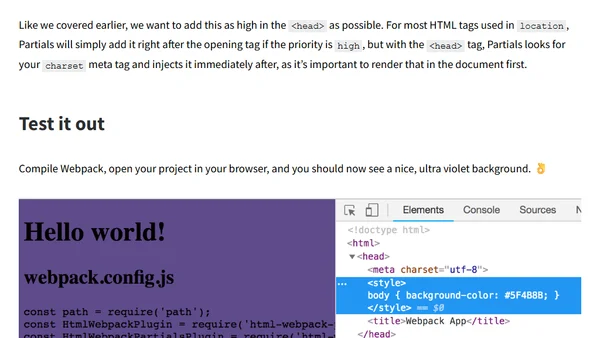
A guide to integrating Google Analytics reliably into a Webpack project using HTML partials, ensuring proper initialization and maintainability.
A developer advocates for extreme simplicity in software design, sharing rules of thumb for writing maintainable code and avoiding unnecessary complexity.
A review of 'Perl Best Practices' by Damian Conway, exploring how to write maintainable and robust Perl code.
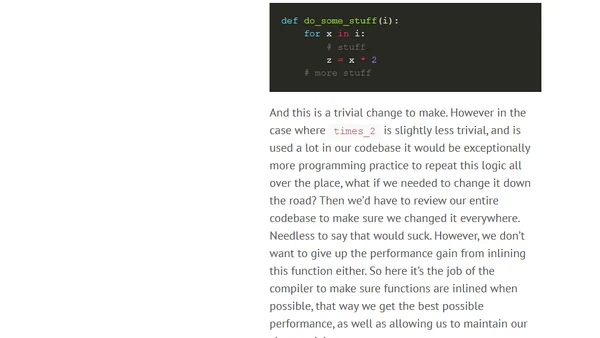
Explains how optimizing compilers allow programmers to write clean, maintainable code without sacrificing performance, using examples like inlining and constant propagation.
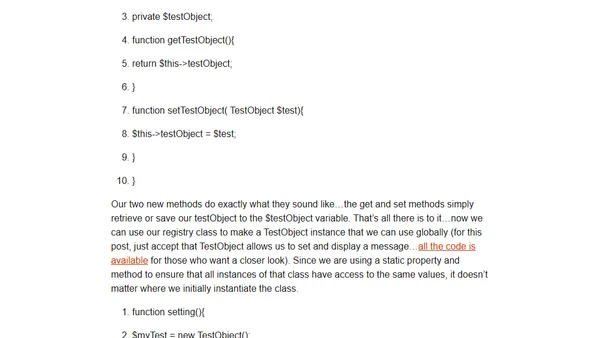
Explains the problems with global variables in PHP and introduces the Registry pattern as a better alternative for sharing data.