Knowledge and Common Knowledge in a Distributed Environment, Part 2
Explores the 'coordinated attack' problem in distributed systems, linking it to the impossibility of achieving common knowledge in asynchronous environments.
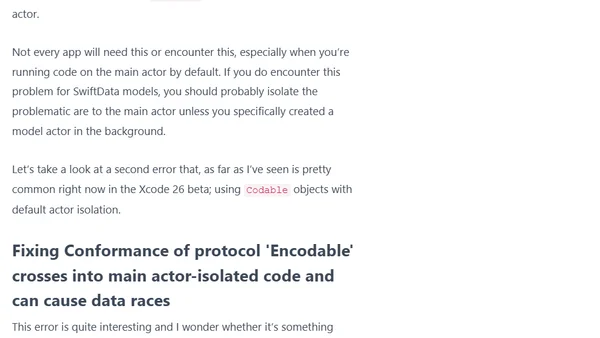
Explains how to fix actor-isolated protocol conformance errors in Swift 6.2, focusing on @MainActor usage and avoiding data races.
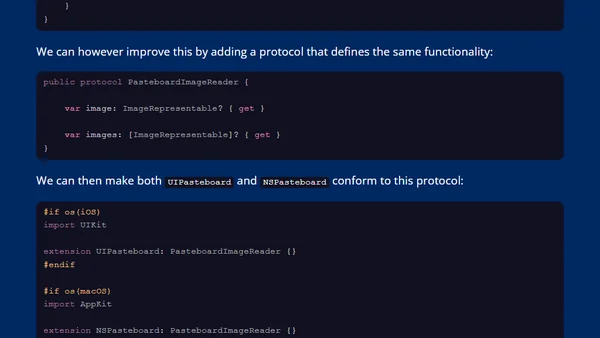
Explains how to use protocol-oriented programming in Swift to design flexible applications by focusing on what entities can do rather than what they are.
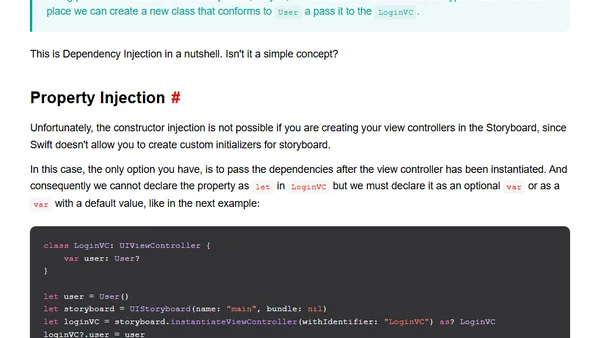
Learn the basics of Dependency Injection in Swift, covering constructor and property injection with practical code examples.
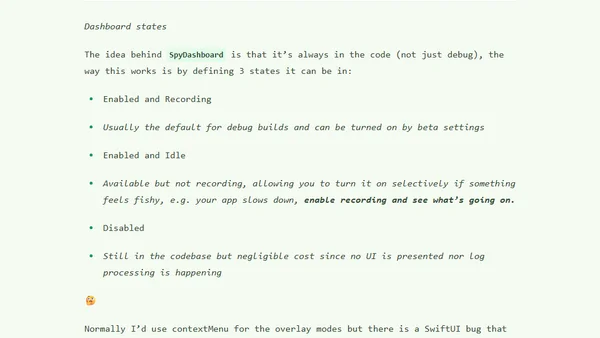
Part 2 of a series on creating a developer tool, focusing on designing core Swift protocols and models for a logging dashboard.
Explores a component-based widget architecture for scalable SwiftUI projects, using self-contained widgets for isolated development.
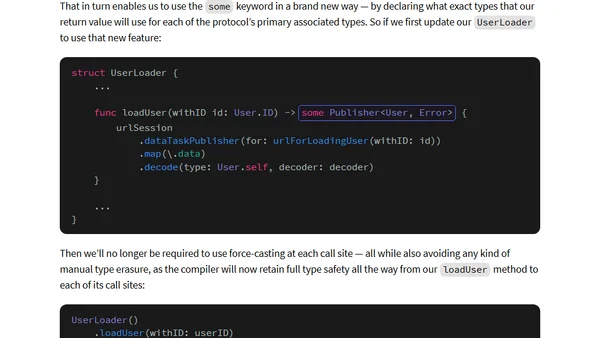
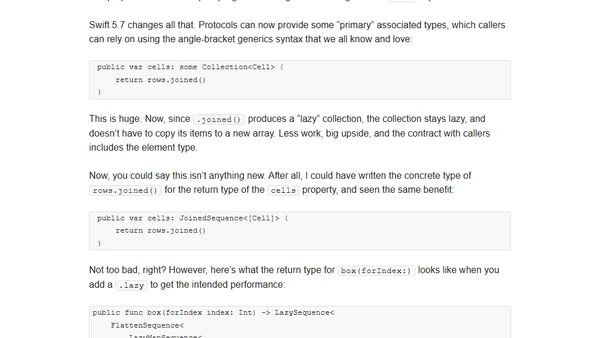
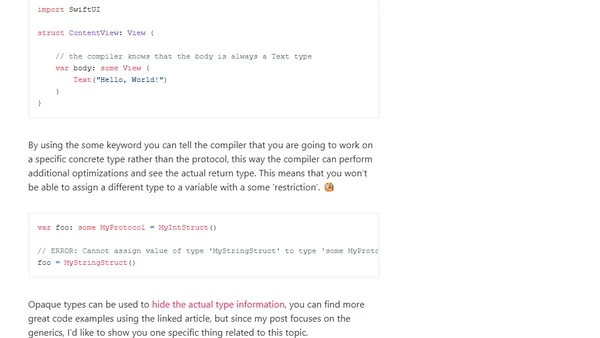
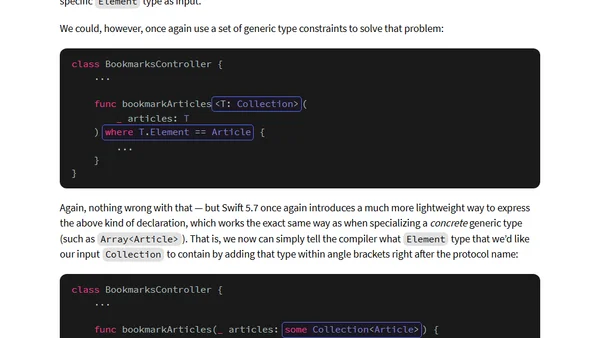
Explores using Swift 5.7's opaque return types (`some`) with primary associated types to simplify generic protocol returns, reducing the need for manual type erasure.
A Swift developer explores performance improvements in a Sudoku solver by using primary associated types and Collection protocols to avoid unnecessary data copying.
A beginner's guide to modern generic programming in Swift, covering protocols, associated types, existentials, and opaque types.
Explains how Swift 5.7's new 'some' and 'any' keywords solve generic protocol referencing issues, improving code abstraction.
Explores a protocol-based approach to extending types in Swift, improving versatility and discoverability compared to traditional type extensions.
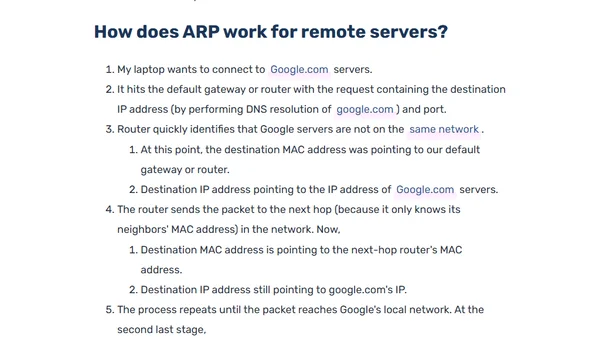
Explains how ARP maps IP addresses to MAC addresses on local networks and how routers handle this for remote destinations.
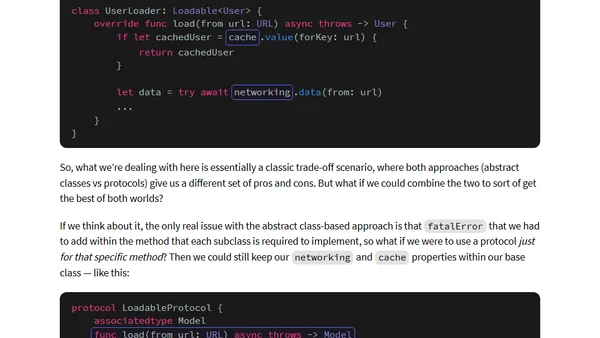
Explains abstract types and methods in Swift, comparing abstract base classes with protocol-oriented approaches for defining shared interfaces.
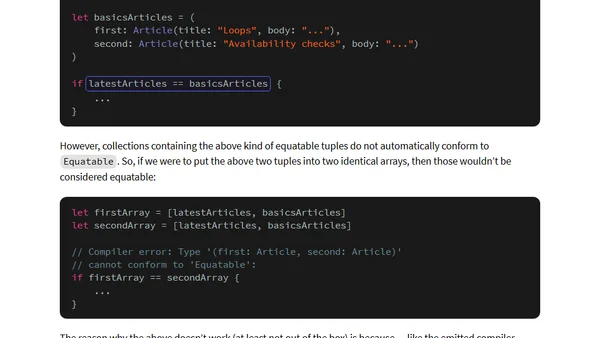
Explains how Swift implements equality using the Equatable protocol, covering value vs. reference types, automatic synthesis, and conditional conformance.
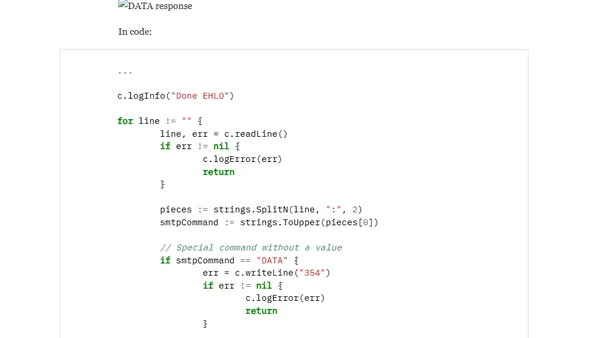
A developer documents their journey of implementing a basic SMTP server in Go to receive emails from Gmail, covering DNS setup and firewall configuration.
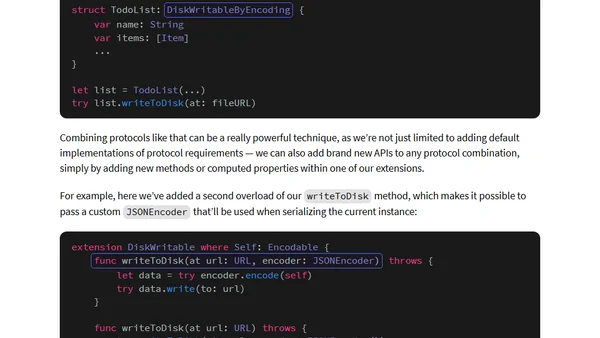
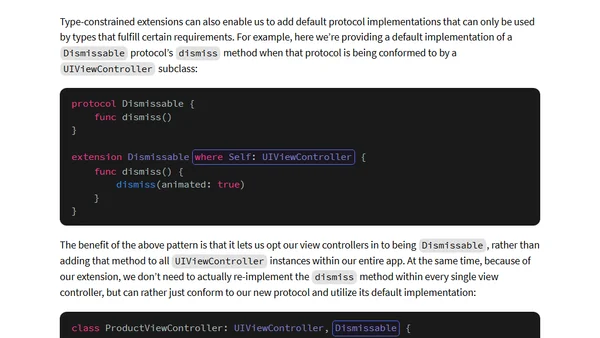
Explains how to combine Swift protocols using inheritance and type-constrained extensions for flexible, reusable code.
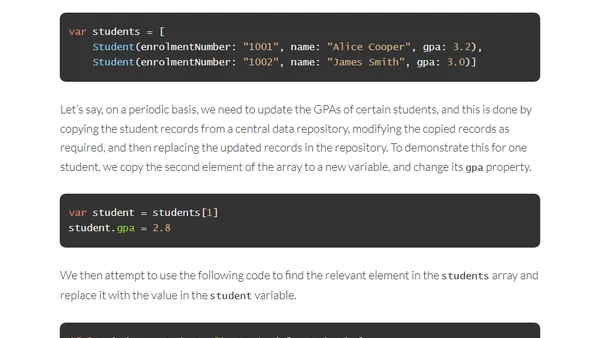
Explains when and how to implement the Equatable and Identifiable protocols in Swift for effective domain modeling with value types.
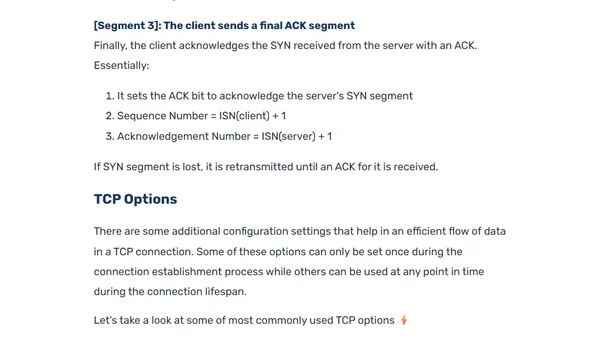
Explains the TCP three-way handshake, its role in reliable network communication, and its technical details for developers.
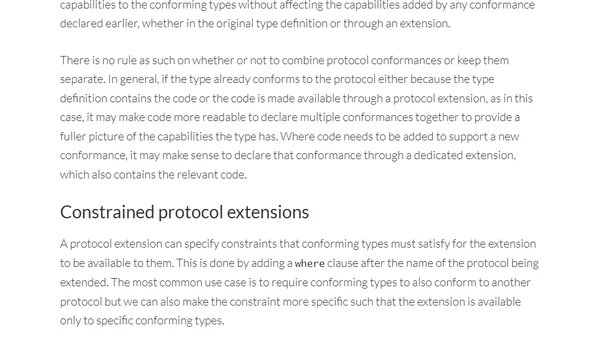
Explains how to use Swift's generic type constraints with the 'where' keyword to create specialized extensions for types and protocols.
Explains how to use Swift 5.5's static protocol APIs to create instances with dot syntax, improving code readability and SwiftUI integration.