Xavier Amatriain
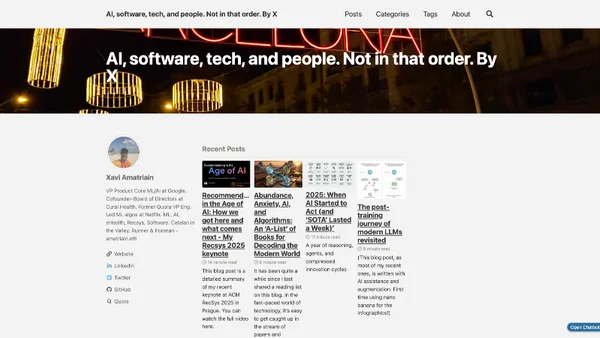
Xavi Amatriain writes about AI, machine learning, and recommendation systems, sharing insights from his work at Google, Netflix, and Curai Health. He explores LLMs, software development, AI strategy, and human-centric technology.
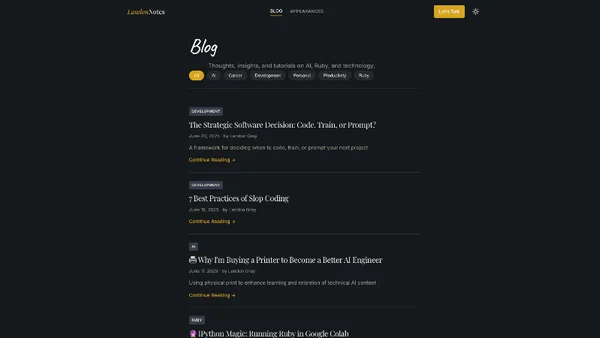
Landon Gray explores software development, AI, and practical programming techniques. Learn best practices in coding, Ruby, LLM-powered app modernization, and frameworks for strategic software decisions.
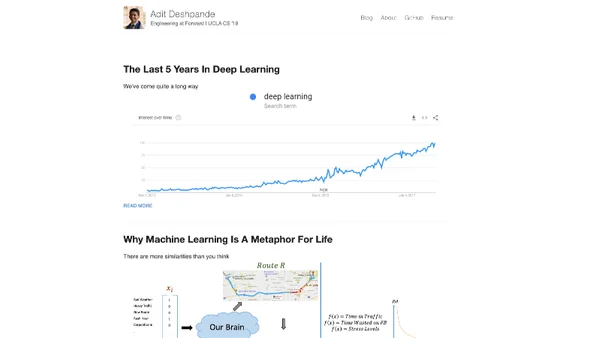
Adit Deshpande writes about deep learning, machine learning research, and AI concepts with a strong focus on clarity and intuition. His blog breaks down influential papers, neural networks, and real-world ML applications for beginners and practitioners alike.
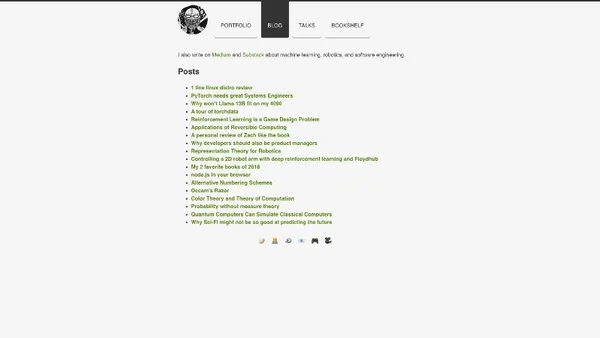
Mark Saroufim is a software engineer and writer focused on machine learning systems, PyTorch, reinforcement learning, and the intersection of computation, mathematics, and product thinking. His writing blends hands-on engineering with theory, exploring everything from deep learning infrastructure to philosophy of computation.
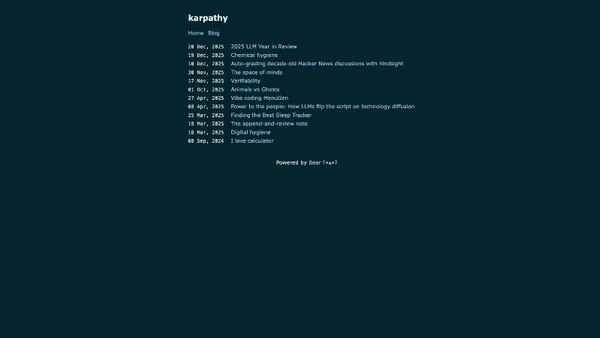
Andrej Karpathy est un chercheur et ingénieur en intelligence artificielle, reconnu pour ses travaux sur le deep learning, les LLMs et la compréhension des systèmes intelligents. Sur son blog, il partage des réflexions claires et profondes sur l’IA, la cognition, la programmation et l’impact sociétal de la technologie.
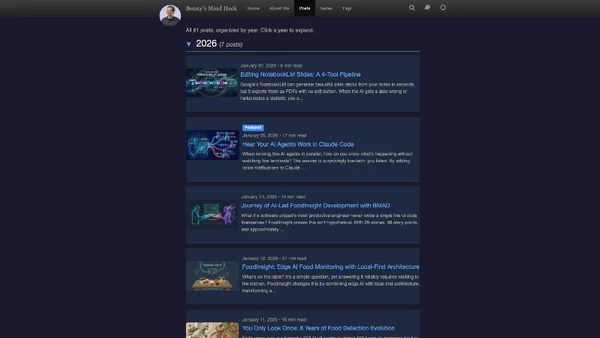
Benny Cheung is a software engineer and AI enthusiast focused on building intelligent systems and agent-driven workflows. His writing covers AI agent orchestration, edge AI, local-first architectures, and AI-powered automation for real-world applications.
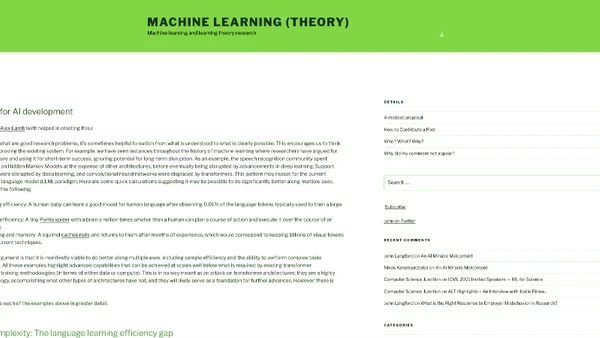
John Langford writes deeply analytical essays on machine learning theory, AI research, and the limits of current architectures. His work explores sample efficiency, representation, long-term memory, and how future AI systems might move beyond today’s transformer-based models.
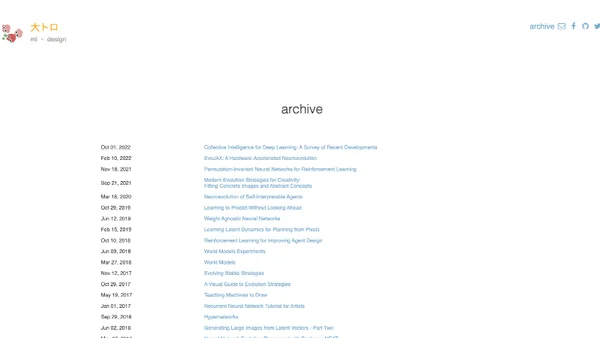
David Ha is an AI researcher known for pioneering work in neuroevolution, reinforcement learning, generative models, and world models. His blog features influential experiments, tutorials, and creative AI projects blending deep learning with evolutionary algorithms.
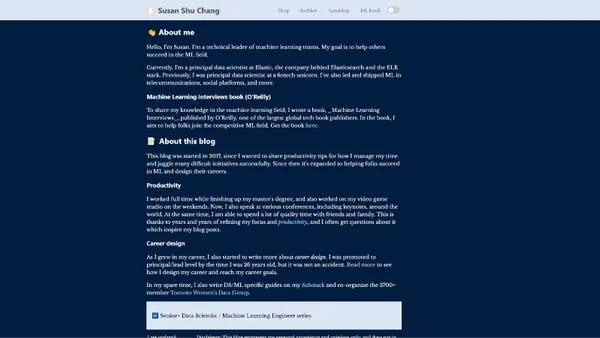
Susan Shu Chang’s blog focuses on machine learning careers, productivity, and leadership. Drawing from her experience as a principal data scientist and O’Reilly author, she shares practical advice on succeeding in ML interviews, career design, and managing high-impact work.
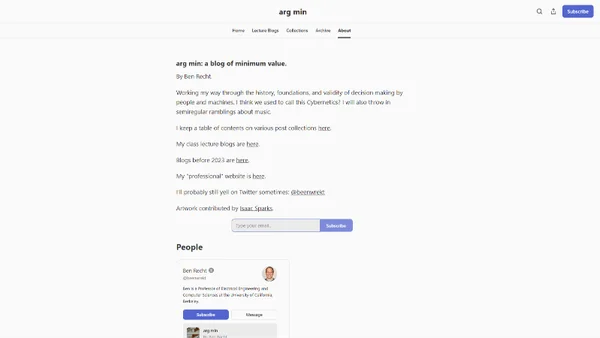
Ben Recht is a researcher and writer exploring the history, theory, and practice of decision-making by humans and machines. On arg min, he covers optimization, machine learning, cybernetics, and occasional reflections on music and culture.
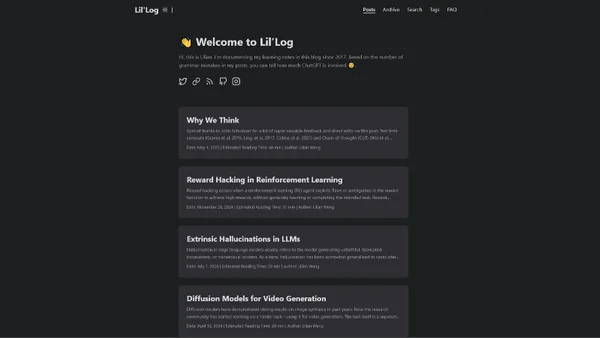
Lilian Weng is a machine learning researcher documenting deep, well-researched learning notes on large language models, reinforcement learning, and generative AI. Her blog offers clear, structured insights into model reasoning, alignment, hallucinations, and modern ML systems.
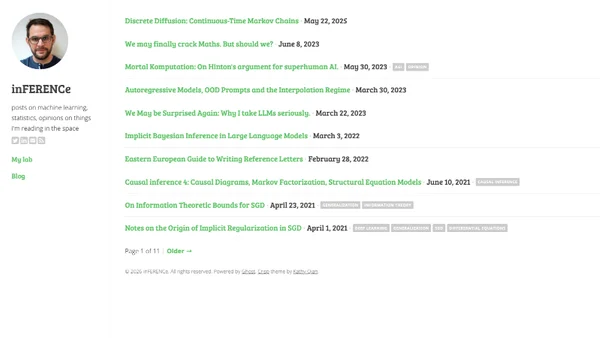
Ferenc Huszár is a Professor of Machine Learning at the University of Cambridge and founder of Reasonable, a deep tech startup building advanced programming LLMs. His research focuses on learning theory, reasoning, and inductive biases in deep learning.
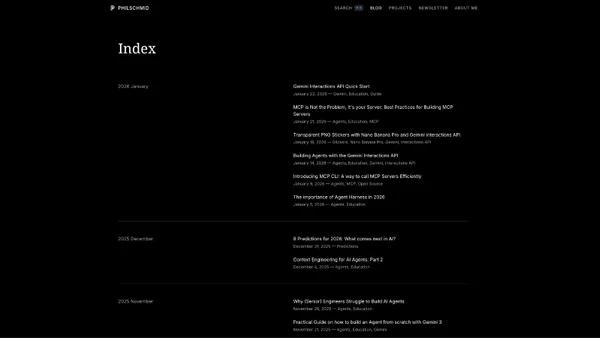
Philipp Schmid is a Staff Engineer at Google DeepMind, building AI Developer Experience and DevRel initiatives. He specializes in LLMs, RLHF, and making advanced AI accessible to developers worldwide.
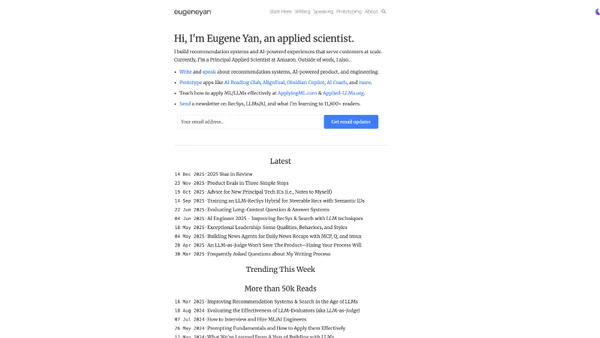
Eugene Yan is a Principal Applied Scientist at Amazon, building AI-powered recommendation systems and experiences. He shares insights on RecSys, LLMs, and applied machine learning, while mentoring and investing in ML startups.
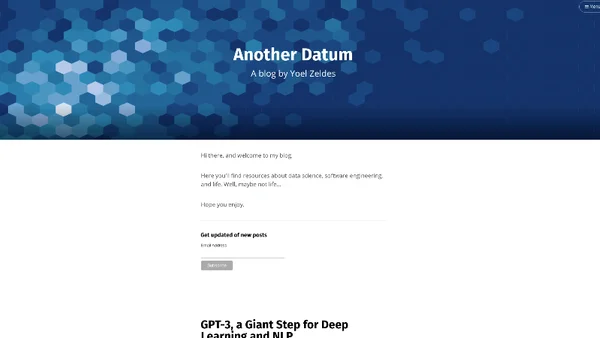
Yoel Zeldes is an algorithm engineer at AI21 Labs with a background in computer science from Hebrew University. He specializes in machine learning, NLP, computer vision, and distributed computing, focusing on data-driven solutions and clean, elegant code.
Mark Tinderholt is a Principal Architect at Microsoft, specializing in Azure cloud architecture, DevOps, and infrastructure automation with Terraform. Through Azure Terraformer, he educates and connects the community around best practices in Azure automation and multi-cloud engineering.
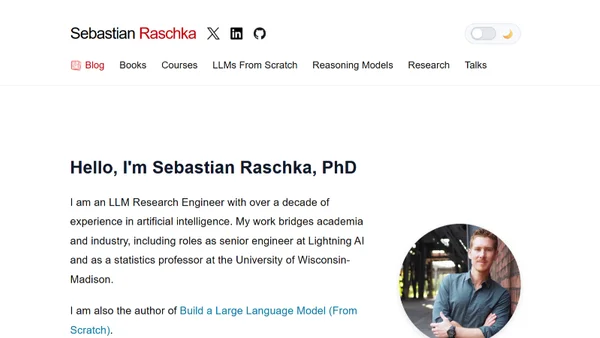
Sebastian Raschka, PhD, is an LLM Research Engineer and AI expert bridging academia and industry, specializing in large language models, high-performance AI systems, and practical, code-driven machine learning.
Simon Willison — Independent developer and writer documenting practical experiments, tools, and deep analysis around large language models, generative AI, web development, security, and emerging programming workflows through detailed posts and daily TILs.
SebastianRaschka.com is the personal blog of Sebastian Raschka, PhD, an LLM research engineer whose work bridges academia and industry in AI and machine learning. On his blog and notes section he publishes deep, well-documented articles on topics such as LLMs (large language models), reasoning models, machine learning in Python, neural networks, data science workflows, and deep learning architecture. Recent posts explore advanced themes like “reasoning LLMs”, comparisons of modern open-weight transformer architectures, and guides for building, training, or analyzing neural networks and model internals.
SimonWillison.net is the long-running blog of Simon Willison, a software engineer, open-source creator, and co-author of the original Django framework. He writes about Python, Django, Datasette, AI tooling, prompt engineering, search, databases, APIs, data journalism, and practical software architecture. The blog includes detailed notes from experiments, conference talks, and real projects. Readers will find clear explanations of topics such as LLM workflows, SQL patterns, data publishing, scraping, deployment, caching, and modern developer tooling. Simon also publishes frequent micro-posts and TIL entries that document small discoveries and tricks from day-to-day engineering work. The tone is practical and research oriented, making the site a valuable resource for anyone interested in serious engineering and open data.