On LLMs in programming
A developer reflects on the anxiety and impact of using Large Language Models (LLMs) in programming, balancing skepticism with practical utility.
The author compares building a Blue Brixx advent calendar to modern software development, highlighting issues like poor documentation and fragile assemblies.
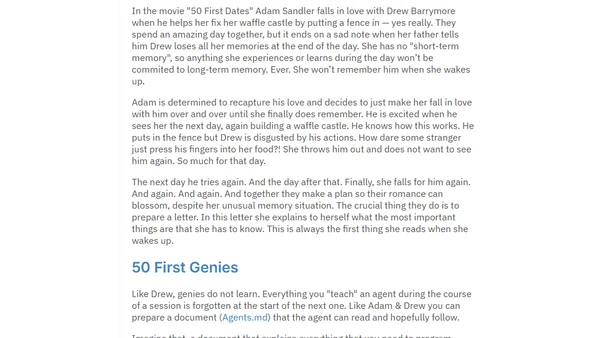
Explores using .goosehints files and the TODO extension with the Goose AI agent to plan and structure a festival countdown web app project.
A neurodivergent software engineer shares how AI tools like ChatGPT provide a judgment-free space for technical collaboration and problem-solving.
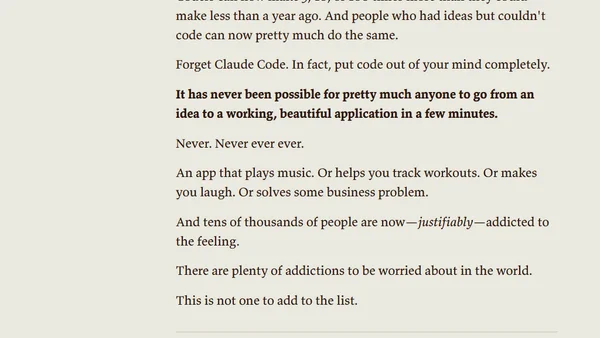
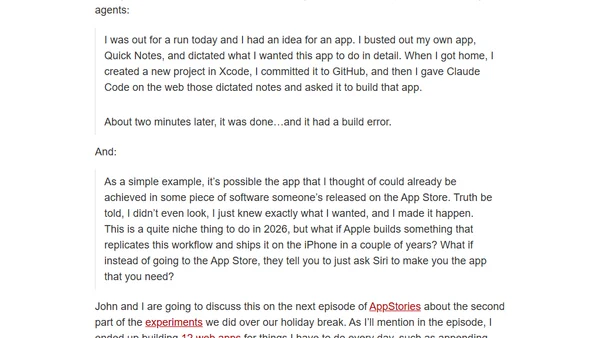
How AI is enabling individuals to build custom software for personal use, replacing paid apps and unlocking new creative potential.
A developer argues against using AI for every problem, highlighting cases where classic programming is simpler and more reliable.
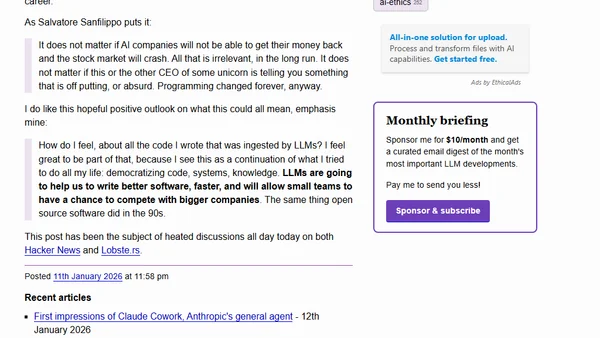
Armin Ronacher reflects on 2025 as a transformative year where AI coding agents like Claude Code fundamentally changed his programming workflow and career.
A developer argues for normalizing 'finished' software that works without constant updates, contrasting it with the expectation of perpetual maintenance.
A ColdFusion code kata exploring methods for conditionally formatting compound strings like names and addresses, comparing brute-force logic with list functions.
A software engineer explains their decision to stay on Substack for blogging, prioritizing community engagement and reducing writing friction over platform controversies.
Simon Willison critiques the trend of developers submitting untested, AI-generated code, arguing it shifts the burden of real work to reviewers.
Argues that software engineers must prove their code works through manual and automated testing, not just rely on AI tools and code reviews.
A podcast episode discussing the optimistic and pessimistic impacts of AI on software development and testing, including productivity gains and industry risks.
A proposal for a 'No Maintenance Month' in December for underfunded open-source projects to highlight the need for sustainable funding.
The Critter Stack team outlines their 2026 development roadmap, focusing on the Critter Watch monitoring tool, documentation, and performance optimizations.
Martin Fowler's link blog covers mainframe modernization, AI code review challenges, and building disposable web apps with LLMs.
Martin Fowler explains his shift from Twitter to 'fragments' posts on his blog for sharing short tech thoughts and links.
Kent Beck discusses how AI coding assistants accelerate learning for junior developers, improving their productivity and making them better hires.
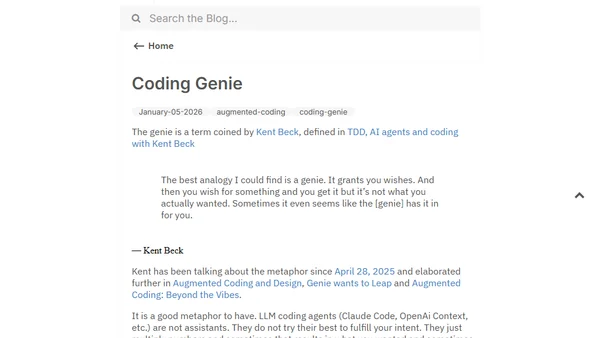
Obie Fernandez reflects on AI coding agents shifting developer focus from writing code to decision-making and intent.
A developer reflects on the boredom of AI-driven 'vibe coding' and why they still prefer hands-on programming for the joy and learning it provides.