Refactoring English: Month 15
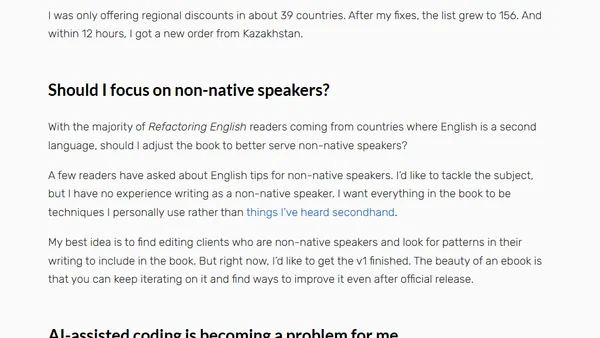
A software developer's monthly update on his book 'Refactoring English,' covering reader demographics, sales metrics, and personal goals.
Author announces a new blog focused on software architecture, sharing knowledge and practical solutions for building adaptable software.
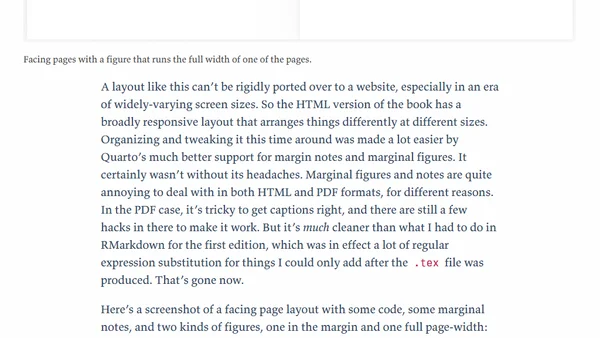
Author details using Quarto to write a technical book on data visualization with R and ggplot, focusing on its advantages and workflow.
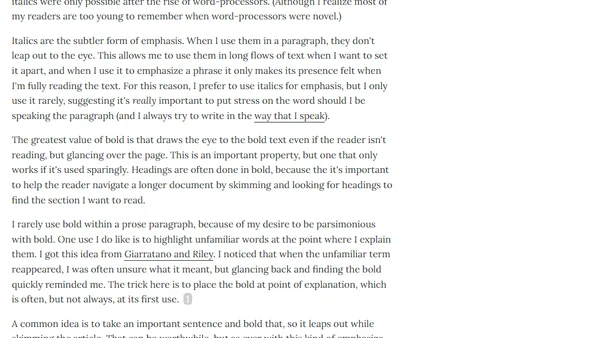
Martin Fowler critiques the overuse of bold text in technical writing, arguing it diminishes emphasis and suggests better typographic practices.
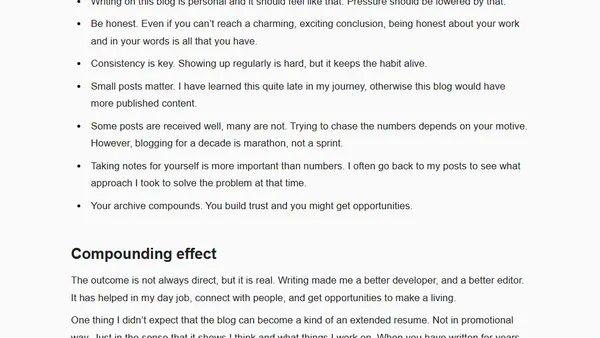
A developer reflects on 10 years of technical blogging, sharing lessons on writing, consistency, and the evolution of topics from JavaScript to React Native.
A developer's 2025 year-in-review focusing on writing output, including a Rust book update, an AI article, and personal blog & newsletter stats.
A monthly retrospective on writing a book about effective writing for software developers, covering progress, goals, and metrics.
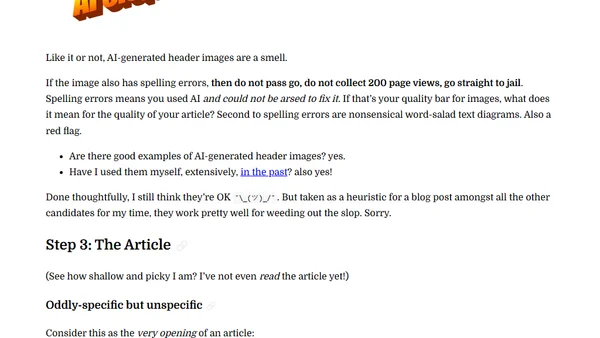
A developer critiques common patterns and 'smells' in AI-generated and low-quality blog posts found on platforms like Medium, offering tips for better writing.
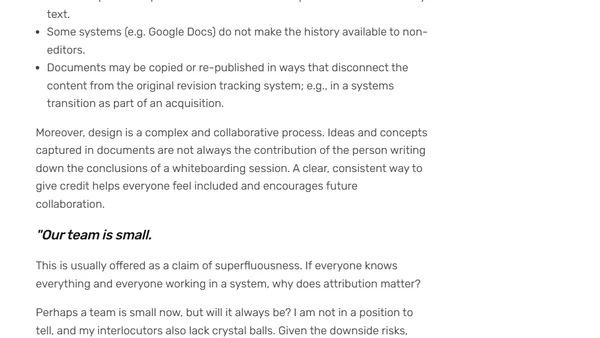
Advocates for including author names and dates on technical documents to ensure proper attribution, support career advancement, and foster a healthy engineering culture.
A software engineer argues that technical blogging remains valuable, inspired by a book on writing effective posts and using AI as an editorial tool.
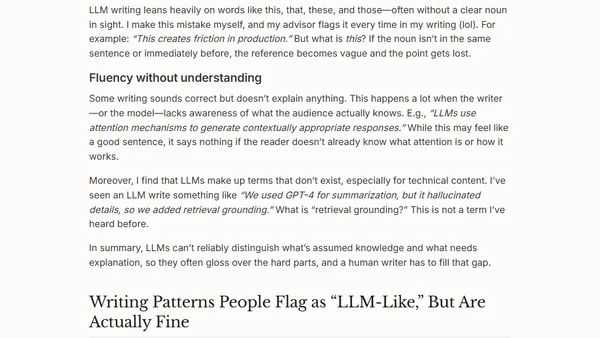
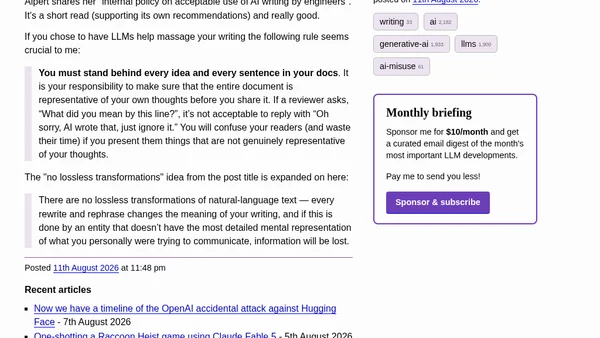
A technical writer's analysis of common pitfalls in LLM-generated writing and practical strategies for using AI tools effectively while maintaining quality.
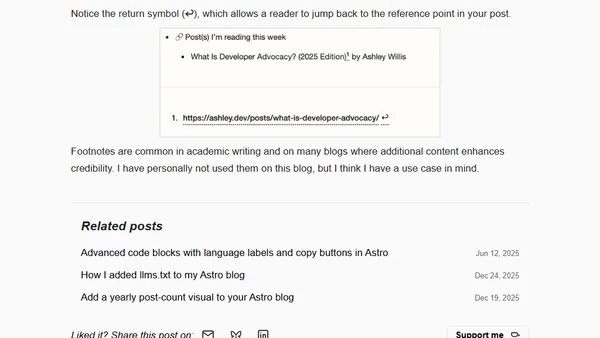
A guide to implementing inline footnotes in Markdown to add citations and notes without cluttering the main text.
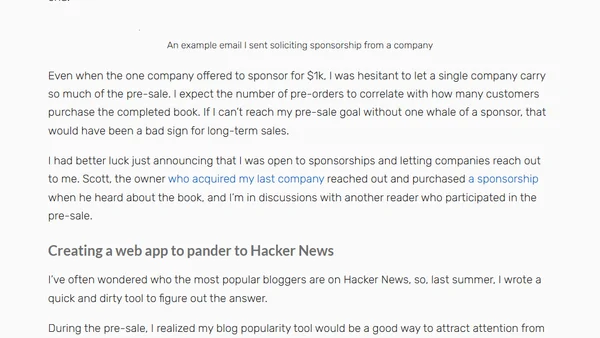
Author shares experience raising $6k via Kickstarter for a self-published technical book aimed at helping software developers improve their writing.
How to configure Vale CLI to ignore front matter when applying consistency rules, preventing false positives in documentation linting.
A tech founder reflects on using Twitter for technical discourse, product development, and personal motivation, while acknowledging its addictive nature.
Explores the distinction between informal 'notes' for quick sharing and formal 'blogs' for polished writing in tech content creation.
A developer argues for writing blog posts about the messy, real-world problem-solving process, not just polished 'happy path' tutorials.
Argues that politeness markers like 'please' weaken technical documentation and should be replaced with direct, actionable instructions.
Introducing nbsanity, a free service that instantly transforms public GitHub Jupyter notebooks into polished, customizable web pages using Quarto.
A guide on how to selectively disable Vale prose linting for specific sections within AsciiDoc documents, explaining two methods and common pitfalls.