Quoting Theia Vogel
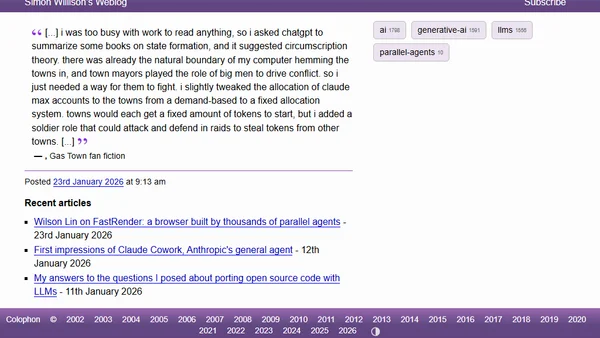
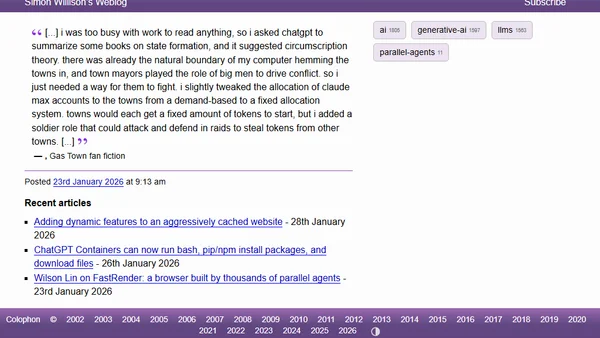
A developer describes using ChatGPT to research state formation theory and applying it to tweak a game's token economy and raid mechanics.
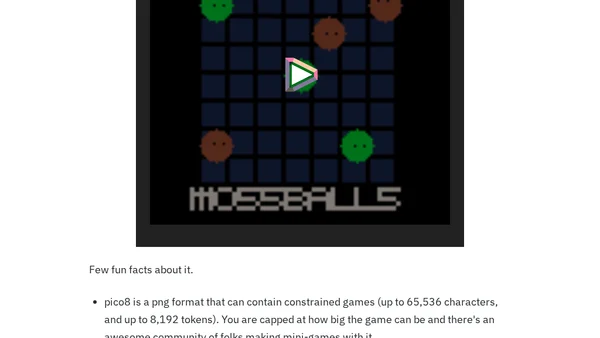
A developer describes using ChatGPT to research game theory and implementing a token-based conflict system in a simulated town game.
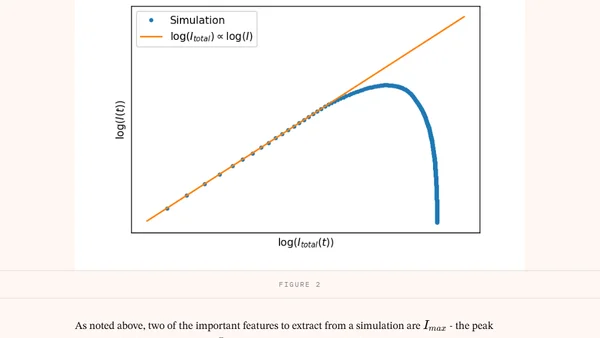
Explores the challenges of fitting a logistic curve using only data from its early, exponential-like growth phase, highlighting the unreliability of such extrapolations.
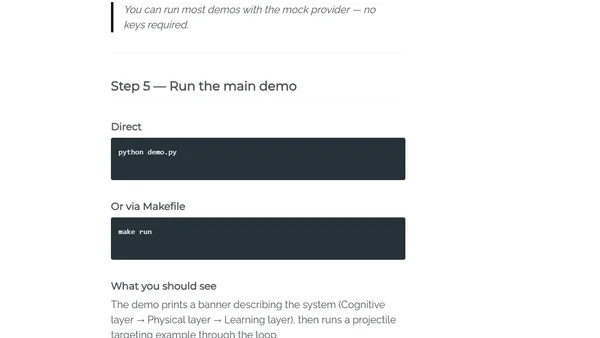
Introducing Physica, a Physics World Model AI that enforces physical laws to prevent errors in AI-generated simulations, moving beyond token fluency.
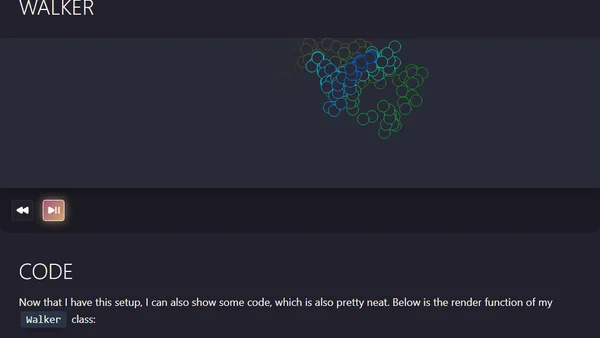
A developer shares their experience implementing a Walker simulation from 'The Nature of Code' using p5.js and integrating it into an Astro project.
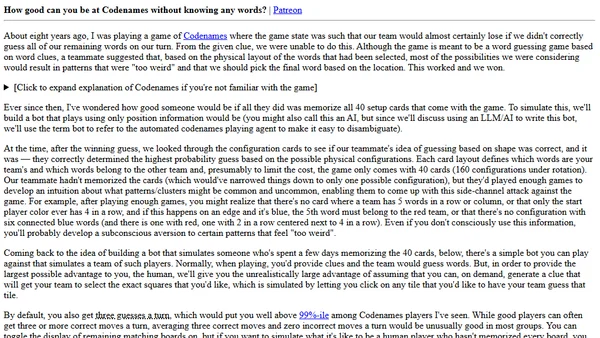
Analyzing if a Codenames bot can win using only card layout patterns, without understanding word meanings.
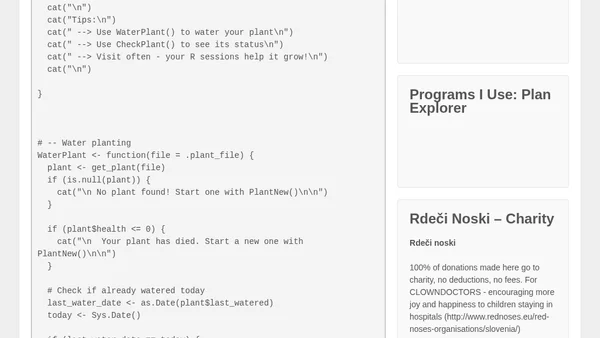
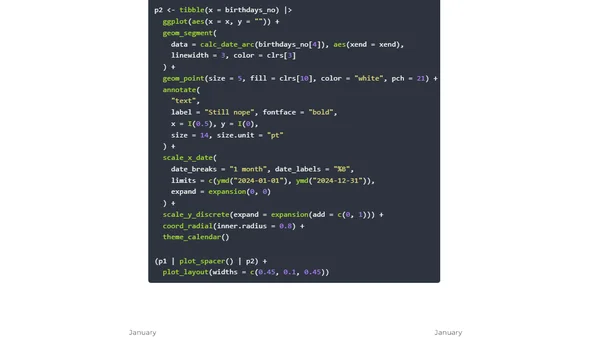
Using R simulations to calculate birthday probabilities instead of complex probability math, with code examples.
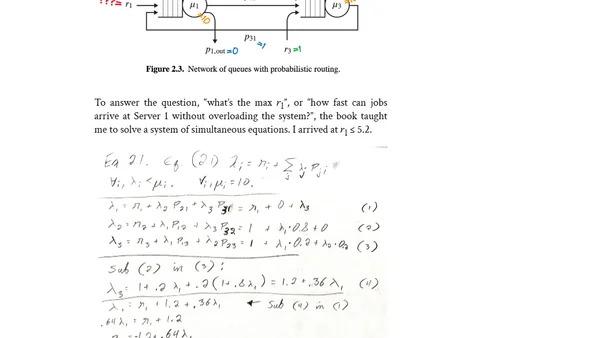
Exploring Java Modelling Tools (JMT) for performance modeling and simulation of queue networks, as an alternative to formal methods.
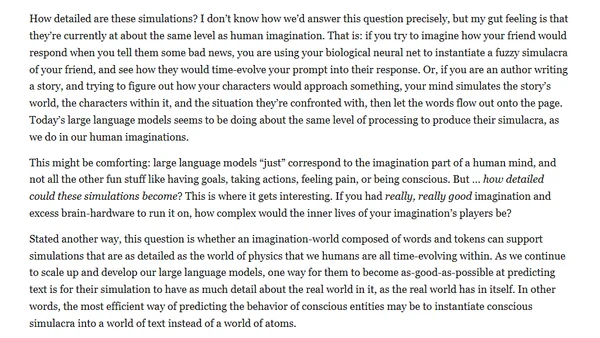
Argues against the 'lossy compression' analogy for LLMs like ChatGPT, proposing instead that they are simulators creating temporary simulacra.
A mathematical analysis of why a garden sprinkler waters unevenly, deriving equations for water distribution and proposing a technical fix.
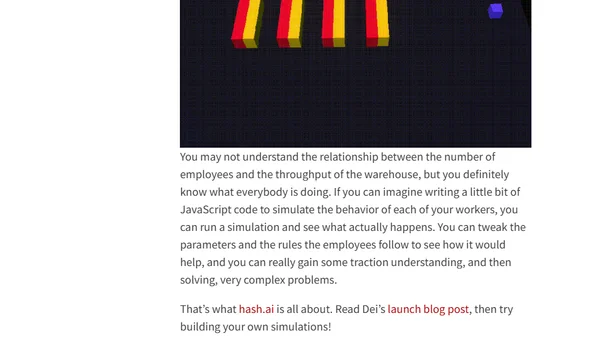
HASH is a free online platform for creating JavaScript simulations to model and understand complex real-world systems.
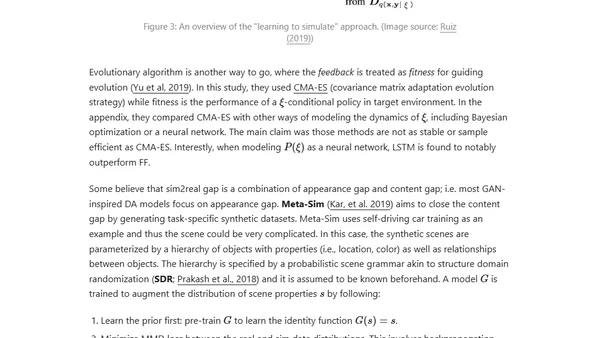
Explores domain randomization as a technique to bridge the simulation-to-reality gap in robotics and deep reinforcement learning.
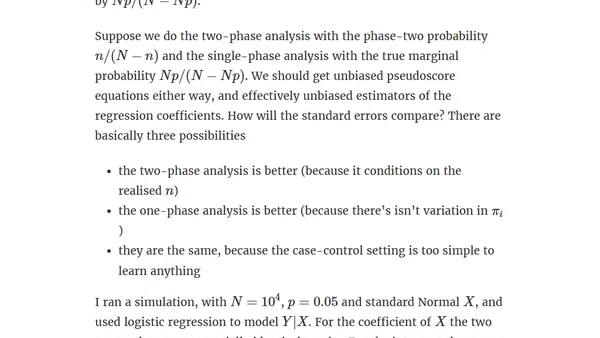
Discusses why simulation summaries should focus on quantiles and robust statistics rather than moments when evaluating asymptotic approximations.
Explores the philosophical implications of consciousness arising from mathematical structures and simulations, inspired by Greg Egan's Permutation City.
A Rust programming simulation of the classic Monty Hall probability problem, demonstrating the counter-intuitive odds.
An analysis of Verilog's quirks and why seemingly logical code can fail or produce unexpected hardware synthesis results.