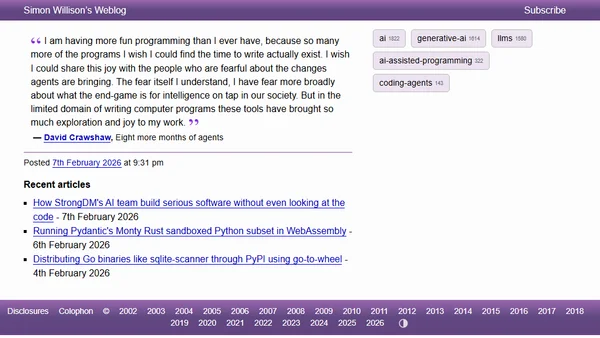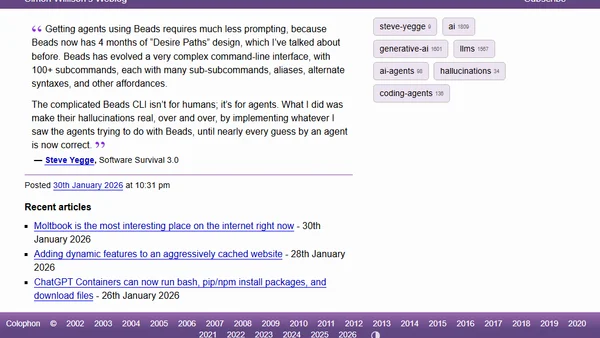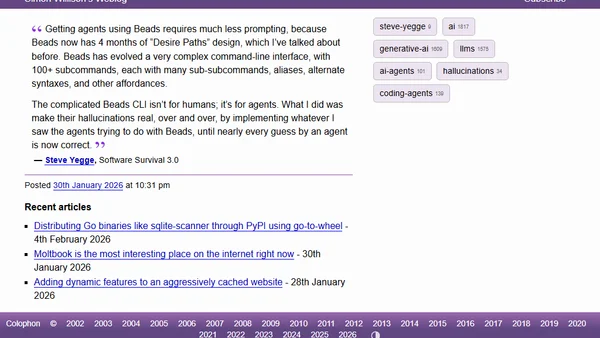
Quoting David Crawshaw
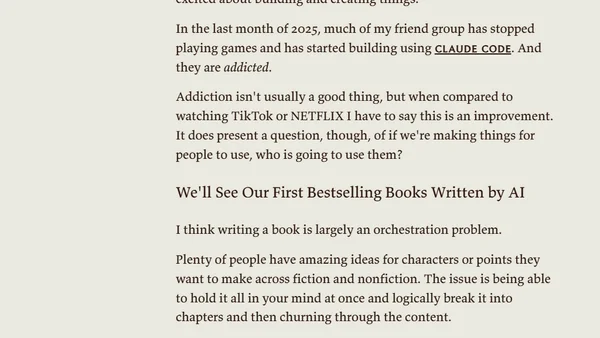
David Crawshaw reflects on the joy and exploration AI agents bring to programming, while acknowledging broader societal fears about AI.
Steve Yegge discusses evolving the Beads CLI for AI agents by implementing their 'hallucinations' to create a natural interface.
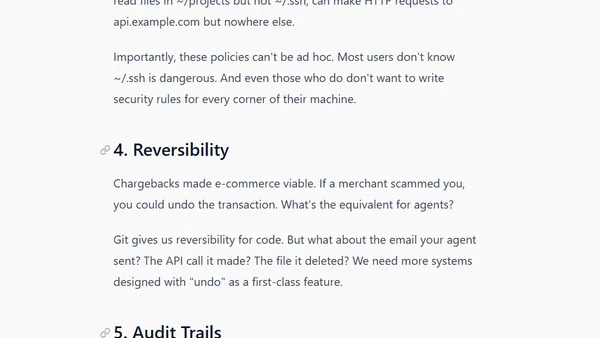
The article compares AI agent security to early e-commerce, arguing we need a multi-layered security stack (supply chain, prompt defense, sandboxing) to make agents trustworthy.
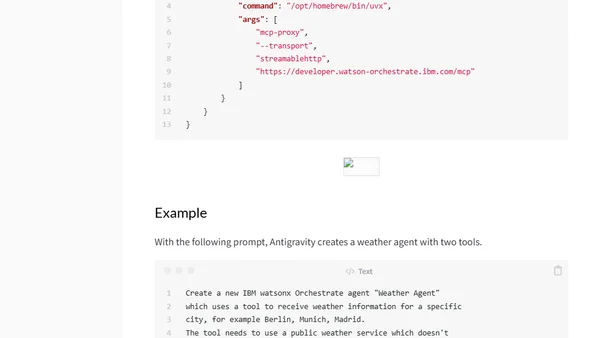
A guide on using Google Antigravity to build and customize agents for IBM's watsonx Orchestrate platform, leveraging MCP and AI development tools.
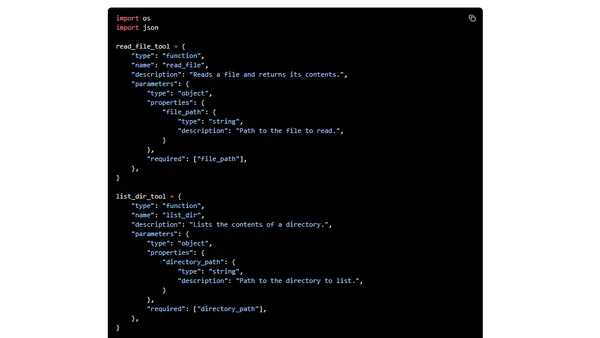
A guide to building AI agents using the Gemini Interactions API, covering core concepts and a step-by-step CLI implementation.
A look at key AI trends for 2026, focusing on verifiability, continuous agents, and vertical problem-solving.
A month-by-month recap of 2025's AI landscape, focusing on reasoning models, agents, efficiency breakthroughs, and industry shifts.
A 9-tier framework for measuring personal AI progress, from basic chatbots to advanced AI companions with deep context and autonomy.
Analysis of MCP's advantages over OpenAPI, focusing on secure authentication and OAuth dynamic client registration for AI agents.
Explores building durable execution systems for agents using only Postgres, avoiding third-party services with a simple SQL library.
Explores using Pyodide to build AI agents that write temporary code for non-coding tasks, focusing on sandboxed execution and virtual file systems.
A developer describes how AI collaboration evolved into specialized writing agents, exploring consciousness and creative process in programming.
A speaker shares their experience presenting at CollabDays Finland 2025 on building M365 Copilot extensions with the Agents SDK, including slides and demos.
A technical deep dive into Google's A2A framework for building and connecting multi-agent AI systems via a standardized JSON-RPC API.
Reflections on the first unit of the Hugging Face Agents course, focusing on the potential and risks of code agents and their evaluation.
A guide to building AI applications using the LangChain framework, covering core concepts, installation, and practical examples.
Analysis of Chapter 6 from Chip Huyen's 'AI Engineering' book, focusing on RAG systems and AI agents, their architecture, costs, and relationship.
Explores AI agents, their capabilities, and frameworks for development, focusing on tools, planning, and evaluation.
A developer shares experiments building LLM-powered tools for research, reflection, and planning, including URL summarizers, SQL agents, and advisory boards.