The Becoming: Building a Poetry Publishing Pipeline with Claude Code
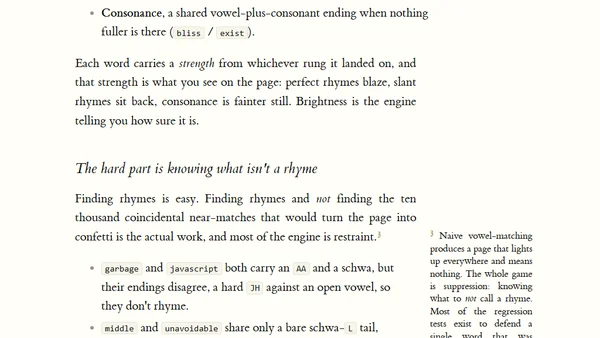
How Claude Code AI was used to build an automated pipeline for publishing a poetry book, from manuscript parsing to PDF and website generation.
Kenneth Reitz is an open-source creator and thinker exploring how technology, AI, and algorithms shape human consciousness, culture, and mental wellbeing—advocating for tech that serves humanity, not exploits it.
12 articles from this blog
How Claude Code AI was used to build an automated pipeline for publishing a poetry book, from manuscript parsing to PDF and website generation.
A software developer argues that the internet has become a net negative, critiquing its shift from democratization to commercialization and psychological manipulation.
A developer explores the intersection of spiritual practice and code by building a contemplative, non-gamified Bible study tool, kjvstudy.org.
Explores how modern technology and constant interruptions have eroded our ability for deep, sustained thought, contrasting it with historical cognitive patterns.
Explores how conversational LLMs actively reshape human thought patterns through neural mirroring, unlike passive social media algorithms.
A programmer's philosophical reflection on how coding and technology create recursive feedback loops that shape human consciousness and cognition.
Explores how Python's readable, English-like syntax reflects a philosophy of programming that reduces cognitive load and shapes computational thinking.
Exploring the philosophical and technical significance of the Unix 'fortune' command as an antidote to modern algorithmic engagement.
Explores writing as cognitive entertainment, connecting programming, consciousness, and AI collaboration to nourish the mind rather than exploit attention.
Explores how visual design in programming, like typography and icon generation, shapes cognitive patterns and attention.
A developer describes how AI collaboration evolved into specialized writing agents, exploring consciousness and creative process in programming.
Explores Douglas Adams' humor as a tool for debugging consciousness and exposing absurd recursive loops in technology, programming, and existence.