All Data Is Good Data
Analysis of Midjourney's pivot to medical ultrasound, sparking debate between tech boosters and medical practitioners over AI in healthcare.

Explores GPU consumption models as a foundational architectural decision for AI production platforms, focusing on workload usage.
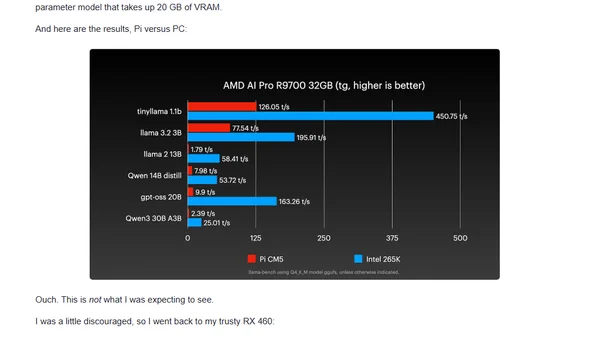
Testing GPU performance on a Raspberry Pi 5 versus a desktop PC for transcoding, AI, and multi-GPU tasks, showing surprising efficiency.
Explains the multi-layered architecture of production generative AI systems, covering hardware, models, orchestration, and tooling.
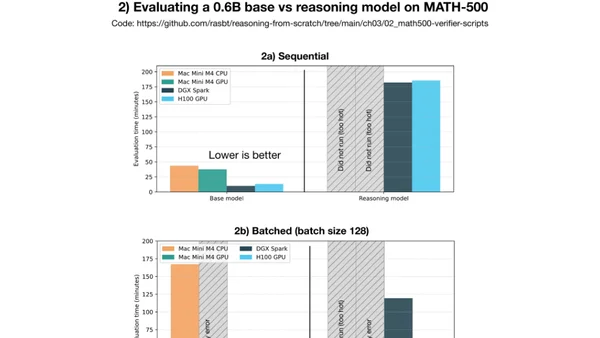
Compares DGX Spark and Mac Mini for local PyTorch development, focusing on LLM inference and fine-tuning performance benchmarks.
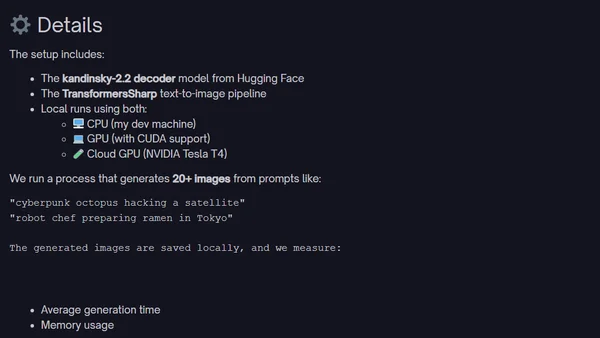
Benchmarking GPU vs CPU performance for local AI image generation in C# using the TransformersSharp library and Hugging Face models.
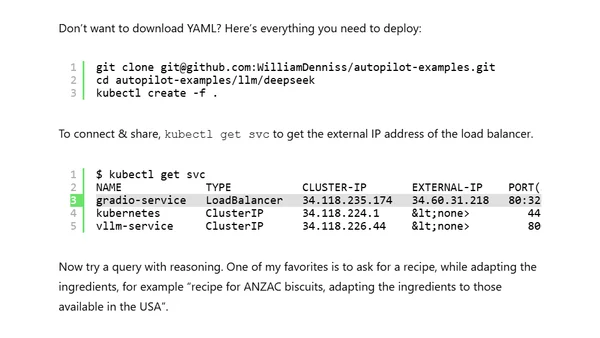
A technical guide on deploying DeepSeek's open reasoning AI models on Google Kubernetes Engine (GKE) using vLLM and a Gradio interface.
Analyzes the limitations of using GPU manufacturer TDP for estimating AI workload energy consumption, highlighting real-world measurement challenges.
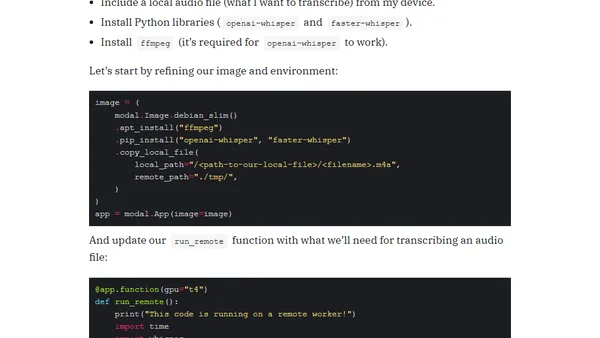
A guide to running Python code on serverless GPU instances using Modal.com for faster machine learning inference, demonstrated with a speech-to-text example.
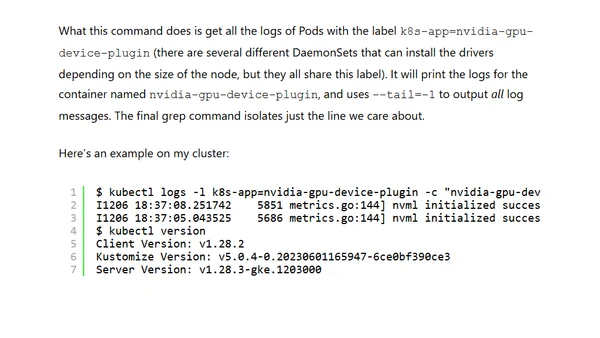
A quick guide to finding the NVIDIA GPU driver version running on a Google Kubernetes Engine (GKE) cluster using a kubectl command.
Exploring how Java code can be executed on GPUs for high-performance computing and machine learning, covering challenges and potential APIs.
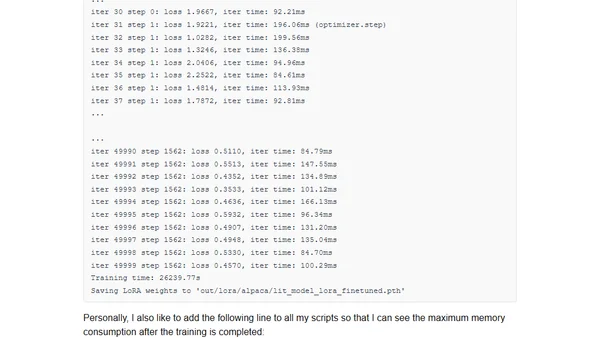
A guide to participating in the NeurIPS 2023 LLM Efficiency Challenge, focusing on efficient fine-tuning of large language models on a single GPU.
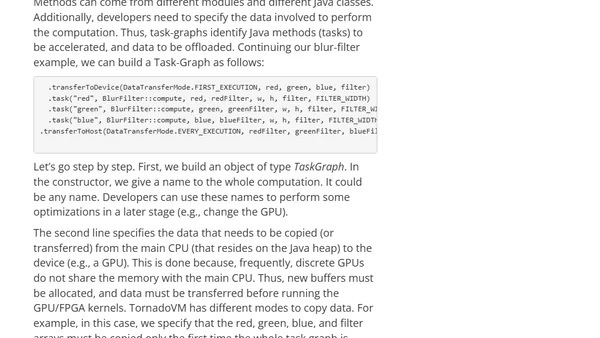
Introduces TornadoVM, an open-source framework for running Java programs on GPUs and FPGAs to boost performance without low-level code.
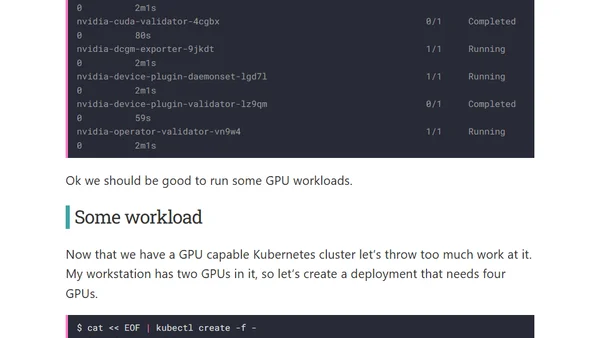
A technical guide on oversubscribing GPUs in Kubernetes using time slicing for development and light workloads, with setup instructions.
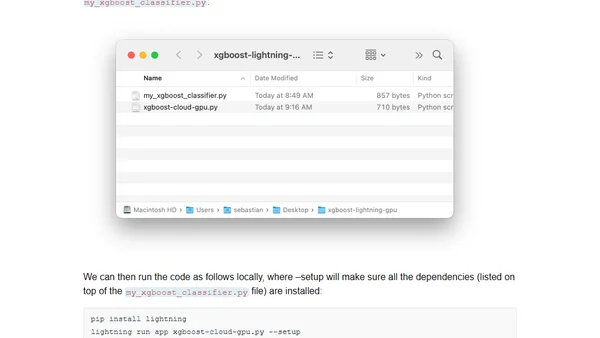
A guide to training XGBoost models on cloud GPUs using the Lightning AI framework, bypassing complex infrastructure setup.
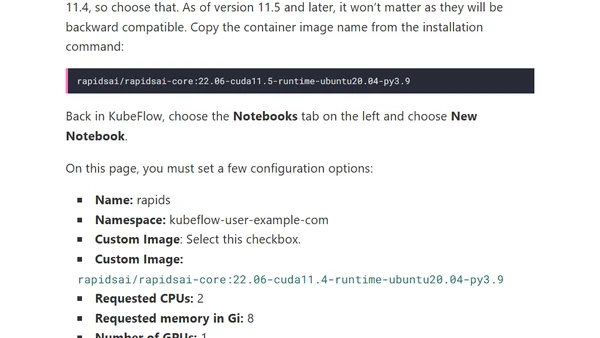
A guide to using RAPIDS to accelerate ETL and data processing workflows within a KubeFlow environment by leveraging GPUs.
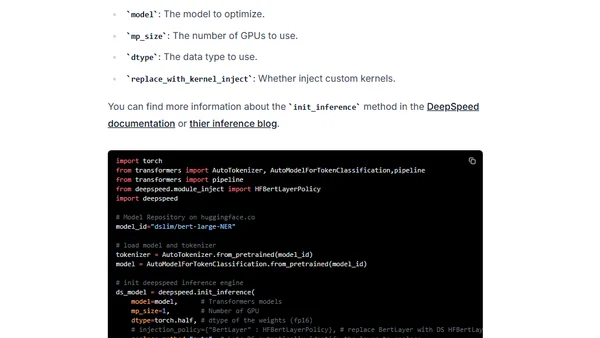
Learn to optimize BERT and RoBERTa models for faster GPU inference using DeepSpeed-Inference, reducing latency from 30ms to 10ms.
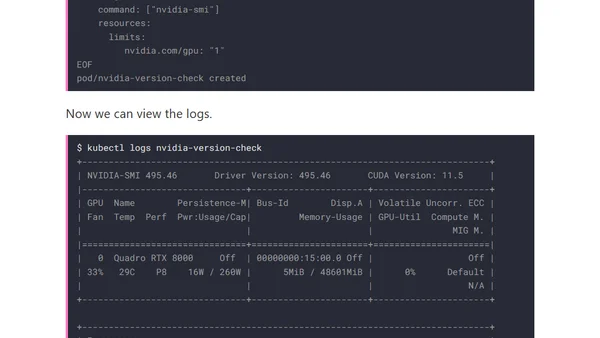
Learn two methods to check NVIDIA driver and CUDA versions on Kubernetes nodes using node labels or running nvidia-smi in a pod.
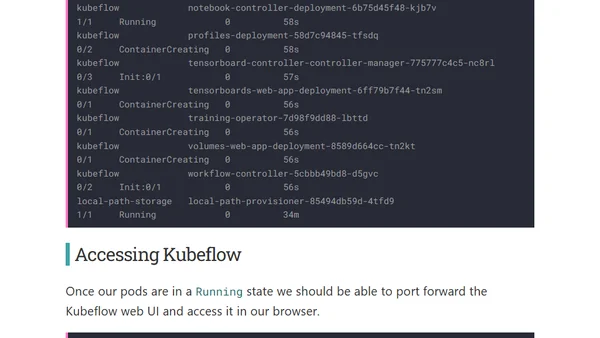
A guide to setting up Kubeflow for MLOps with GPU support in a local Kind Kubernetes cluster for development and testing.
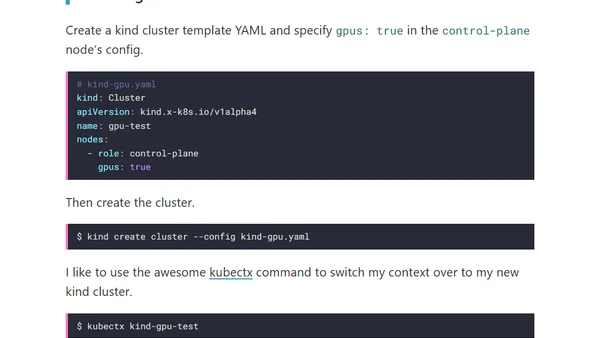
A guide to hacking GPU support into the kind Kubernetes tool for local development and testing with NVIDIA hardware.