How to Give AI Agents Identity Without Sharing Human Credentials
Explains how to give AI agents secure identities using workload identities, delegated authority, and token exchange instead of sharing human credentials.
Critique of poor quality ads in Apple News, focusing on scams, repetition, and Taboola partnership issues.
Explains middleware in Microsoft Agent Framework for capping token usage, covering cost control, security, performance, and custom logic.
Analysis of rising code review load due to AI-generated code, and tools/strategies to manage it.
Analysis of rising code review loads due to AI-generated code and the surge of AI tools to manage it.
Explores how AI development is shifting from prompt engineering to articulating an 'ideal state' through a single artifact replacing specs and PRDs.
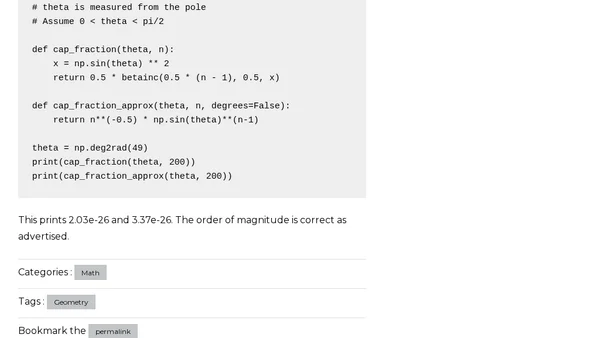
Explores almost periodic functions using the example of sin(αx) − sin(βx) with irrational frequency ratio.
Brent Ozar answers database questions on HADR_SYNC_COMMIT waits, indexing strategies, RCSI, and SQL Server comparisons.
Daily tech links covering AI agents, .NET, web dev, Windows tools, and industry news for July 23, 2026.
Explains SQL Server blocking chains, head blockers, and why transaction duration matters more than the session itself for diagnosing performance issues.
EU Court rules VPNs are lawful tools, not liable for users bypassing geo-blocking or copyright infringement.
Explains why prompt libraries are insufficient for agentic AI and how to translate prompt intent into enforceable execution policies.
Comparison of VMware Cloud Foundation 9.0 and 9.1, detailing key changes, management architecture, and operational improvements for private cloud.
Designing a trusted agent controller for enterprise AI, focusing on deterministic state machines and security boundaries.
Explores whether code quality remains important when LLMs generate code, questioning if human-centric quality standards apply in an AI-driven future.
A guide on safely deploying AI model, prompt, and tool changes using canary releases and automated rollbacks.
Guide to sharing NVIDIA GPUs in Kubernetes using MIG, time-slicing, and ResourceQuotas for improved utilization.
Explores the critical security boundaries for AI agents in enterprise environments, defining what actions agents must never be allowed to perform autonomously.
PyPI now rejects uploads to releases older than 14 days to prevent supply-chain attacks, as explained by Seth Larson.