Hiring someone to develop scikit-learn community and industry partners
Scikit-learn foundation seeks a community and partnerships developer to grow the open-source ecosystem and foster industry sponsorships.
The article argues that the choice of machine learning library (like PyTorch or TensorFlow) is less critical than building robust data and production pipelines.
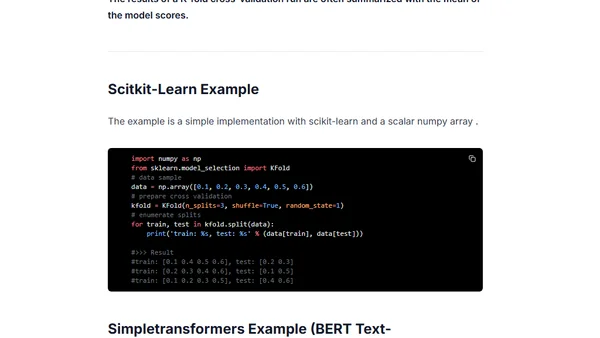
Explains K-Fold cross-validation for ML models with a practical example using BERT for text classification.
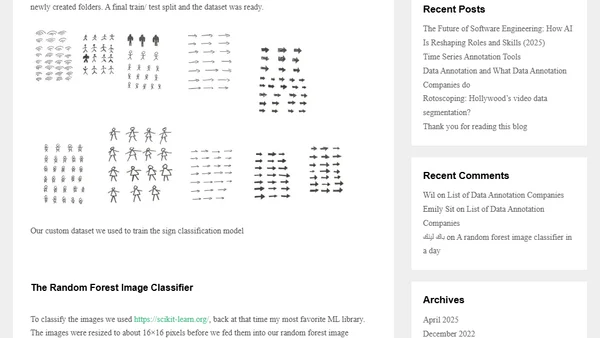
A team built a handwritten sign digitizer for Hack Zurich 2016, creating a custom dataset and training a random forest image classifier in one day.
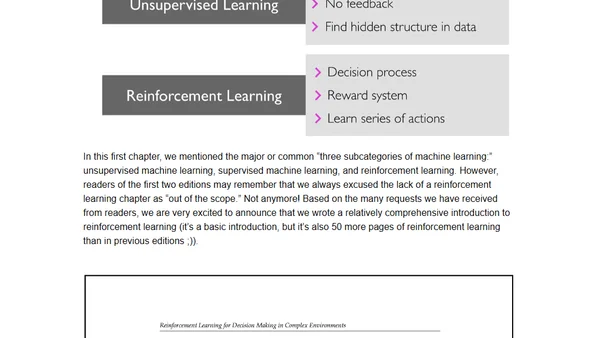
Announcing the 3rd edition of Python Machine Learning, updated for TensorFlow 2.0 and featuring a new chapter on Generative Adversarial Networks (GANs).
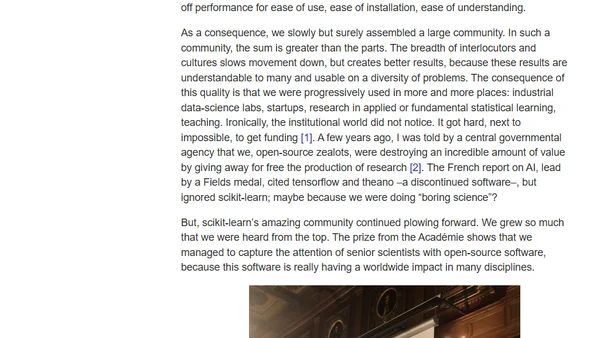
Authors of scikit-learn receive a major scientific prize, highlighting a cultural shift towards recognizing open-source software as valuable academic contribution.
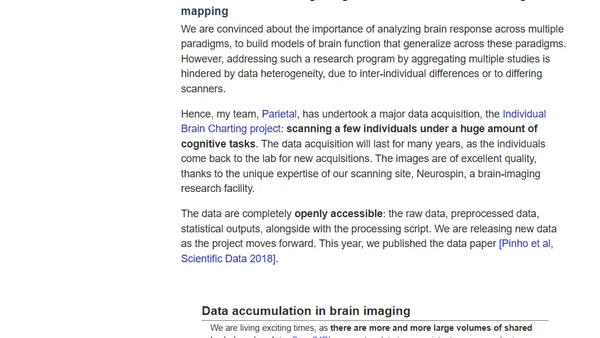
A researcher's 2018 highlights: using machine learning for cognitive brain mapping, analyzing non-curated data, and contributing to scikit-learn development.
Inria establishes a foundation to secure funding and support for the scikit-learn open-source machine learning library, enabling sustainable growth and development.
A report on recent scikit-learn sprints in Austin and Paris, highlighting new features, bug fixes, and progress toward the 0.20 release.
A practical guide to implementing a hyperparameter tuning script for machine learning models, based on real-world experience from Taboola's engineering team.
A summary of the 2017 Paris sprint for scikit-learn, highlighting participants, achievements, and support for the open-source machine learning library.
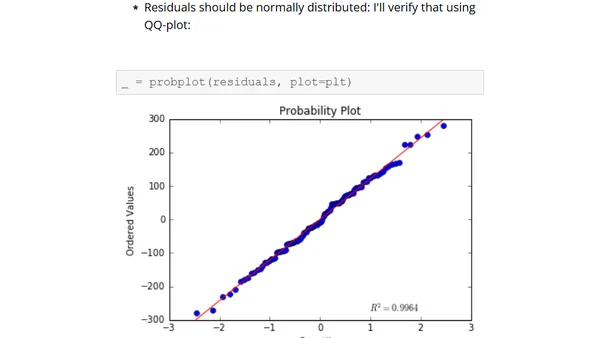
A data scientist shares a technical interview task on linear regression, covering data cleaning, model fitting, and assumption validation.
A former PhD scientist shares his positive transition to data science freelancing, detailing the freedom and variety of his new career.
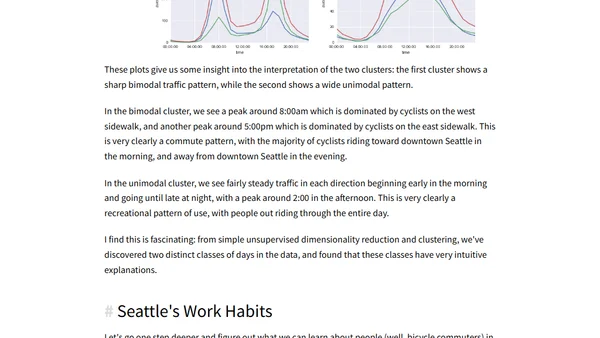
Using Python and unsupervised machine learning to analyze Seattle bicycle count data and uncover insights about commuting work habits.
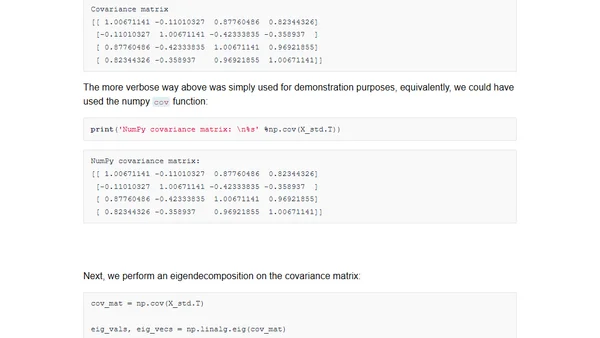
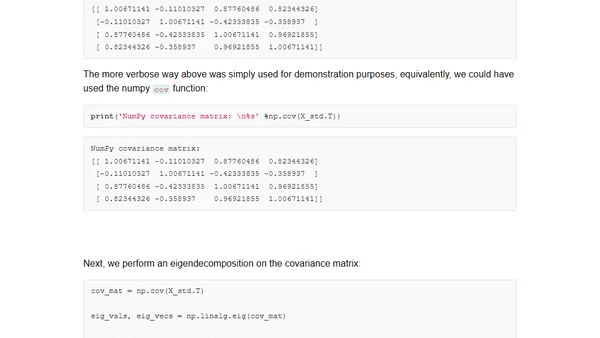
A tutorial explaining Principal Component Analysis (PCA), a dimensionality reduction technique used in machine learning and data analysis.
A tutorial explaining the internals of Principal Component Analysis (PCA) for dimensionality reduction in machine learning and data analysis.
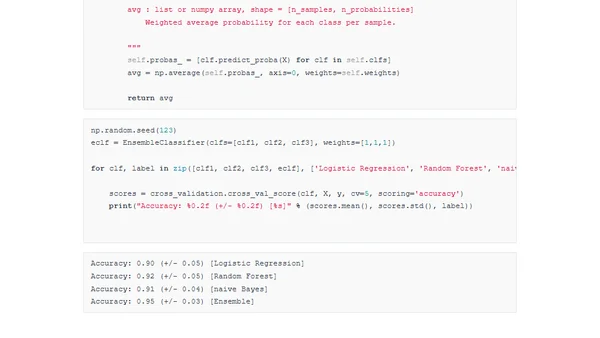
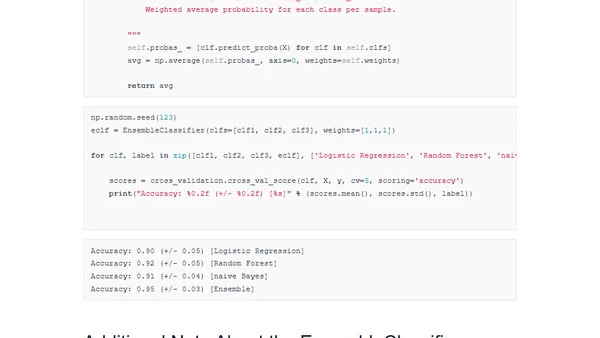
A guide to building a weighted majority rule ensemble classifier in scikit-learn, demonstrated using the Iris dataset.
A guide to implementing a weighted majority rule ensemble classifier in scikit-learn to combine different ML models and improve prediction accuracy.
A developer shares their experience building a machine learning model to classify song moods (happy/sad) based on lyrics using Python and NLP.
Explains how to use the RBF kernel trick to perform nonlinear dimensionality reduction via Kernel PCA for complex datasets.