2024 highlights: of computer science and society
A researcher reflects on 2024 highlights in AI, covering societal impacts, software tools like Scikit-learn, and technical research on tabular data and language models.
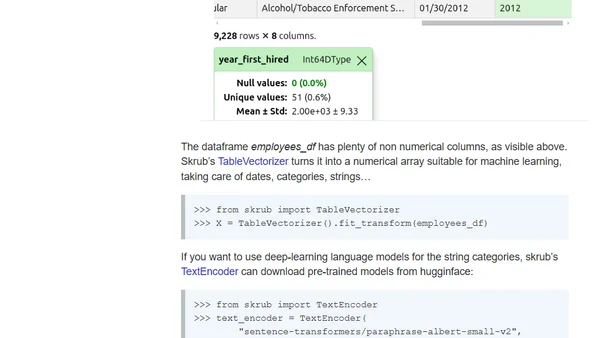
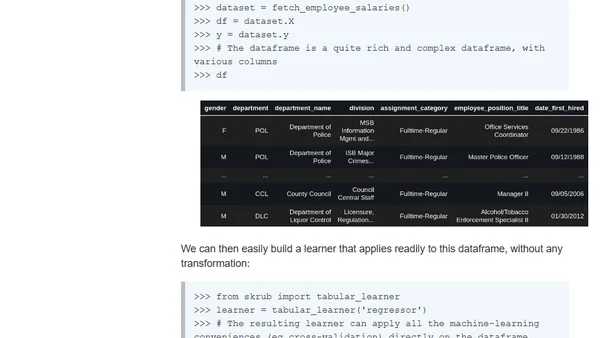
Announcing skrub 0.2.0, a library update simplifying machine learning on complex dataframes with new features like tabular_learner.
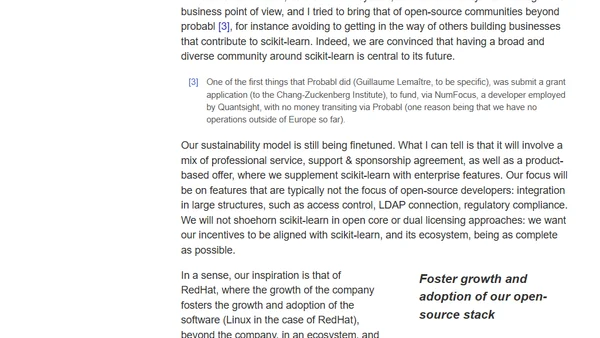
The article discusses the spin-off of scikit-learn's open-source development from Inria to a new mission-driven enterprise, Probabl, focusing on sustainable funding and growth.
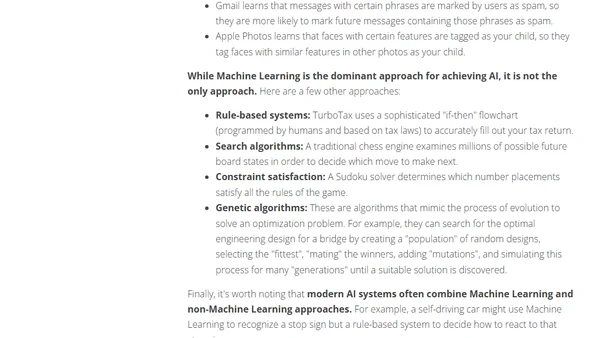
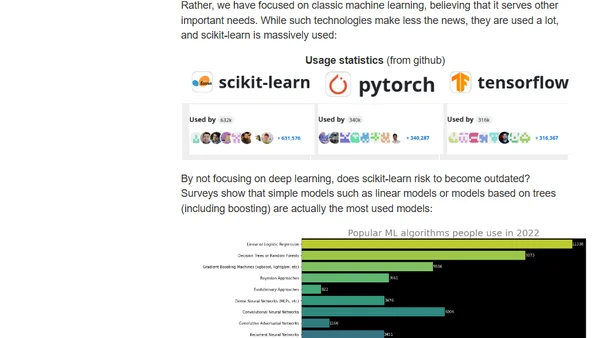
Scikit-learn remains a dominant and impactful machine learning library, especially for classic ML and tabular data, despite the hype around deep learning.
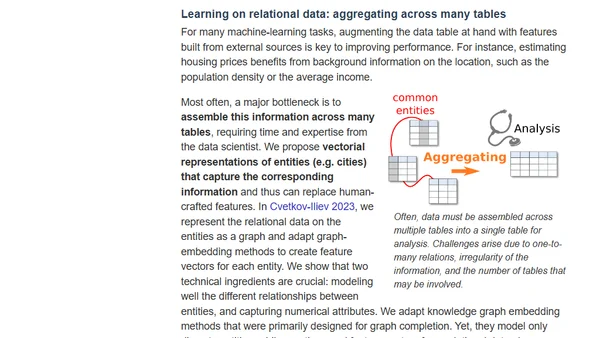
A retrospective on forming a research team in 2022 to apply machine learning to challenges in health and social sciences, including data management and validation.
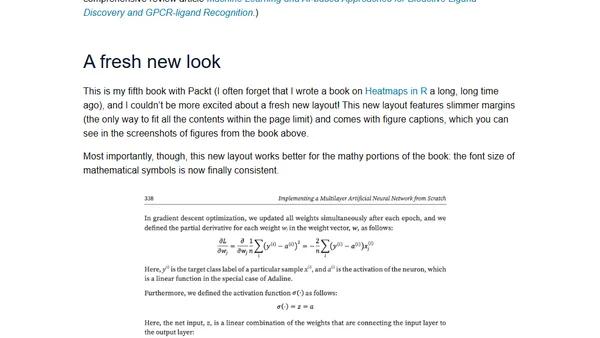
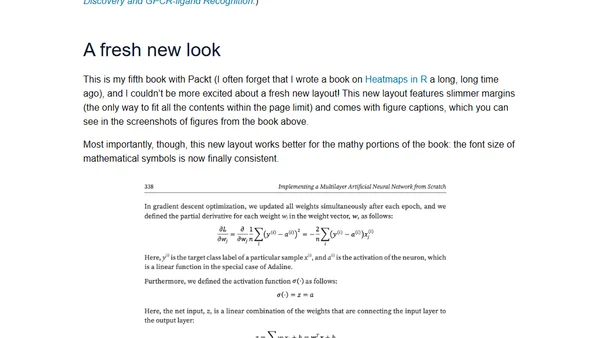
Author announces a new machine learning book covering scikit-learn, deep learning with PyTorch, neural networks, and reinforcement learning.
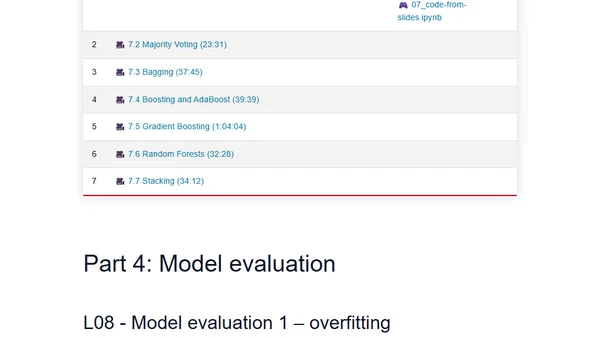
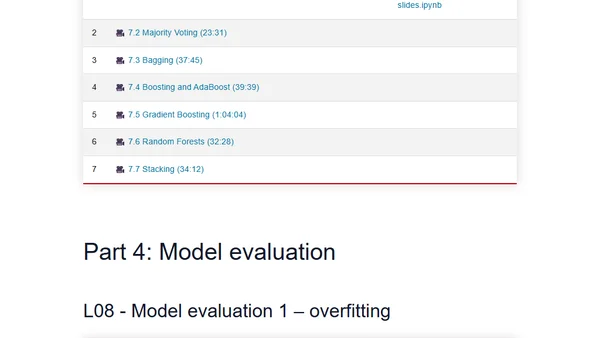
A comprehensive collection of 90 machine learning lecture videos covering Python, scikit-learn, algorithms, and model evaluation techniques.
Scikit-learn foundation seeks a community and partnerships developer to grow the open-source ecosystem and foster industry sponsorships.
Authors of scikit-learn receive a major scientific prize, highlighting a cultural shift towards recognizing open-source software as valuable academic contribution.
A researcher's 2018 highlights: using machine learning for cognitive brain mapping, analyzing non-curated data, and contributing to scikit-learn development.
Inria establishes a foundation to secure funding and support for the scikit-learn open-source machine learning library, enabling sustainable growth and development.
A report on recent scikit-learn sprints in Austin and Paris, highlighting new features, bug fixes, and progress toward the 0.20 release.
A summary of the 2017 Paris sprint for scikit-learn, highlighting participants, achievements, and support for the open-source machine learning library.
A former PhD scientist shares his positive transition to data science freelancing, detailing the freedom and variety of his new career.
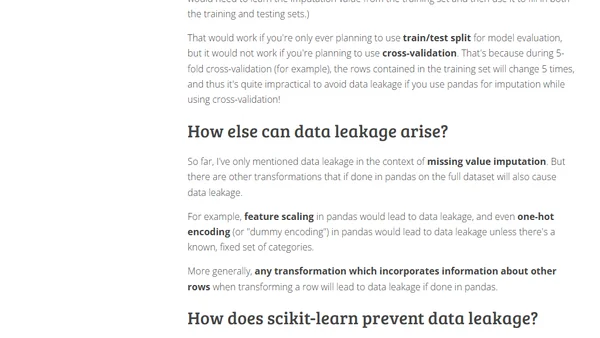
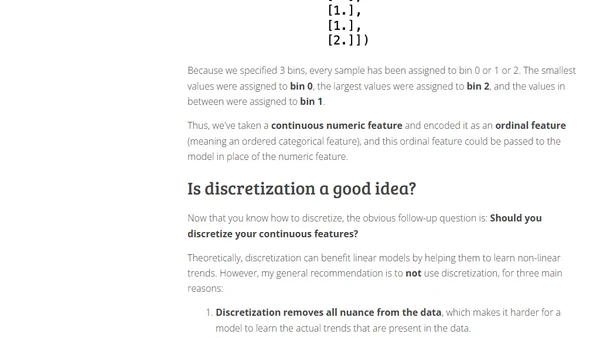
A tutorial explaining Principal Component Analysis (PCA), a dimensionality reduction technique used in machine learning and data analysis.
A guide to implementing a weighted majority rule ensemble classifier in scikit-learn to combine different ML models and improve prediction accuracy.
A developer shares their experience building a machine learning model to classify song moods (happy/sad) based on lyrics using Python and NLP.
A technical guide to Linear Discriminant Analysis (LDA) for dimensionality reduction and classification in machine learning, including a Python implementation.
A report on the 2014 scikit-learn developer sprint in Paris, covering participants, venues, achievements, and sponsors.
Highlights of the scikit-learn 0.15 release, including performance improvements, new features, and deprecations.