Size Matters
A developer discusses the importance of computer specs, criticizing cheap Windows machines with low RAM and advocating for better hardware.
A technical case study on A/B testing the instant.page prefetching library using Netlify's split testing and SpeedCurve for performance measurement.
Explains how to check if .NET Core GC verbose events are enabled on a live Linux server without using a debugger, by reading process memory.
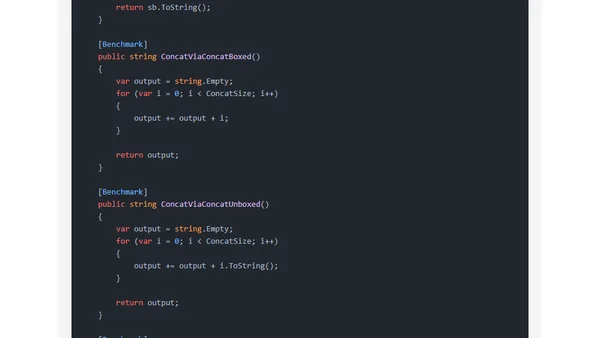
A list of critical C# performance pitfalls and code patterns to avoid, drawn from real-world production issues at Criteo.
Explains the Global VM Lock (GVL) in Ruby, its impact on concurrency and scaling, and how to optimize applications like Sidekiq and Puma.
Learn how to use Django Debug Toolbar to identify and fix slow database queries in your Django application views.
Explains when and why to use React's useCallback hook for performance optimization, debunking common overuse misconceptions.
Explains static site generators (SSGs), their benefits for speed and security, and contrasts them with dynamic websites.
Explains the limits of function inlining in Go, including the inlining budget and trade-offs between binary size and performance.
Explains .NET ThreadPool starvation, how synchronous waiting on async tasks causes it, and why queuing exacerbates the problem.
Analysis of how JavaScript frameworks impact website performance, referencing Tim Kadlec's detailed research on the topic.
How to handle slow Django views by offloading long-running tasks using Django Q for background processing.
Explains why client-side redirects are bad for performance and recommends using server-side redirects instead.
Explains how to efficiently parse a set of known strings in Elm by building a trie-like structure to avoid the performance pitfalls of Parser.oneOf.
Explains why LINQ Join is faster than nested loops or Select for merging data in C#, focusing on performance with large datasets.
Part 3 of a series on the Levenshtein Distance algorithm, focusing on advanced C#-specific performance optimizations for the inner calculation loop.
A step-by-step guide to analyzing .NET application start-up performance using PerfView and flamegraphs.
Explains that assigning large slices in Go is not more expensive than small ones, as all slices are the same size (three machine words).
A software engineer argues that effective performance optimization requires understanding system bottlenecks and applying a scientific, evidence-based approach.
Explains how to use browser Feature Policies like oversized-images and unoptimized-images to catch and prevent common web performance issues.