Reducing Tiled Maps to Optimized Collision Rectangles with Greedy Merging
Explains a greedy algorithm to convert dense tile-based collision maps into optimized axis-aligned rectangles for efficient runtime collision detection.
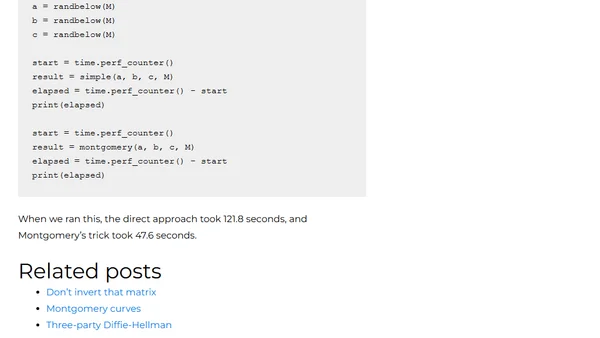
Explains Montgomery's trick for efficiently computing multiple modular inverses at once, with Python code examples and performance comparison.
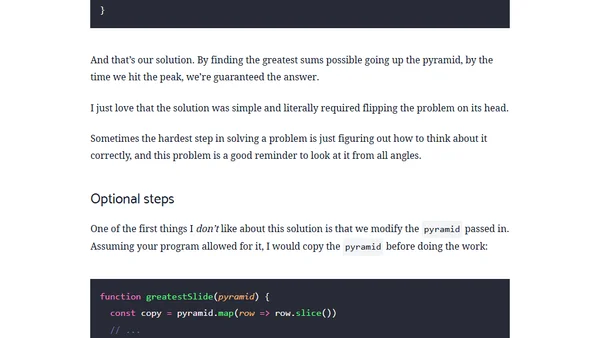
A walkthrough of solving the 'Pyramid Slide Down' coding problem using dynamic programming, starting from the bottom up.
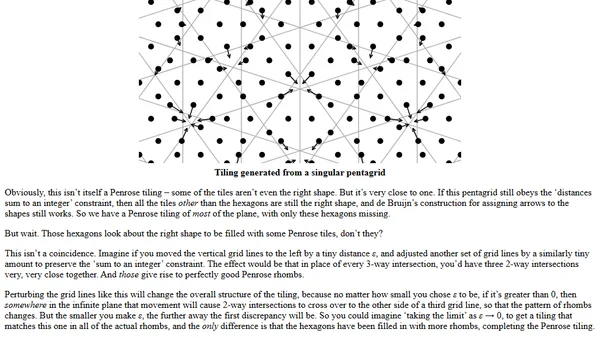
A technical follow-up article exploring advanced finite-state transducer algorithms for generating and analyzing complex aperiodic tilings like Penrose, hat, and Spectre patterns.
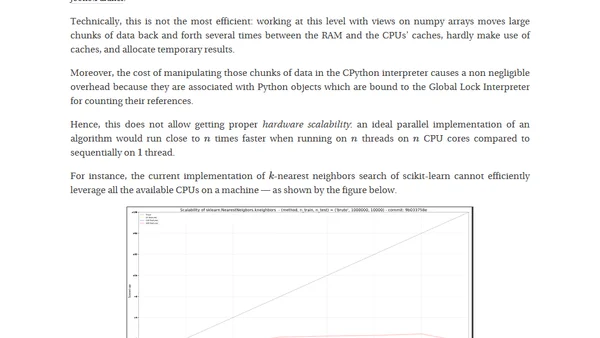
Analyzes performance bottlenecks in scikit-learn's k-nearest neighbors search and introduces a new implementation for better CPU scalability.
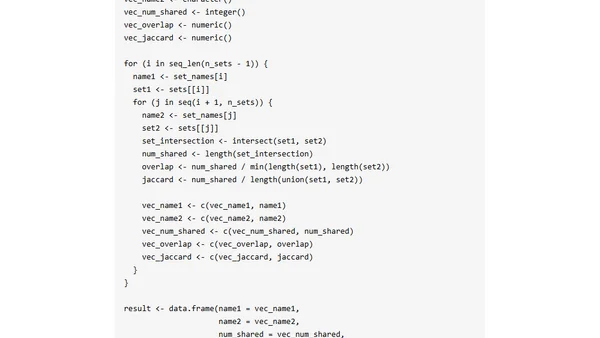
A guide to optimizing the speed of calculating pairwise overlaps for many sets, using a biological data analysis example and progressive brute-force improvements.
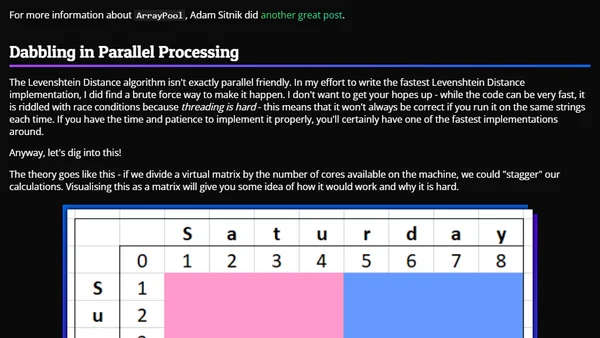
Part 3 of a series on the Levenshtein Distance algorithm, focusing on advanced C#-specific performance optimizations for the inner calculation loop.
Explains memory and performance optimizations for the Levenshtein Distance algorithm, building on a basic implementation.
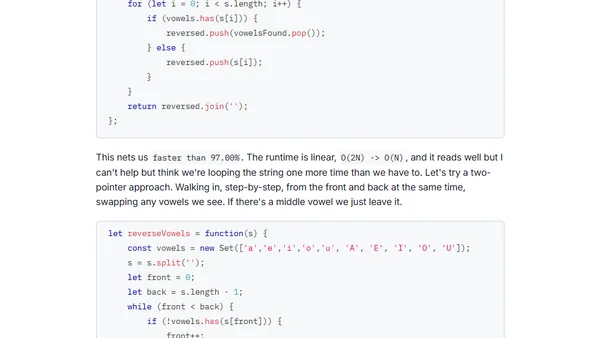
A guide to optimizing JavaScript solutions for coding puzzles, focusing on performance improvements from naive to high-speed implementations.
Explores implementing the Fibonacci sequence in Python using Haskell's lazy, functional style for elegance and efficiency.