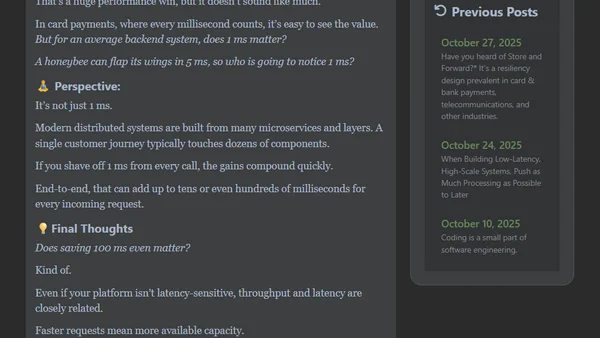
⚡️Does saving 1 millisecond really matter?* Answer: more than you’d think.
Explores the compounding impact of shaving milliseconds off microservice latency in distributed systems, affecting throughput and scalability.
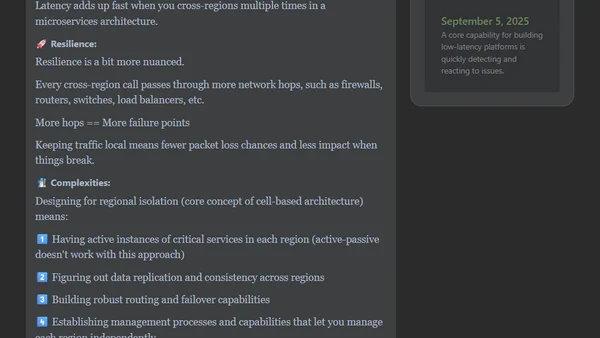
Explains how avoiding cross-region calls in microservices improves performance and resilience, and discusses the complexities of designing for regional isolation.
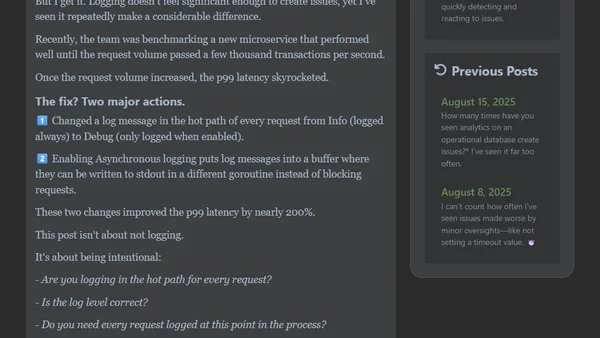
Explains how improper logging can severely impact microservice latency and offers solutions like adjusting log levels and using async logging.
A software engineer shares three highly effective production alerts for catching bugs and system issues, based on real-world experience.
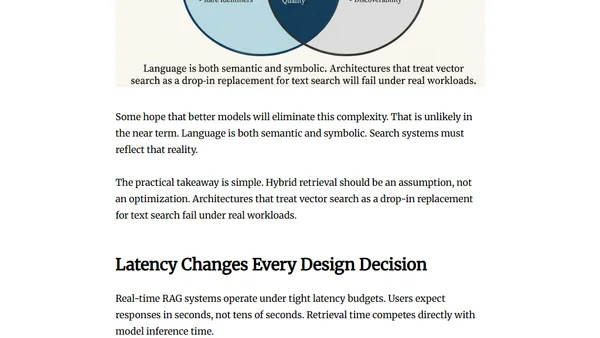
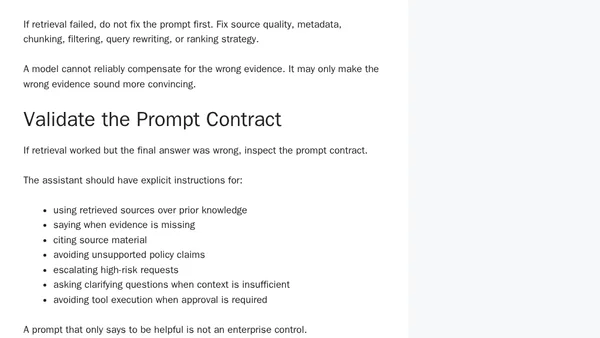
Argues that RAG system failures stem from data engineering issues like fragmented data and governance, not from model or vector database choices.
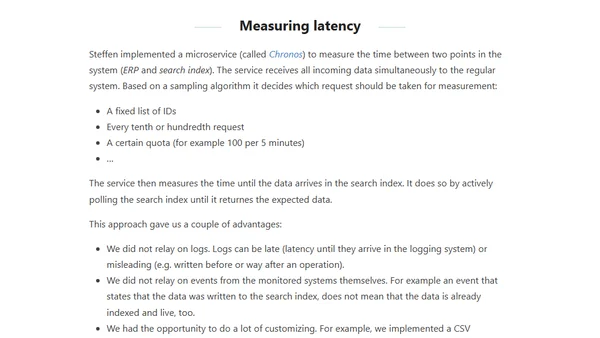
A case study on implementing a custom microservice (Chronos) to measure end-to-end latency in a microservice architecture.
Analyzes how server location and CDNs impact website speed using real latency data and access logs.
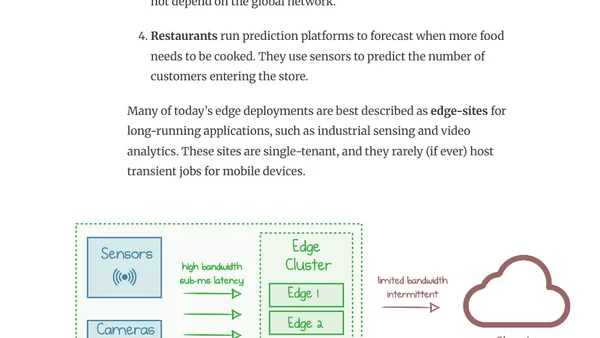
Explores the evolution of edge computing from its initial consumer-focused vision to its current industrial applications and challenges.
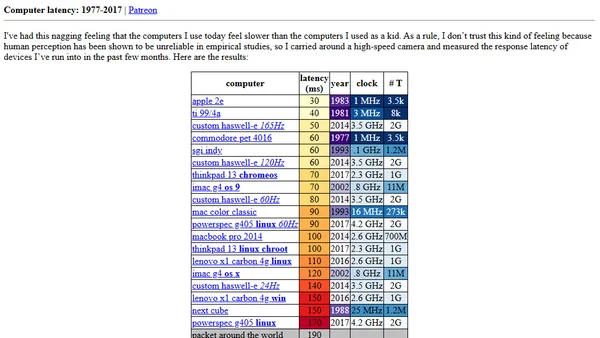
A technical analysis measuring computer latency from 1977-2017, finding that some modern machines are slower than 40-year-old computers.
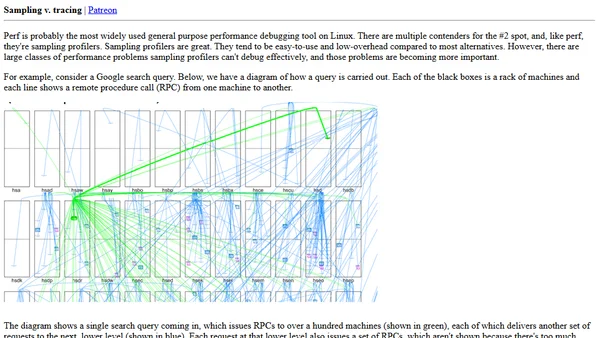
Explains why sampling profilers fail at debugging tail latency and introduces Google's event tracing framework as a solution.
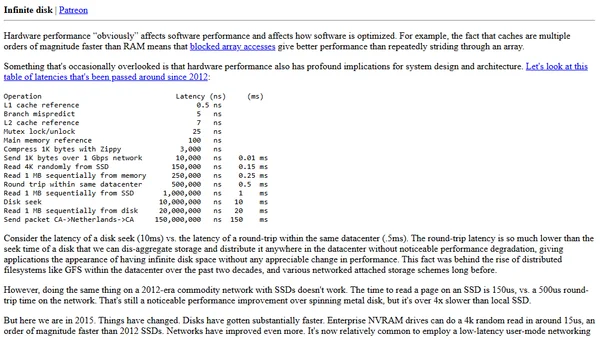
Explores how hardware latency, especially disk vs. network speeds, enables the concept of 'infinite' disaggregated storage in data centers.
Explores the challenge of measuring long-term success, using the Perry Preschool Study and Head Start program as examples of initial vs. lasting outcomes.
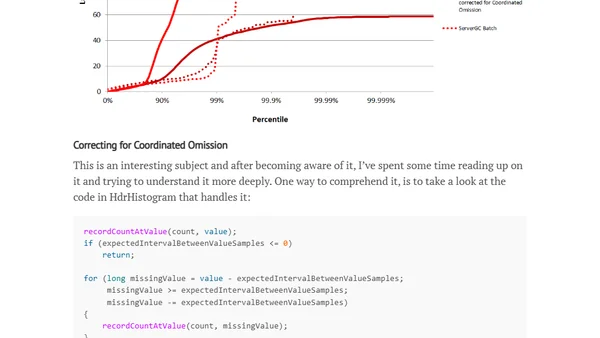
An update on measuring .NET GC performance, correcting methodology and interpreting results with expert feedback.
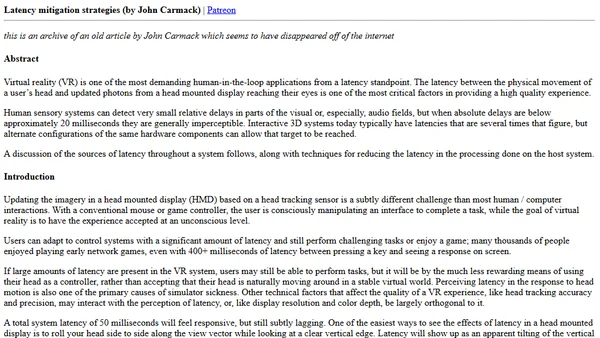
John Carmack's archived article on reducing latency in virtual reality systems to improve user experience and prevent simulator sickness.
A guide to optimizing web performance by reducing request latency, streamlining responses, and leveraging modern infrastructure to handle traffic efficiently.
Explains the eight common but false assumptions developers make when building distributed systems, leading to major issues.