SQL Server Monitoring Is Not Diagnosis: Why Context Matters
Explains why SQL Server monitoring alone isn't diagnosis and how context is crucial for interpreting performance signals.
Explains why SQL Server monitoring alerts alone are insufficient for stability, emphasizing interpretation and context.
A critique of European cloud providers' mindset and support failures, using a personal server outage story to highlight systemic issues.
Explains why password resets alone fail in Active Directory environments due to cached hashes, Kerberos tickets, and hybrid sync gaps.
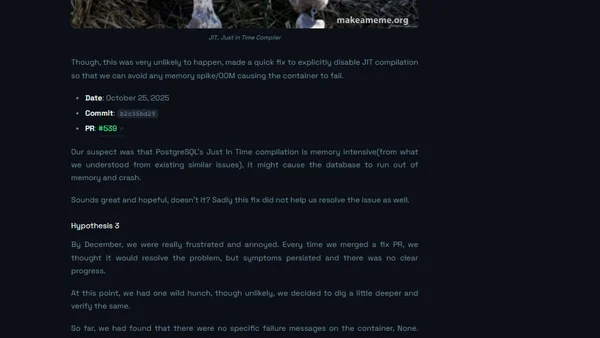
A developer recounts debugging a PostgreSQL container stability issue that turned out to be a hidden security vulnerability, sharing lessons learned.
A pragmatic take on Friday deploy freezes, arguing they are a necessary hack for teams without strong observability, not a moral virtue.
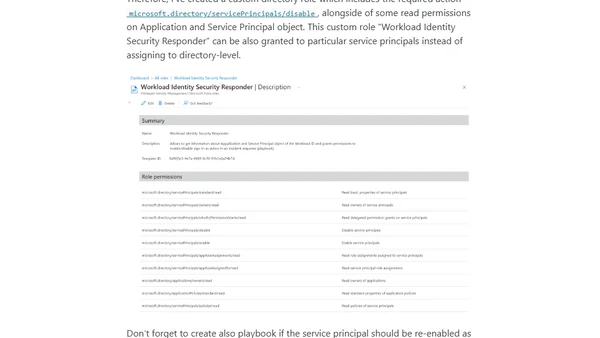
Explains how to use Microsoft Sentinel playbooks and Conditional Access to respond to security incidents involving compromised Microsoft Entra Workload Identities.
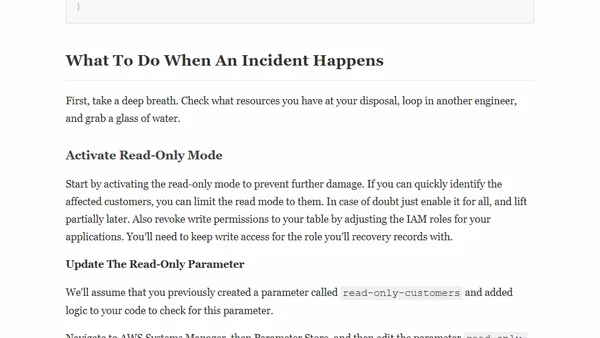
Guide to partially recovering corrupted or deleted data in AWS DynamoDB using Point In Time Recovery (PITR) without a full table restore.
A software engineer shares practical advice for managing stress and handling on-call production support incidents effectively.
A framework for categorizing security engineering work into four key buckets: prevention, detection, damage reduction, and work generation.
An IT professional argues that technology is often wrongly blamed for human errors, using real-world examples from workplace incidents.