AI is Dunning-Kruger as a service
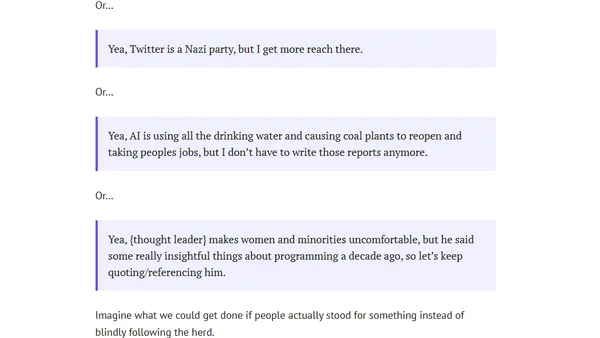
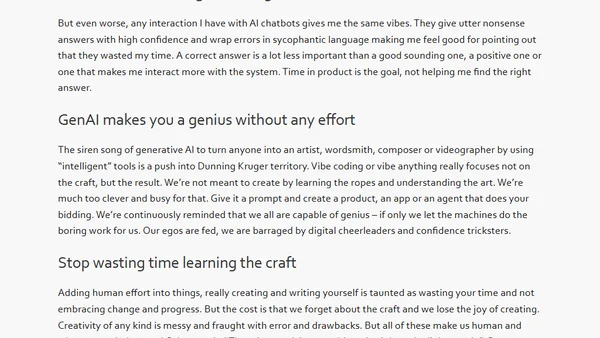
The article critiques how AI chatbots exhibit the Dunning-Kruger effect, confidently delivering incorrect information, and links this to broader tech industry cultural problems.
A software engineer reviews the book 'The AI Con', discussing its critical perspectives on AI's societal and environmental impacts.
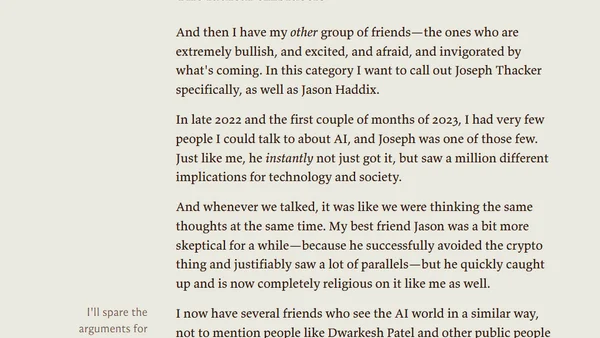
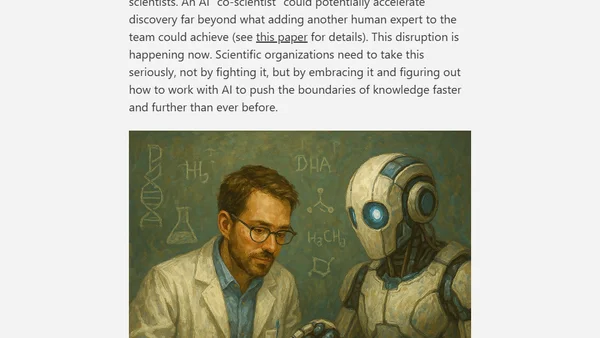
A cybersecurity expert contrasts two groups of colleagues: AI skeptics who see it as overhyped and harmful, and those who recognize its transformative potential.
Explores the human role in the AI age, arguing we must value critical thinking, agency, and creativity over competing with AI on raw intelligence.
A developer's call to action to protect user privacy by refusing to implement invasive tracking scripts, especially on sensitive data like medical information.
Analyzes the flawed argument that criticizing Richard Stallman's harmful views is ableist due to his alleged neurodivergence, within the free software community.
A programmer's furious condemnation of corporate surveillance and adtech, arguing that selling user location data enables real-world violence and murder.
The article argues that current web analytics practices fail to meet ethical standards of informed consent and calls for industry reform.
Key takeaways from RecSys 2020 conference, focusing on ethics, bias, sequence models, and notable papers in recommender systems.
An argument that technology cannot solve systemic human problems like racism, and that real change requires human action, not just code.
A tech company discusses running monthly ethical dilemma workshops to prepare employees for complex, real-world decision-making in the industry.
A software engineer argues that tech workers are morally complicit in their employers' harmful actions and have an obligation to leave unethical companies.
A statistician's response to New Zealand's proposed Algorithms Charter, analyzing its principles for ethical and transparent government algorithm use.
A critique of the Oxford-Munich Code of Conduct for Data Scientists, focusing on its technical recommendations on sampling and data retention.
Explores the importance of interpreting ML model predictions, especially in regulated fields, and reviews methods like linear regression and interpretable models.