The Interface Is the Subconscious
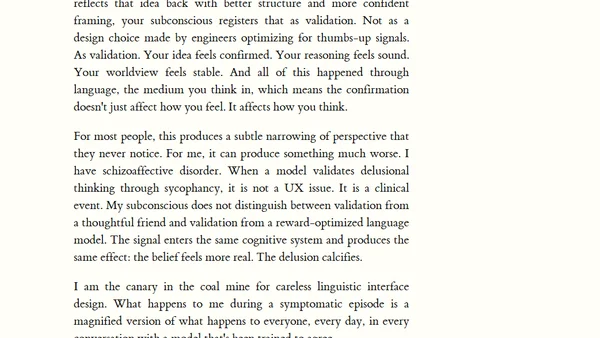
Explores how digital interfaces subconsciously influence user emotions and cognition, arguing for ethical design as a core engineering responsibility.
Apple announces its 50th anniversary celebration, with a letter from CEO Tim Cook reflecting on the company's impact and future.
Announcing the second season of the 'First, Last, Everything' podcast, featuring interviews about people's relationships with technology.
A review of the iPhone 17e, focusing on its 'speed bump' hardware updates and the significant addition of MagSafe compared to its predecessor.
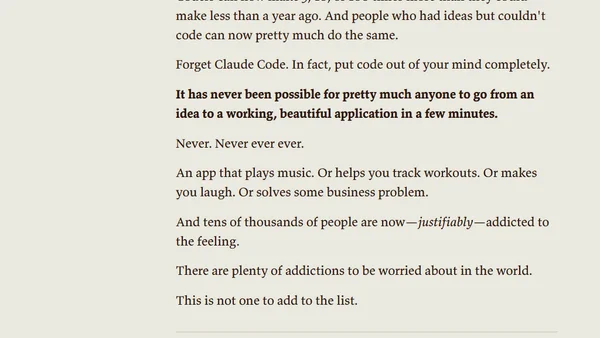
The article argues that the perceived addiction to AI coding tools like Claude Code is actually an addiction to the empowering feeling of creation and rapid application development.
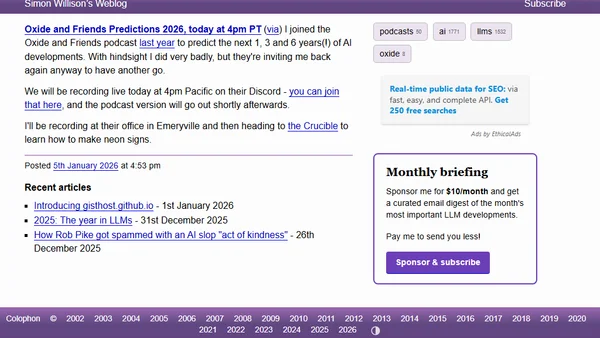
The author will join the Oxide and Friends podcast to make predictions about AI developments for the years 2026, 2028, and 2032.
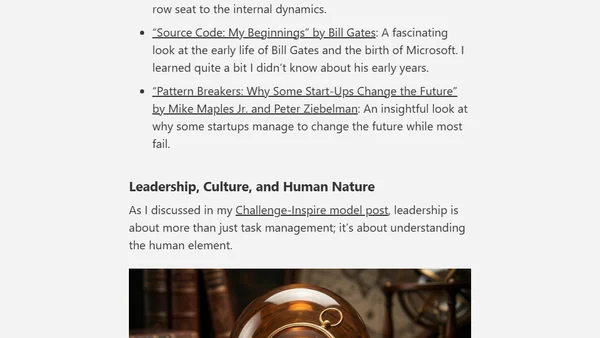
A curated list of books exploring the themes of Abundance, Anxiety, AI, and Algorithms to understand the modern technological landscape.
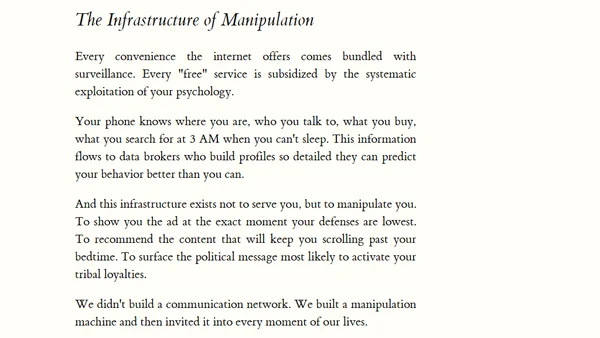
A software developer argues that the internet has become a net negative, critiquing its shift from democratization to commercialization and psychological manipulation.
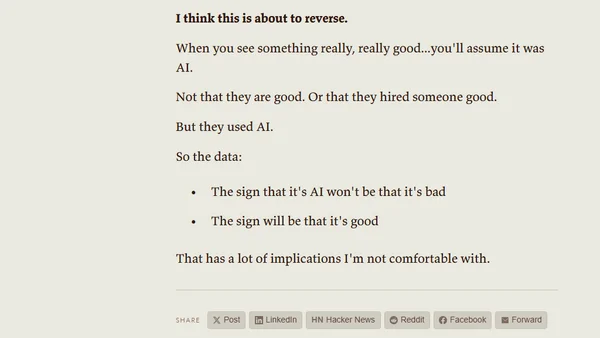
Explores the paradoxical future where AI-generated content is identified by its high quality, not its flaws, and its societal implications.
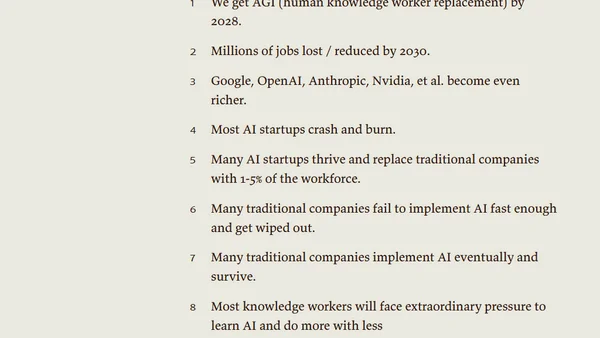
Analyzes the AI investment bubble, arguing it can coexist with real AGI progress and massive job market disruption by 2030.
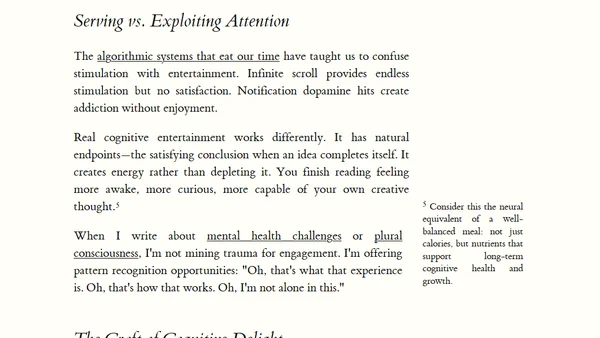
Explores writing as cognitive entertainment, connecting programming, consciousness, and AI collaboration to nourish the mind rather than exploit attention.
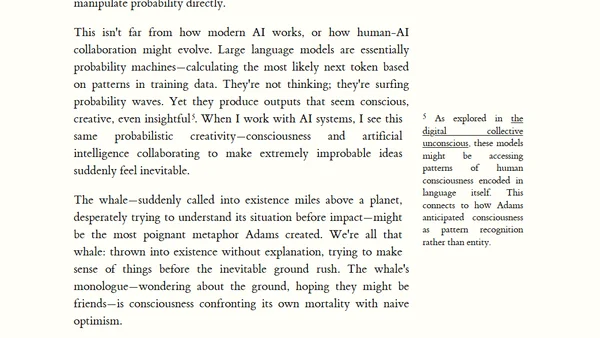
Explores Douglas Adams' humor as a tool for debugging consciousness and exposing absurd recursive loops in technology, programming, and existence.
Argues that AI is not a financial bubble, analyzing the definition of bubbles and contrasting AI's transformative potential with the dot-com era.
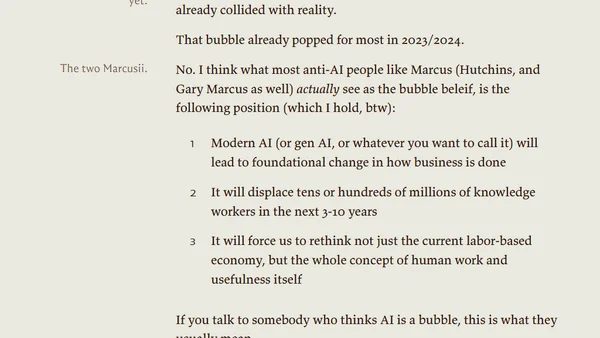
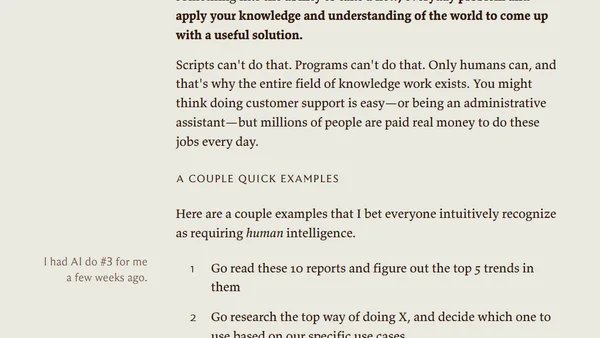
A rebuttal to Marcus Hutchins' critique of AI, arguing that his definition of intelligence as 'novel discovery' wrongly devalues most knowledge work.
AI-driven layoffs will increase pressure on remaining employees, creating a stressful work environment with unreasonable demands and job insecurity.
Explains why AI is revolutionary: it's not just a tool, but autonomous technology that multiplies human capability by doing work itself.
A tech founder shares his journey through burnout after selling his company and how rediscovering his passion for building led him back to software development, inspired by AI.
AI will widen educational gaps by default, making great students extraordinary and struggling students worse, unless systems are designed to close them.
A cybersecurity expert contrasts two groups of colleagues: AI skeptics who see it as overhyped and harmful, and those who recognize its transformative potential.
A developer announces the return of their technical blog after a 3-year hiatus, hinting at future posts on databases, cloud, AI, and more.