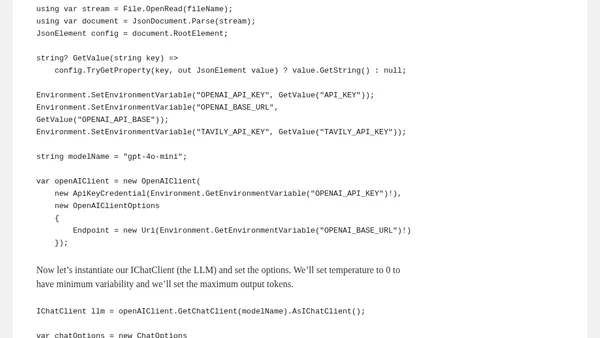
Migrating Agentic Code Python -> C# Part 6 (final)
Final part of migrating agentic code from Python to C# using Microsoft Agent Framework, implementing workflow executors.

Jesse Liberty discusses AI in an interview on .NET Live, sharing his extensive tech experience.
A curated roundup of IT/tech links including AI, .NET, Blazor, web development, Windows, and DevOps news for June 22, 2026.
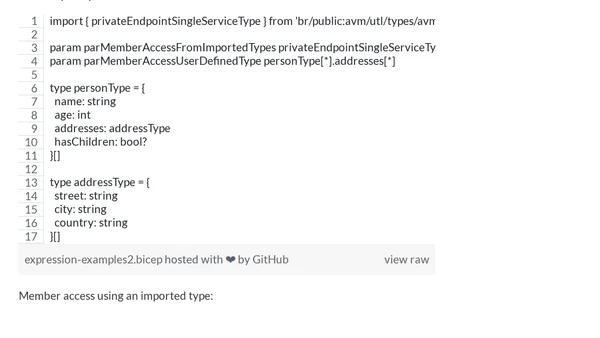
Explains Azure Bicep resource-derived types, member access with [*] syntax, and strongly typed parameters.
A web developer shares CSS techniques and lessons learned while designing the FFConf 2026 site, including vertical text, polygons, and contrast handling.
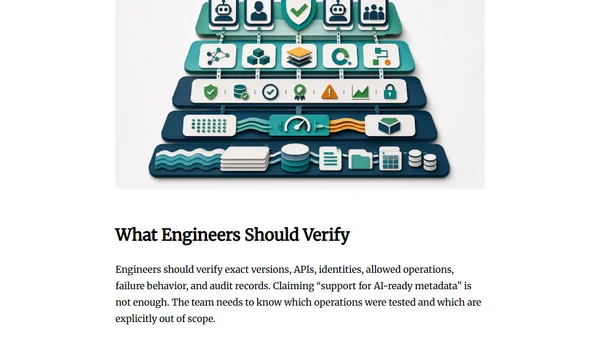
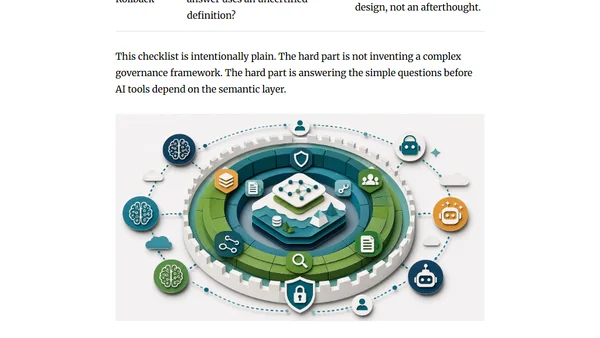
Explains how AI-ready metadata prevents query failures by making ownership, freshness, lineage, quality, and policy visible at execution time for LLM-driven analytics.
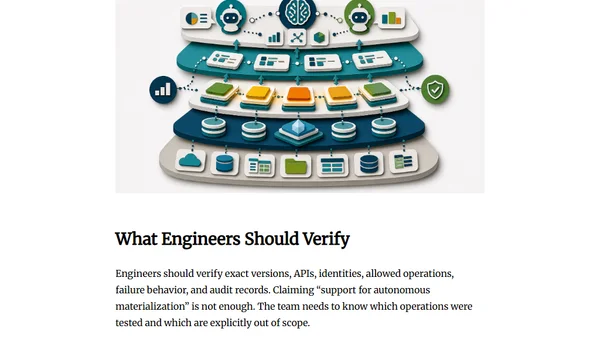
Explores autonomous materialization for agentic analytics, focusing on performance, governance, and lifecycle management in data platforms.
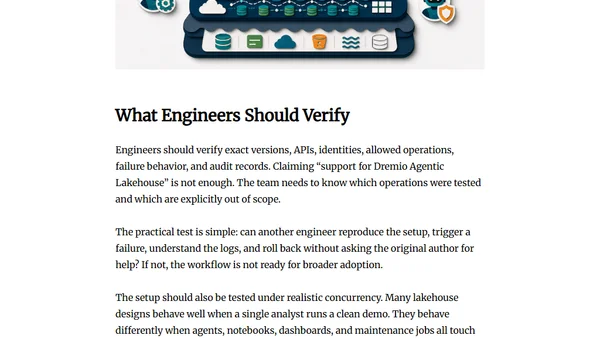
Explores the Dremio Agentic Lakehouse concept: data built for AI agents and platform management automated by agents, with architecture patterns and production considerations.
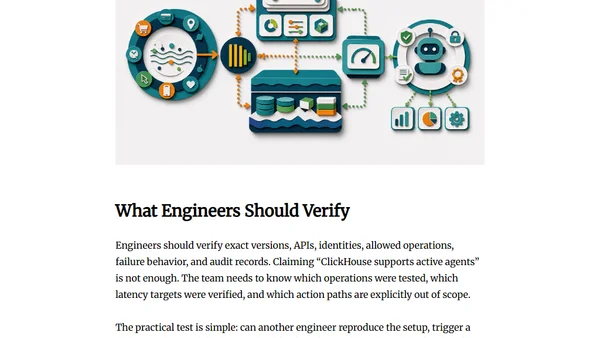
Explores using ClickHouse for low-latency analytical loops in active agent systems, emphasizing validation, safety, and architecture patterns.
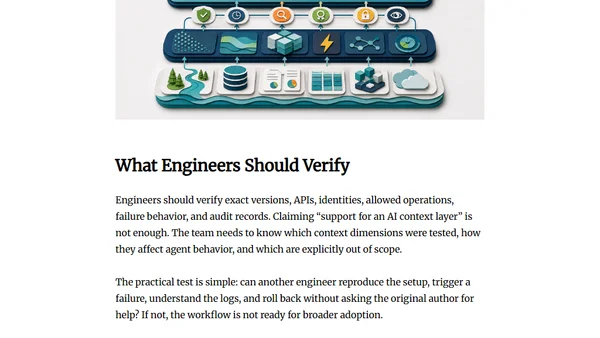
Explains why AI agents need a context layer with lineage, quality, freshness, and ownership for reliable analytics.
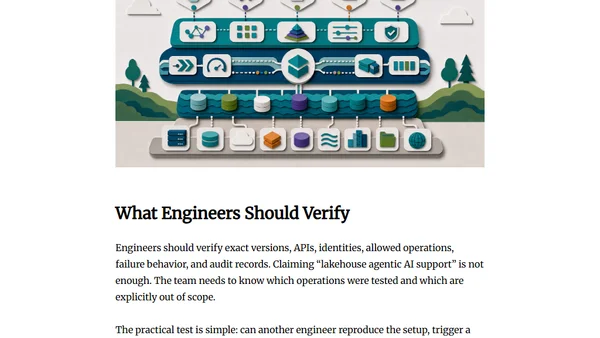
Explores how lakehouses serve as an operating layer for agentic AI, focusing on governed data access, cost controls, and production reliability.
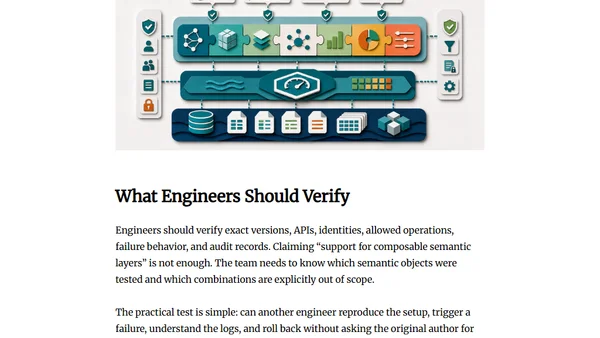
Explains why composable semantic layers are essential for AI agents to perform reliable multi-step analytical queries in production.
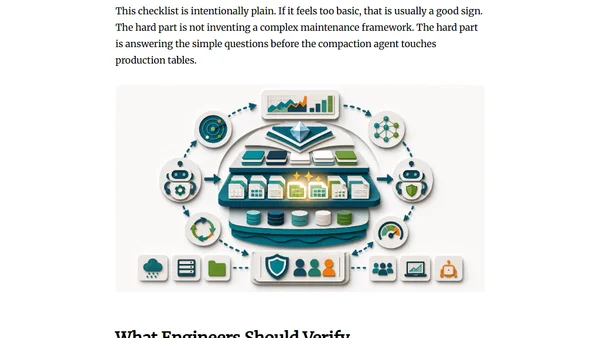
Explores event-driven table compaction using agents in lakehouse architectures, focusing on small file problems and production patterns.
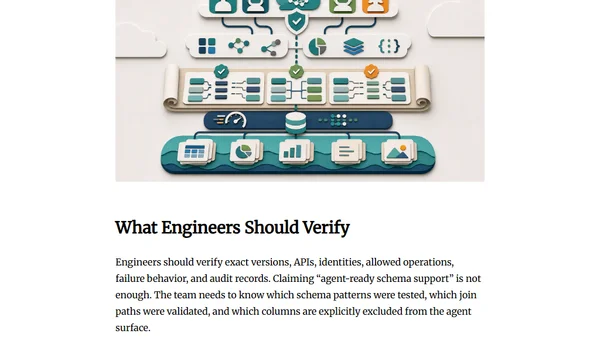
Explores how schema contracts, semantic models, and governed lakehouse design improve Microsoft Fabric agentic analytics and AI behavior.
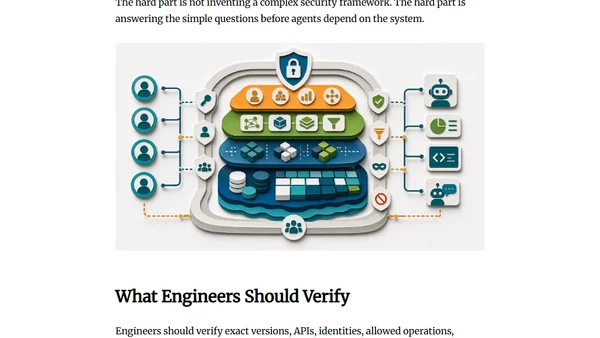
Article on fine-grained security for AI agents, focusing on identity, masking, and policy enforcement in machine-speed analytics.
Analysis of Apache Iceberg v4 performance focusing on metadata round trips, root manifests, and object storage latency for platform engineers.
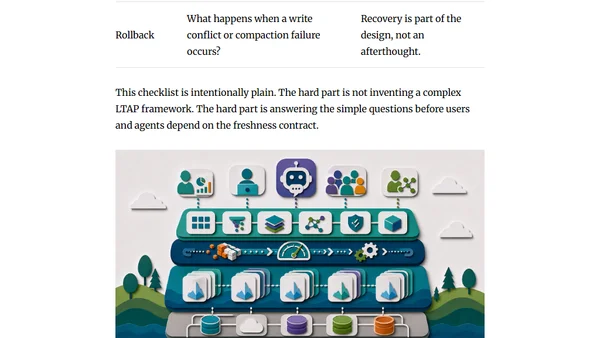
Analysis of LTAP (Lakehouse Transactional Analytical Processing) focusing on freshness, isolation, and workload boundaries for data architects.
Analysis of how enterprise AI value comes from governed context and data contracts, not just model choice.
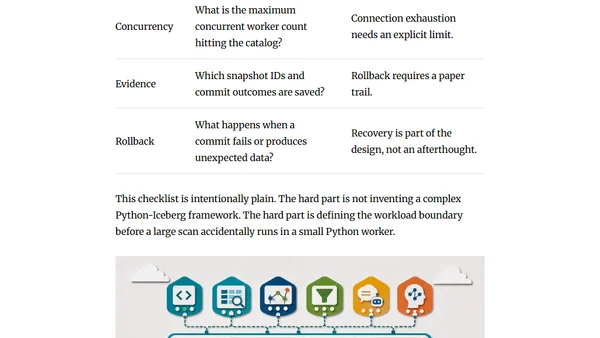
Explores using PyIceberg without Apache Spark for Python-based Iceberg table operations, focusing on architecture, boundaries, and production patterns.
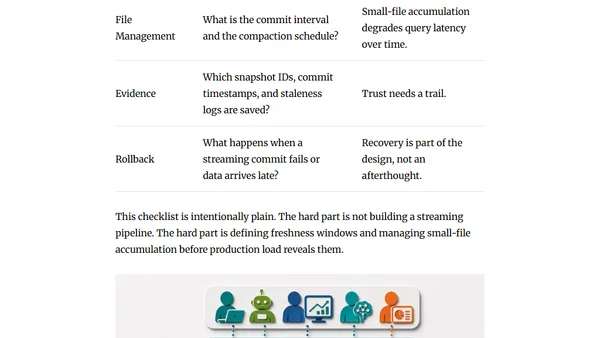
Explores the real-time lakehouse architecture, focusing on streaming, Iceberg snapshots, and the dual clocks of event arrival and query visibility.