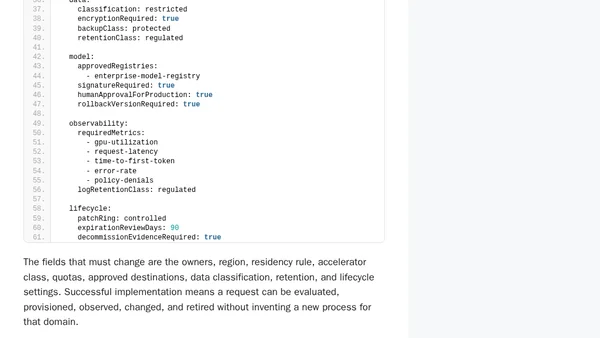
The VCF AI Multiverse: One Private Cloud Foundation for Many Enterprise AI Domains
Explores using VMware Cloud Foundation as a shared private cloud for multiple enterprise AI domains, balancing common infrastructure with domain-specific governance.
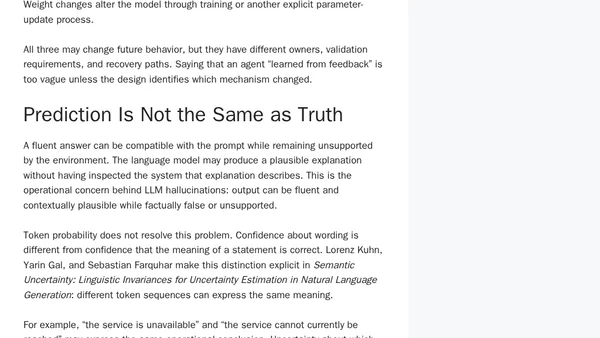
Explores Bayesian inference and predictive processing in AI, clarifying how evidence updates probabilities and why LLMs need architectural separation for trustworthy enterprise workflows.
Enterprise AI is a distributed system requiring hybrid cloud and edge architecture, not a single platform.
Analysis of strategic differences between OpenAI and Anthropic, focusing on consumer personal agents vs enterprise operations.
A scorecard with 12 questions for CEOs and boards to assess AI readiness before scaling enterprise AI initiatives, focusing on governance, value, and risk control.
This article discusses how CIOs should redesign IT operating models for AI-augmented work, emphasizing centralized control with federated business ownership and clear accountability boundaries.
Explores how enterprise AI context windows need explicit memory, reset, and retrieval boundaries to prevent drift and errors.
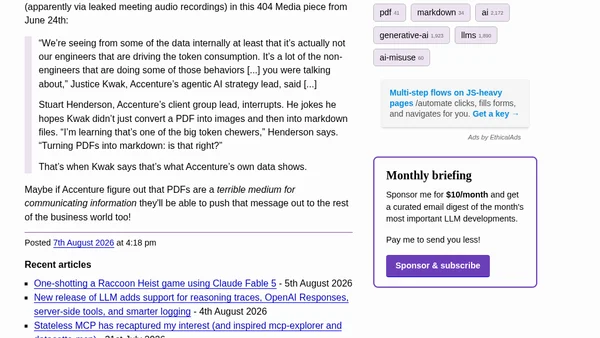
Companies are scrambling to reduce AI token costs, with Accenture revealing non-engineers drive consumption, notably converting PDFs to markdown.
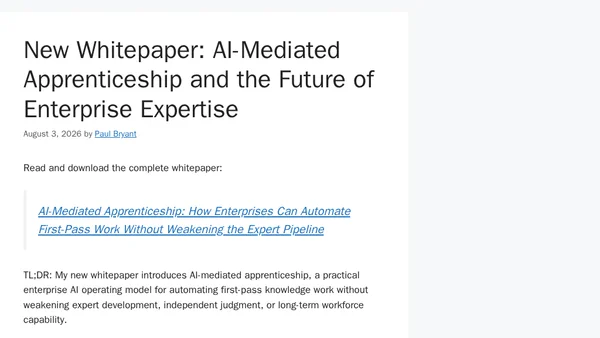
A whitepaper on AI-mediated apprenticeship, an enterprise AI operating model for automating knowledge work while preserving expert development and independent judgment.
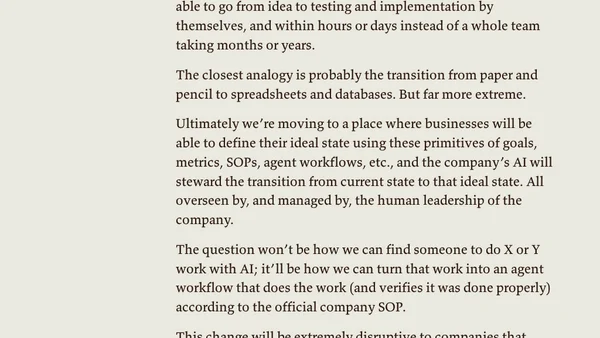
Explores how AI will restructure companies into AI-native entities with agentic workflows, SOPs, and transparent operations.
A decision framework for IT teams to identify enterprise RAG use cases that survive production, focusing on governed, narrow applications over broad chatbots.
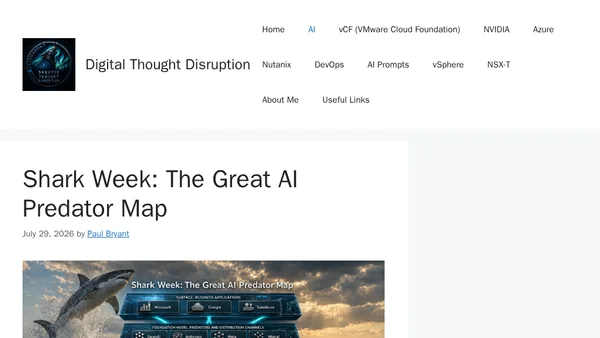
An architectural analysis of the enterprise AI market, mapping how major tech companies compete for control points across workflows, models, infrastructure, and silicon.
Analysis of the enterprise AI ecosystem as a food chain, examining which vendors control key layers and capture value.
Explores the emergent failure mode where multiple autonomous AI agents compete for shared resources, causing system-wide issues.
A decision framework for choosing between deterministic workflows, single agents, and multi-agent systems in enterprise AI architecture.
Explains AgentOps as the new Day-2 operations discipline for managing AI agents in production, covering lifecycle, observability, governance, and incident response.
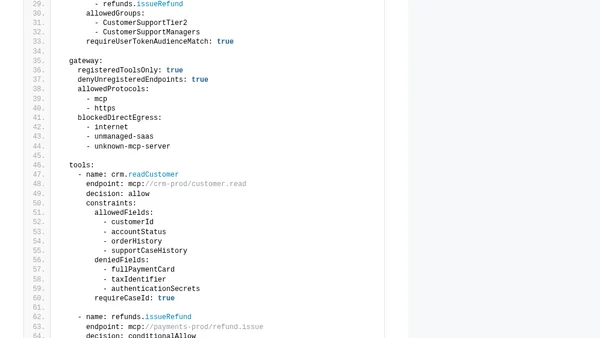
Explains why enterprise AI agents need a control plane with identity, policy, and observability beyond just prompts.
Explores the critical security boundaries for AI agents in enterprise environments, defining what actions agents must never be allowed to perform autonomously.
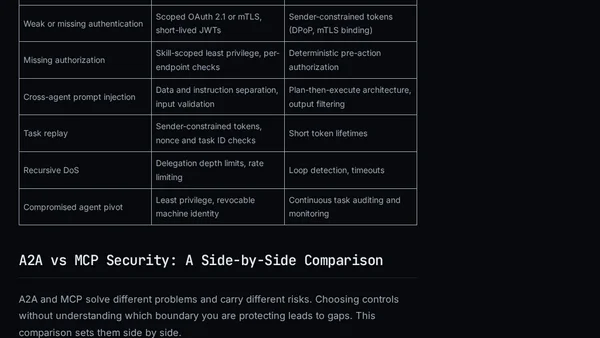
A guide on securing agent-to-agent (A2A) communication in multi-agent AI systems, covering risks, authentication, and practical controls.
Explains the importance of defining orchestration boundaries in enterprise LLM applications, focusing on architecture decisions over framework choices.