Introducing Guess.js - a toolkit for enabling data-driven user-experiences on the Web
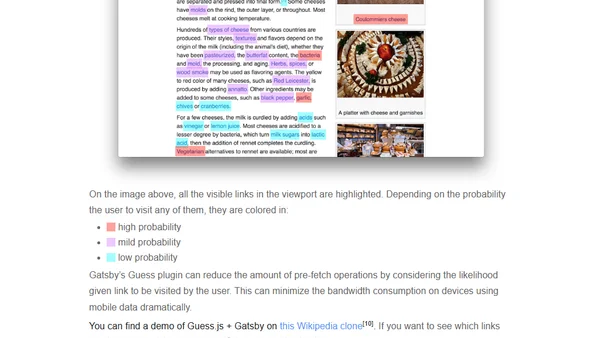
Introducing Guess.js, a toolkit for data-driven user experiences on the web, including predictive pre-fetching and smarter JavaScript bundling.
Summary of a Perfmatters talk on improving mobile web performance at Etsy through techniques like lazy loading and CSS optimization.
Notes from a Pinterest performance team talk on building a dedicated team, custom metrics, regression fighting, and optimization strategies.
Revisits the 'compressive images' technique for responsive web design, analyzing its modern relevance, performance trade-offs, and memory impact.
An analysis of Google AMP's performance, examining its speed in search results, as a standalone framework, and compared to canonical pages.
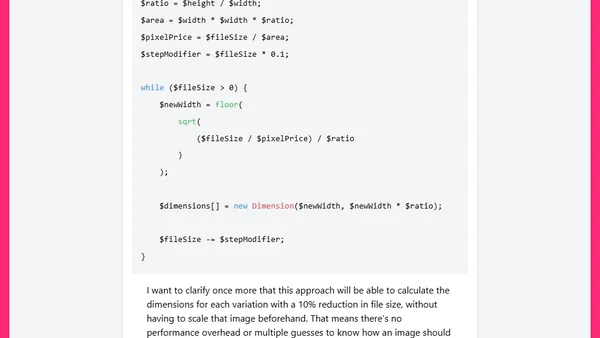
A guide to implementing responsive images for web performance, covering mindset, techniques, and calculations for optimal image delivery.
A critical analysis of Google's AMP project, focusing on its incentives, performance promises, and the recent AMP Stories announcement.
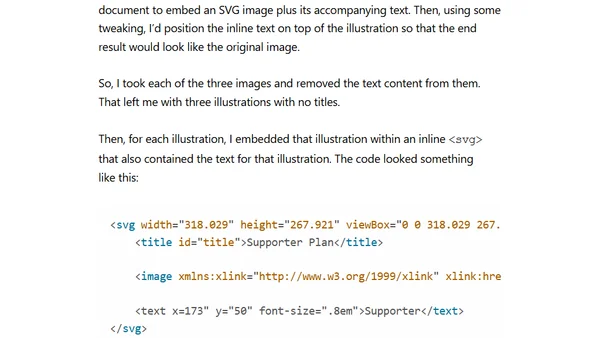
A case study on optimizing complex SVG illustrations for performance and accessibility by using inline SVG techniques.
The author shares their favorite books of 2017, focusing on design systems, web performance, and user experience.
Discusses the challenges of achieving 120fps on the web, analyzing performance bottlenecks and best practices for smooth animations.
A guide to web performance fundamentals, covering mindset, HTML rendering, and practical optimization techniques for developers.
A critical analysis of Google AMP, focusing on its SEO incentives and impact on web performance and publisher adoption.
The author discusses their experience being interviewed on the Perfbytes podcast about the Visually Complete metric at a performance conference.
A developer discusses implementing the responsive images spec in Stitcher, focusing on challenges of image downscaling and integration.
Explains why GIFs are slow on the web and offers two solutions: replacing them with HTML5 video or using lossy compression tools.
The article explores how modern web bloat, like heavy CSS and JavaScript, makes websites unusable for people with slow, dialup-like internet connections.
A developer shares his journey advocating for and witnessing the launch of Speed Index and Visually Complete metrics in Dynatrace's products.
A guide to optimizing CSS image sprites for better web performance, covering file separation, PNG8, UTF-8 icons, and memory management.
Explains the six stages of the browser's Critical Rendering Path (CRP) and how understanding it is key to improving website performance.
Analyzes how modern JavaScript frameworks like Preact handle component prioritization during boot, questioning if they optimize for key web performance metrics.