Split Array into `n` number of chunks
A developer explains how to split an array into chunks to parallelize tasks, using a JavaScript function to improve performance in web scraping.
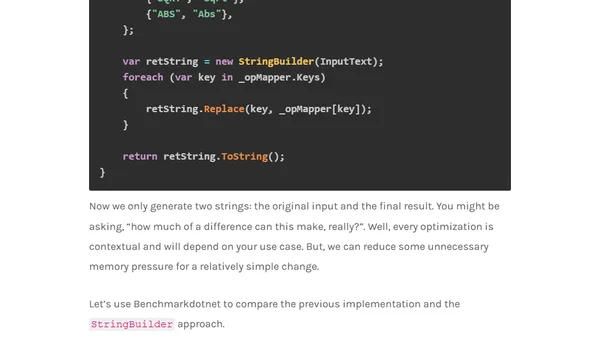
Introduces a new open-source Roslyn analyzer library for .NET that helps developers identify performance issues with System.Collections and LINQ usage.
Explains how to use NgRx for data prefetching to improve perceived performance and user experience in Angular applications.
Analysis of key trends shaping cloud adoption, including performance optimization, app portability, and the skills shortage.
A design proposal to improve performance of tensor-product dimension handling in QuTiP's Qobj by restructuring internal data and parsing.
Analyzes if car manufacturers optimize vehicles for specific crash tests by examining results from new, unpracticed IIHS safety tests.
Explores a predictive strategy to eliminate cold starts in serverless functions by pre-warming instances based on invocation patterns.
Explores how the 'Age' HTTP header from CDNs like Netlify can interfere with link prefetching tools such as Instant.Page, impacting perceived performance gains.
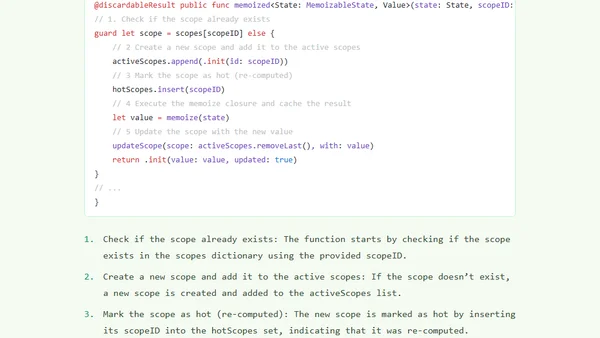
Explains memoization, a programming technique that caches function results to improve performance by trading space for time.
A guide on using React's memo API to optimize component rendering and prevent unnecessary re-renders in React applications.
Explores the concept and implementation of multilayer caching in .NET applications, discussing performance trade-offs and strategies.
A developer shares how to use Go's tracing tools and custom instrumentation to debug and improve CPU core utilization in parallelized workloads.
A developer uses a new Shopify Liquid profiler to identify and fix a major performance bottleneck causing slow page rendering times.
Explains how to use Monte Carlo analysis for product development, using TweetDeck screen capacity as a practical example.
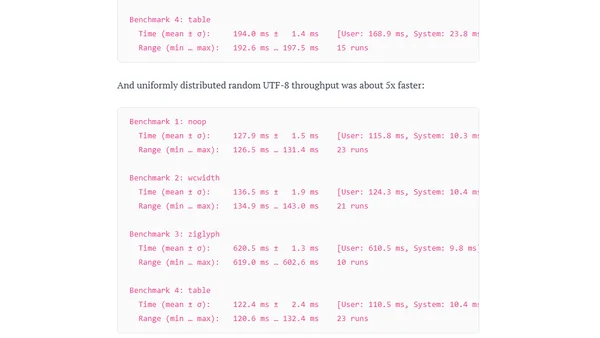
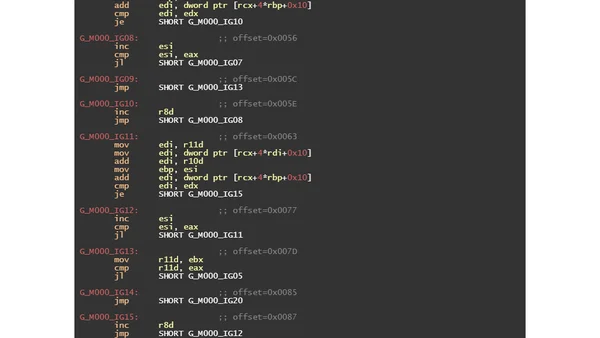
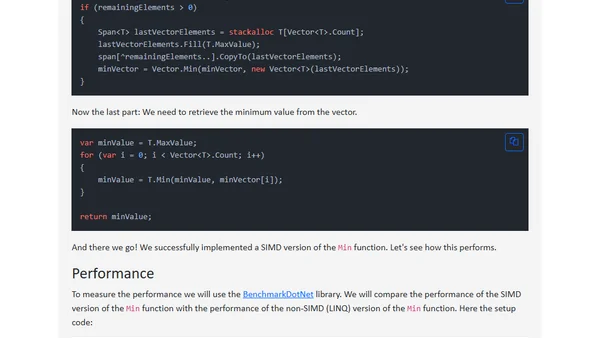
Explores using SIMD (Single Instruction, Multiple Data) CPU instructions to optimize the Levenshtein Distance string comparison algorithm.
A guide on using React's Profiler API to monitor and track component render performance in production applications.
A technical case study on improving WebXR VR performance by moving a Three.js app's physics calculations off the main thread.
A tutorial on implementing simple in-memory caching in .NET Core using the IMemoryCache interface to improve application performance.
Announcing a major performance update for MyNatsClient, a .NET client for NATS, achieving a 60% speed increase and reduced resource usage.
Explains why premature optimization in programming is inefficient, using the Pareto Principle and power laws to argue for data-driven performance improvements.