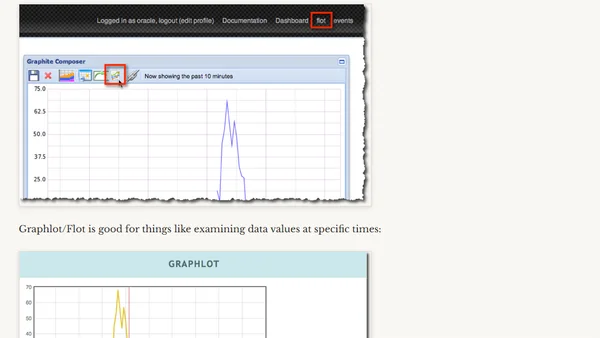
Visualising OBIEE DMS Metrics over the years
A history of visualizing OBIEE DMS metrics, from early JMX tools to modern Grafana dashboards.
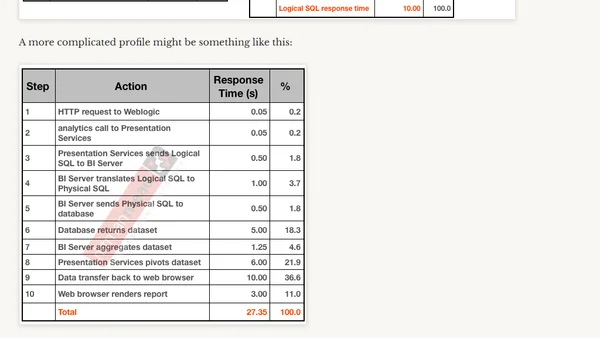
Explains the importance of metrics for diagnosing OBIEE performance issues and introduces an updated monitoring tool.
A presentation explaining the 'Speed Index' web performance metric, including a video and slides from a conference talk.
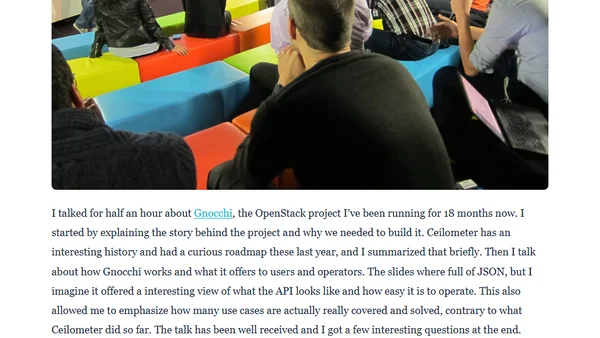
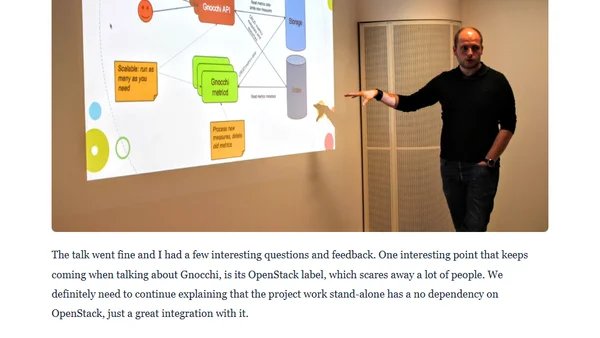
A developer presents Gnocchi, an OpenStack metrics project, at a Paris meetup, explaining its purpose, functionality, and advantages over Ceilometer.
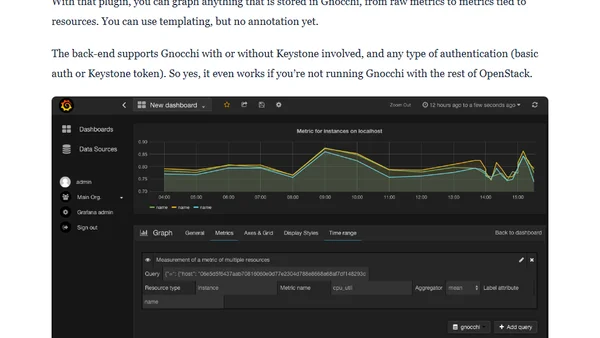
Announcing a Grafana plugin for Gnocchi, enabling visualization of metrics from the OpenStack-compatible time-series database.
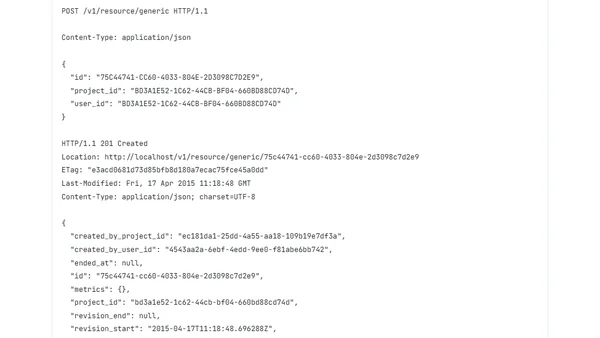
Announcing Gnocchi 1.0, a scalable time-series database for storing cloud infrastructure metrics and resources via a REST API.
A guide to moving beyond basic grep for Python application monitoring, covering error logging with Sentry and metrics collection with tools like Prometheus.
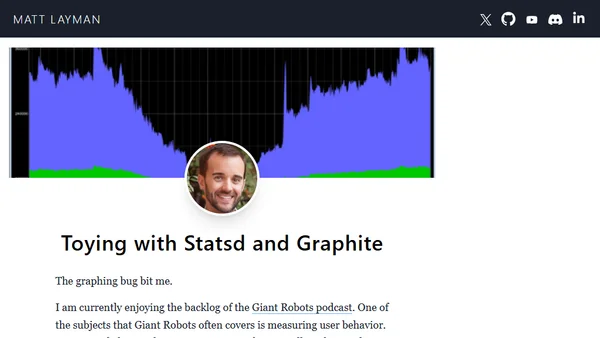
A guide to setting up and testing Statsd and Graphite for custom application metrics and data visualization.
Explores the human side of DevOps, emphasizing culture, collaboration, and emotional intelligence as key pillars for breaking down silos and achieving continuous delivery.
Explores different metrics for web performance budgets, comparing milestone timings, SpeedIndex, quantity-based, and rule-based approaches.
A technical guide on visualizing OBIEE DMS performance metrics using Graphite for monitoring and dashboard creation.
Explains how to access and gather CPU, memory, I/O, and network usage metrics from Linux control groups (cgroups) for LXC and Docker containers.
Part VI of an OBIEE performance series focusing on analyzing test results, avoiding averages, and using percentiles for accurate diagnosis.
A beginner's guide to attribution modeling for web products, explaining how to give credit to marketing channels for conversions.
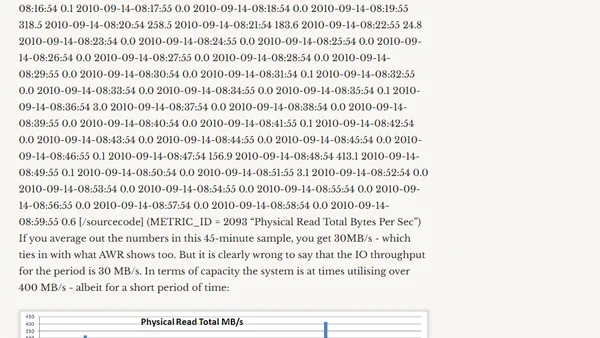
Explains why average I/O throughput metrics from AWR snapshots can be misleading for capacity planning, using real database examples.
Discusses the shift from chasing website visitor numbers to focusing on deeper user engagement and content contribution in a saturated web.