Microsoft AI in 2025: My Top 60 Announcements (Chronological) 📅
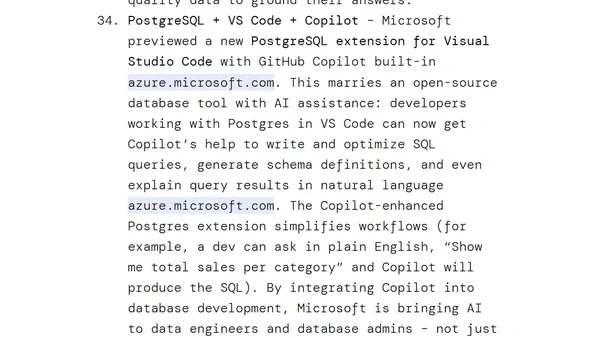
A chronological summary of Microsoft's top 60 AI announcements from 2025, covering investments, partnerships, and new divisions.
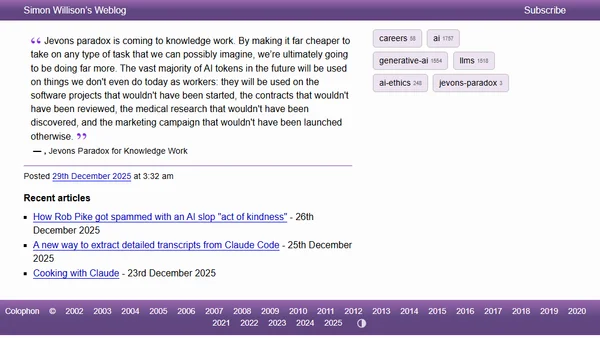
Explores how AI will expand knowledge work by making tasks cheaper, leading to new projects and activities we don't do today.
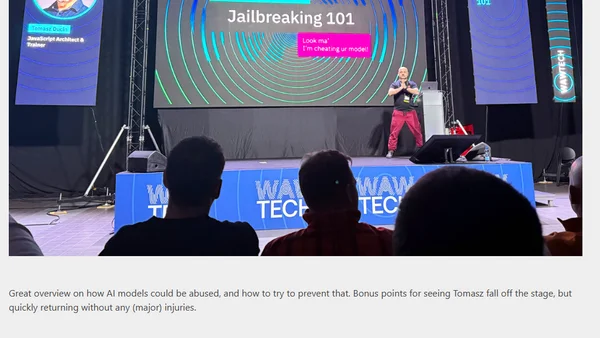
A personal recap of attending WAWTECH 2025, a tech conference in Warsaw, covering talks on AI security, autonomous drones, and hands-on workshops.
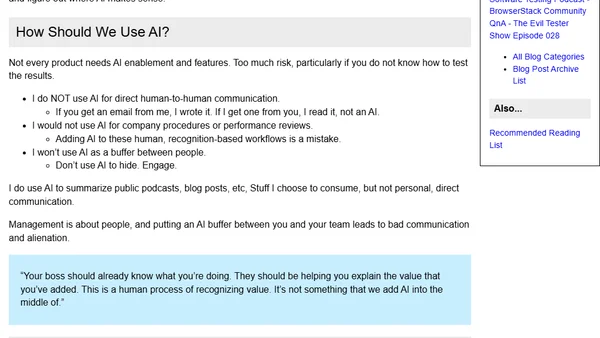
A podcast episode discussing the optimistic and pessimistic impacts of AI on software development and testing, including productivity gains and industry risks.
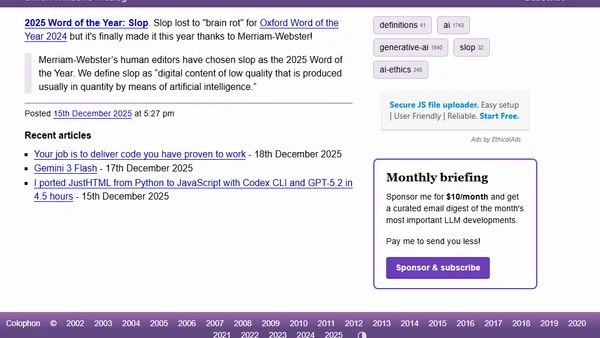
Merriam-Webster names 'slop' the 2025 Word of the Year, defining it as low-quality, mass-produced AI-generated digital content.
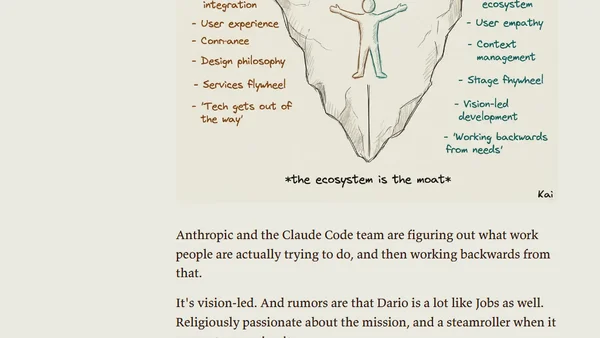
Anthropic's Claude Code ecosystem, like Apple's iPhone, gives it a strategic advantage over competitors focused solely on AI models.
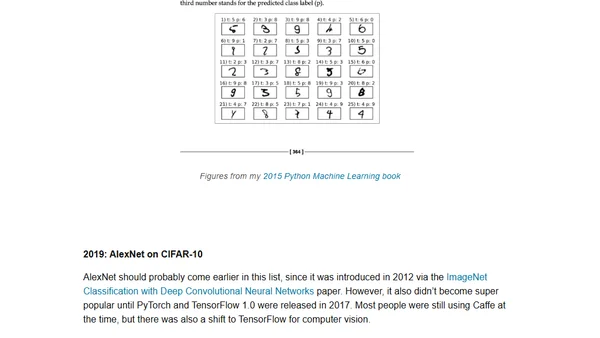
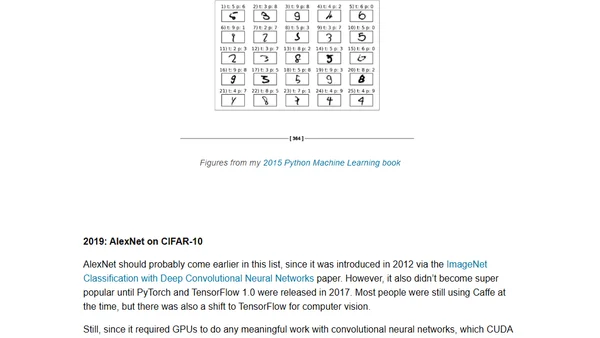
A historical overview of beginner-friendly 'Hello World' examples in machine learning and AI, from 2013's Random Forests to 2025's Qwen3 with RLVR.
A timeline of beginner-friendly 'Hello World' examples in machine learning and AI, from Random Forests in 2013 to modern RLVR models in 2025.
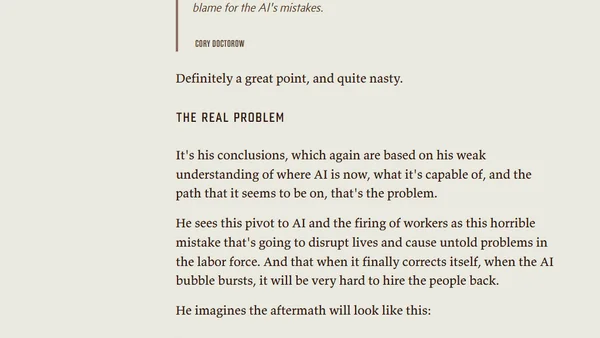
A critique of Cory Doctorow's AI essay, arguing it misunderstands AI's potential impact and gives harmful advice, while praising the 'Reverse Centaur' analogy.
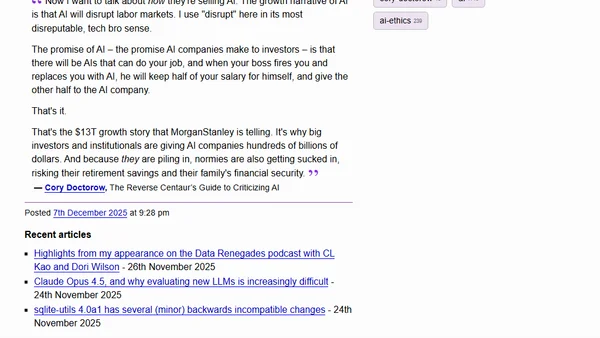
Cory Doctorow critiques the AI industry's growth narrative, arguing it's based on replacing human jobs to enrich companies and investors.
Using Claude AI to accelerate decompilation of N64 games by automating the conversion of assembly code into human-readable C.
Analysis of China's Kimi K2 Thinking AI model, a low-cost, open-weight model challenging US dominance in reasoning and agentic tasks.
A simplified, non-technical definition of reinforcement learning as an iterative optimization process based on external feedback.
The article argues that optimism about AI's benefits is a privilege, highlighting its potential for harm like bullying and deepfakes.
Analyzes data showing autonomous vehicles significantly reduce crashes and injuries compared to human drivers, based on Waymo's safety performance.
Explores Abstraction of Thought (AoT), a structured reasoning method that uses multiple abstraction levels to improve AI reasoning beyond linear Chain-of-Thought approaches.
A retrospective on ChatGPT's third anniversary, covering its surprising launch, initial internal skepticism, and unprecedented growth to 800 million users.
Explores the fundamental differences between animal intelligence and AI/LLM intelligence, focusing on their distinct evolutionary and optimization pressures.
Explores the paradoxical future where AI-generated content is identified by its high quality, not its flaws, and its societal implications.
Argues that AI should be judged by its outputs and capabilities, not by debates over its internal mechanisms or consciousness.