From Random Forests to RLVR: A Short History of ML/AI Hello Worlds
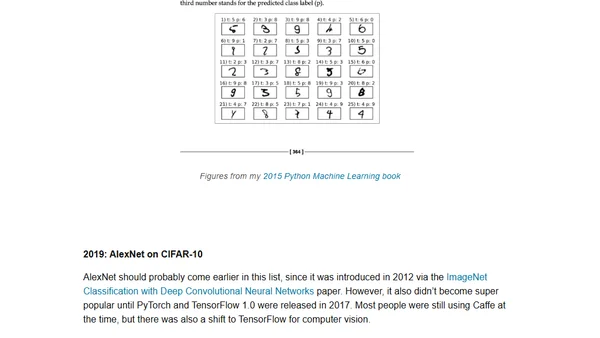
A timeline of beginner-friendly 'Hello World' examples in machine learning and AI, from Random Forests in 2013 to modern RLVR models in 2025.
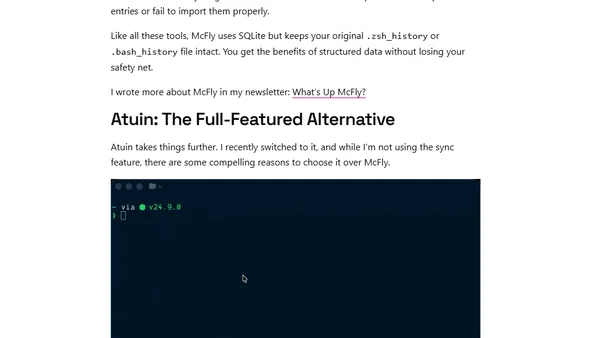
A developer compares three shell history tools: default shell search, McFly, and Atuin, explaining their features and why they switched.
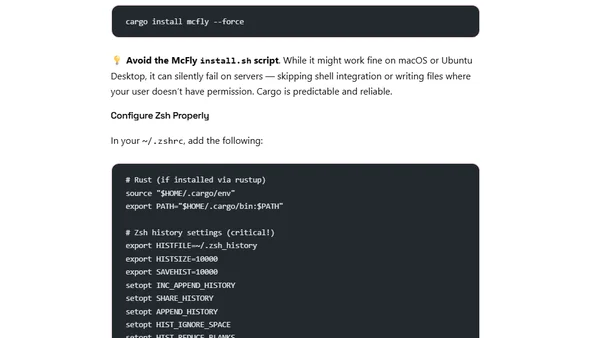
Guide to installing and configuring the McFly shell history tool on Ubuntu Server, covering common pitfalls and Zsh setup.
A reflection on two decades of blogging, focusing on its adoption at Sun Microsystems and its role in fostering technical transparency and open source collaboration.
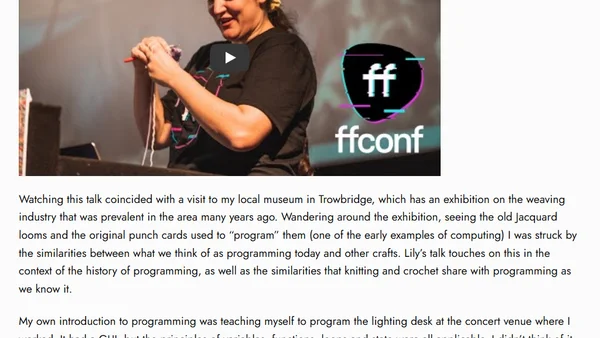
The author explores programming as a craft, drawing parallels with weaving, knitting, and lighting design to argue it's an accessible, creative skill.
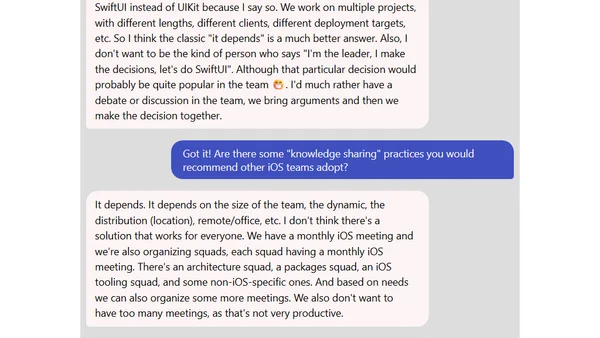
An interview with iOS developer Marius Constantinescu about his journey into programming, from early exposure in Romania to specializing in iOS development.
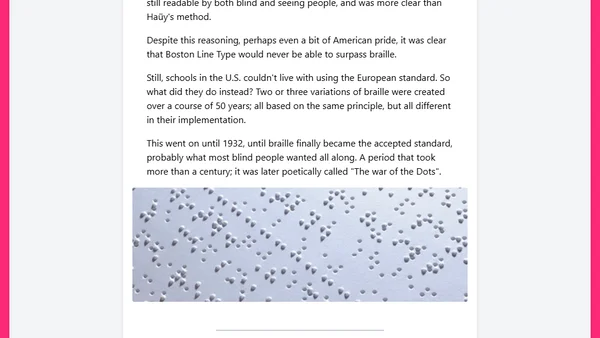
Explores the history of Braille as an analogy for iterative software development, highlighting how user-centric design leads to superior solutions.
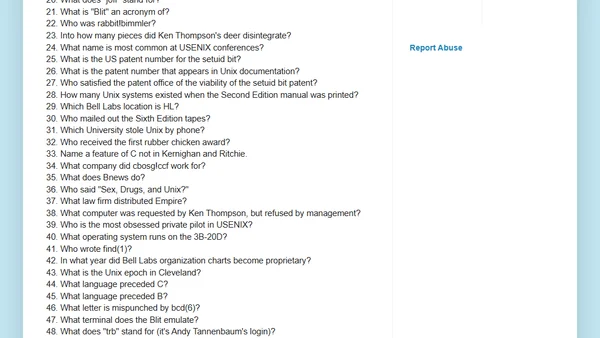
A challenging Unix trivia quiz with historical context, originally used to control program exit and later featured at a USENIX conference.
Explores the evolution of the World Wide Web from a simple 'Web of Documents' to the complex 'Web of Applications' we use today.
Traces JavaScript's evolution from a disliked browser scripting language to a dominant force in modern serverless computing.
A blog post reviewing a video presentation by Rob Pike on the history and development of the Unix operating system at Bell Labs.
A historical overview of JavaScript's evolution from a simple scripting language in 1995 to a dominant force in web development.
A historical overview of DevOps, tracing its evolution from 1980s mainframes to modern practices, focusing on cultural challenges.
A brief look at the history of programming languages, highlighting the convergence of OO and functional paradigms over time.
Dan Weinreb's rebuttal to Richard Stallman's account of the Symbolics and LMI Lisp machine companies, arguing Stallman's version is biased and inaccurate.