Philipp Schmid
Philipp Schmid is a Staff Engineer at Google DeepMind, building AI Developer Experience and DevRel initiatives. He specializes in LLMs, RLHF, and making advanced AI accessible to developers worldwide.
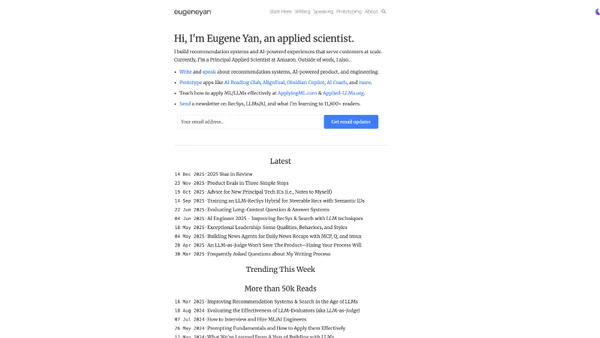
Eugene Yan is a Principal Applied Scientist at Amazon, building AI-powered recommendation systems and experiences. He shares insights on RecSys, LLMs, and applied machine learning, while mentoring and investing in ML startups.
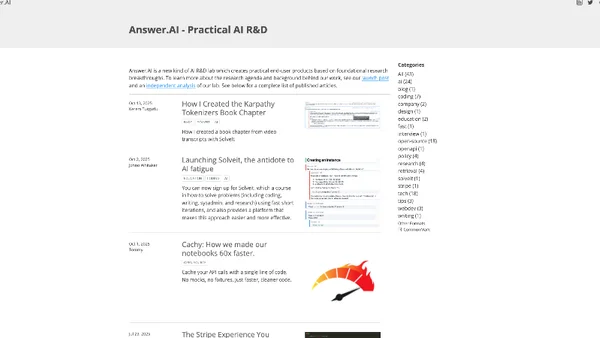
Jeremy Howard leads Answer.AI, an AI R&D lab building practical applications from cutting-edge research. He focuses on AI, open-source tools, and educational platforms to help developers and researchers solve real-world problems efficiently.
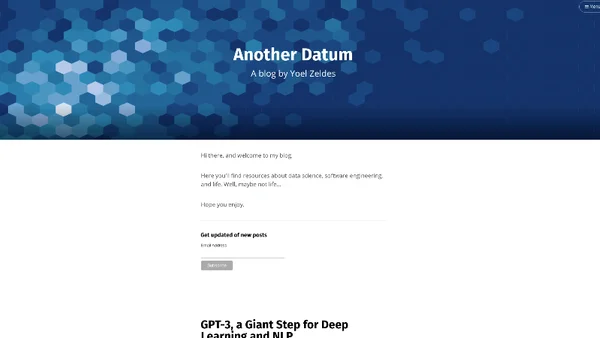
Yoel Zeldes is an algorithm engineer at AI21 Labs with a background in computer science from Hebrew University. He specializes in machine learning, NLP, computer vision, and distributed computing, focusing on data-driven solutions and clean, elegant code.
Domenic Denicola is a former browser engineer and web standards contributor, known for his work on JavaScript promises, modules, streams, and WHATWG APIs. He writes about web platform design, performance, and emerging AI capabilities in the browser.
Tomas Petricek is an assistant professor at Charles University in Prague and a partner at fsharpWorks, specializing in programming systems, functional programming, and the history and philosophy of computing.
Liran Tal is an AI security researcher and Node.js security expert focusing on securing agentic AI workflows, MCP, and software supply chains through research, education, and open-source work.
Awni Hannun is a machine learning researcher and writer specializing in speech recognition, sequence models, and deep learning frameworks. He shares insights, tutorials, and analyses on ML concepts, algorithms, and practical implementations.
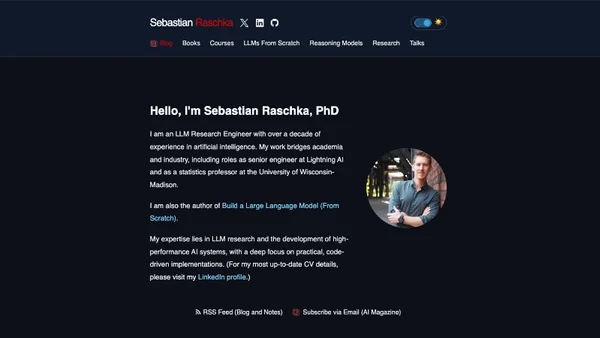
Sebastian Raschka, PhD, is an LLM Research Engineer and AI expert bridging academia and industry, specializing in large language models, high-performance AI systems, and practical, code-driven machine learning.
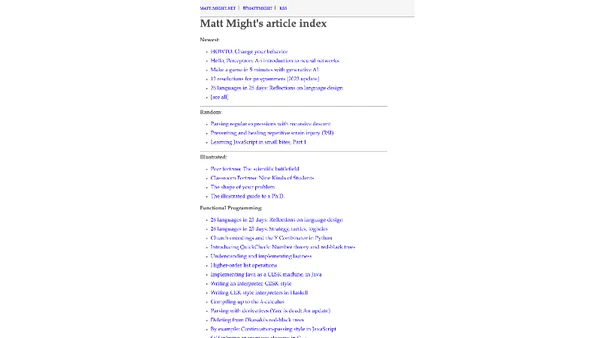
Matt Might’s article index features insightful essays and tutorials on programming languages, functional programming, computer science concepts, and practical advice for programmers and researchers.
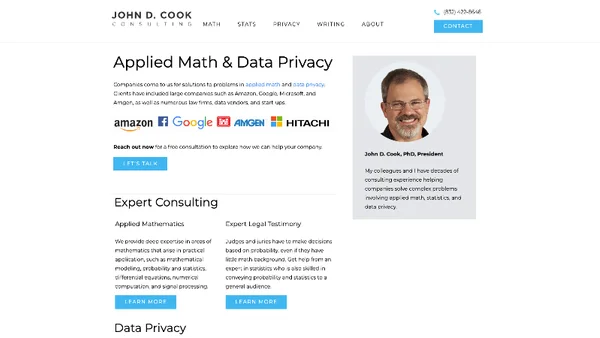
John D. Cook provides expert consulting in applied mathematics and data privacy, helping clients from tech, biotech, and legal industries—including Amazon, Google, Microsoft, and Amgen—solve complex problems efficiently.
SebastianRaschka.com is the personal blog of Sebastian Raschka, PhD, an LLM research engineer whose work bridges academia and industry in AI and machine learning. On his blog and notes section he publishes deep, well-documented articles on topics such as LLMs (large language models), reasoning models, machine learning in Python, neural networks, data science workflows, and deep learning architecture. Recent posts explore advanced themes like “reasoning LLMs”, comparisons of modern open-weight transformer architectures, and guides for building, training, or analyzing neural networks and model internals.
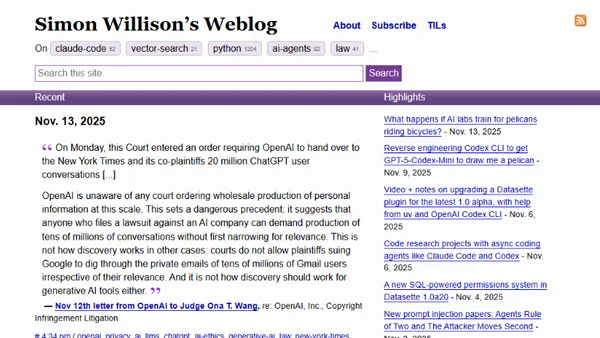
SimonWillison.net is the long-running blog of Simon Willison, a software engineer, open-source creator, and co-author of the original Django framework. He writes about Python, Django, Datasette, AI tooling, prompt engineering, search, databases, APIs, data journalism, and practical software architecture. The blog includes detailed notes from experiments, conference talks, and real projects. Readers will find clear explanations of topics such as LLM workflows, SQL patterns, data publishing, scraping, deployment, caching, and modern developer tooling. Simon also publishes frequent micro-posts and TIL entries that document small discoveries and tricks from day-to-day engineering work. The tone is practical and research oriented, making the site a valuable resource for anyone interested in serious engineering and open data.
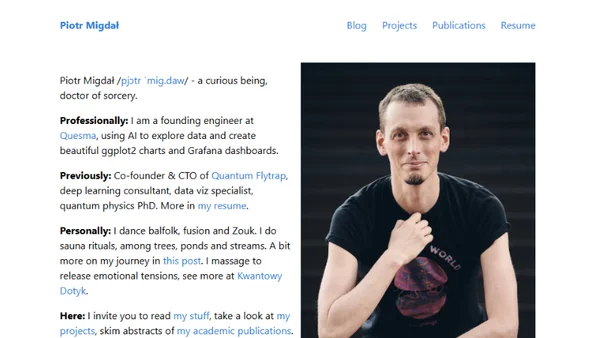
Piotr Migdał – Blog of a Data Explorer and Visual Storyteller This is the personal blog of Dr. Piotr Migdał, a technologist and visual storyteller with a strong background in quantum physics, deep learning, and data visualization. He is a founding engineer at Quesma, where he uses AI to turn complex datasets into clear visual insights through ggplot2 charts and Grafana dashboards. His posts combine technology, creativity, and personal reflection. You will find articles about machine learning, interactive data visualization, and projects that bridge science and art. Beyond his technical work, Piotr writes about dance, mindfulness, and the human side of creativity. This blog is a great read for developers, data scientists, and anyone interested in how technology and art can come together to explain the world in a meaningful way.
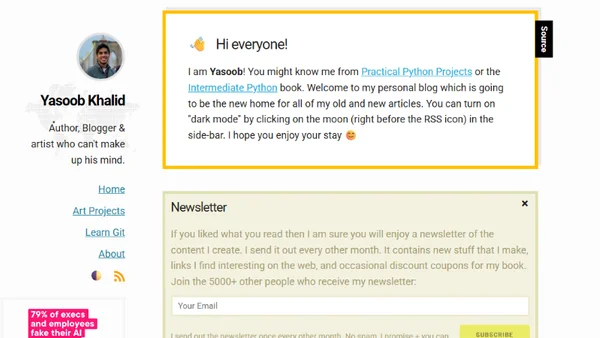
Yasoob Khalid is a developer and writer best known for the free, open-source book Intermediate Python and his project-driven follow-up, Practical Python Projects. His articles and books have reached 5+ million readers across 189+ countries, and his blog remains a go-to place for clear, practical Python insights. By day, Yasoob works on Azure Cloud Networking at Microsoft, and by night he continues to publish tutorials, notes, and experiments that demystify real-world Python for learners at every level. He’s also the author behind the long-running Python Tips site and newsletter, where he focuses on approachable explanations and hands-on examples.
RobinWieruch.de is the personal site and blog of Robin Wieruch, a software engineer and educator known for clear, practical tutorials on React, TypeScript, Next.js, GraphQL, Node.js, and testing. The articles focus on real projects and common problems such as state management, authentication, data fetching, pagination, performance, and testing strategies. Robin is the author of The Road to React and other hands-on guides. He publishes step by step walkthroughs that pair code with explanations, so readers learn the concepts and the reasoning behind them.