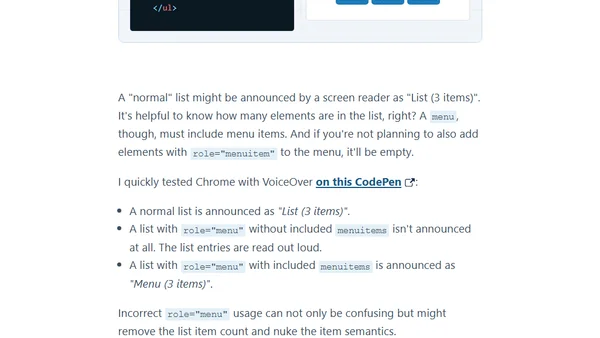
ARIA roles can remove their children’s semantics (#tilPost)
Explains how misusing ARIA roles like 'menu' can strip semantic meaning from child elements, harming accessibility.
The HTML <time> element is widely used but lacks practical browser or assistive tech support, making it a semantic but underutilized feature.
A video podcast featuring Sara Soueidan and Kevin Powell discussing web accessibility, covering HTML semantics, ARIA, CSS, and common myths.
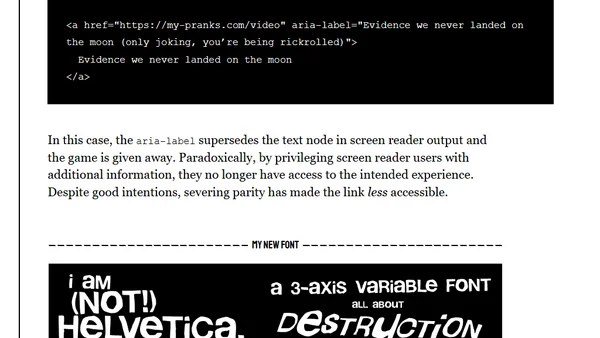
Explores web accessibility principles through the lens of rickrolling, arguing that parity of experience is more important than descriptive labels.
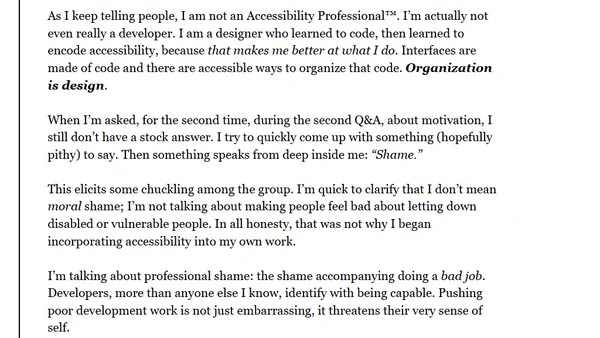
A keynote speaker explores the emotional drivers of web accessibility adoption, arguing that professional pride and shame are key motivators for developers.
Overview of the European Accessibility Act (EAA) requirements for websites and apps, covering scope, compliance timeline, and benefits.
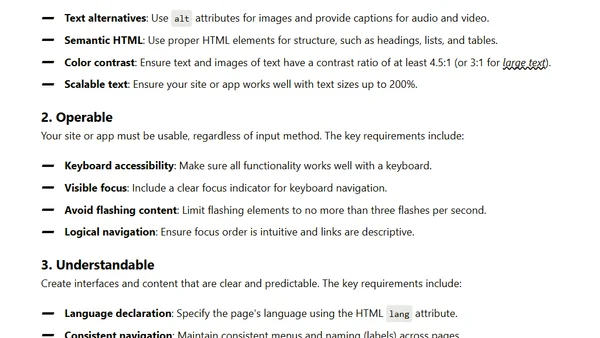
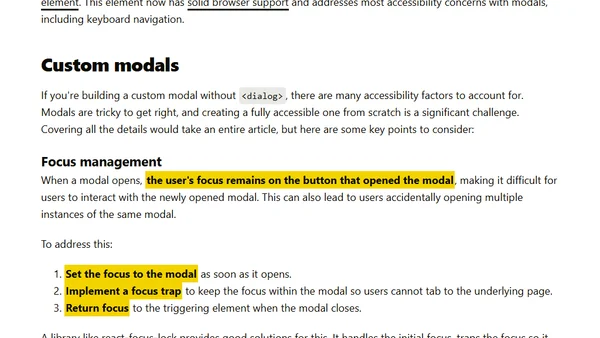
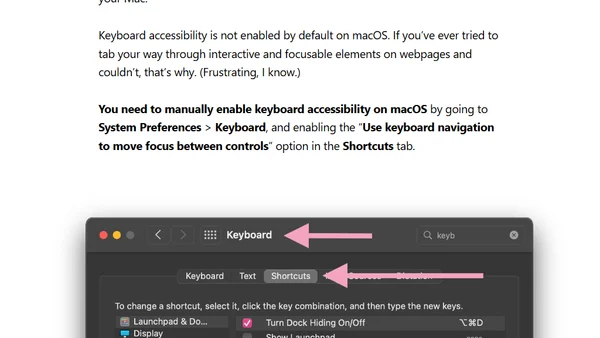
Essential front-end accessibility practices for developers, covering semantic HTML, keyboard navigation, ARIA, and more to improve UX for all users.
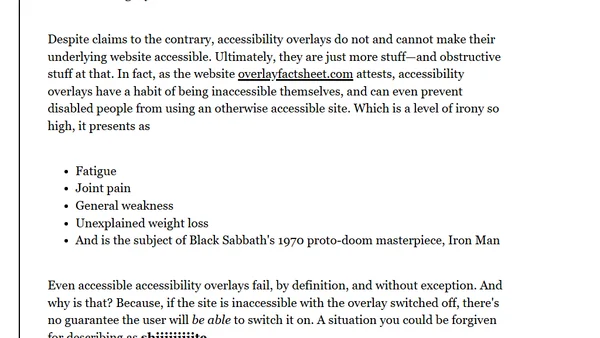
Explains why accessibility overlays are problematic software that fails to make websites accessible and can even hinder disabled users.
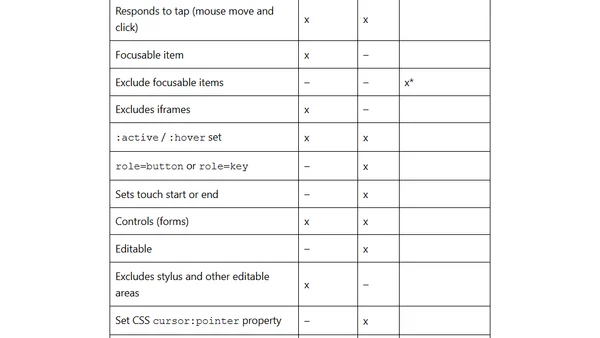
Explains how browsers expand click targets for accessibility and provides WCAG guidelines for developers to ensure accurate user interactions.
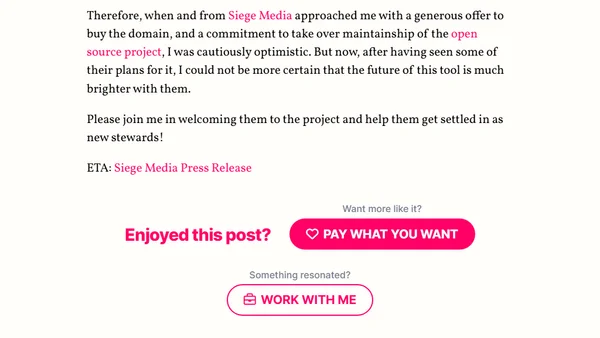
The popular web accessibility tool contrast-ratio.com has been transferred to new maintainers at Siege Media for future development.
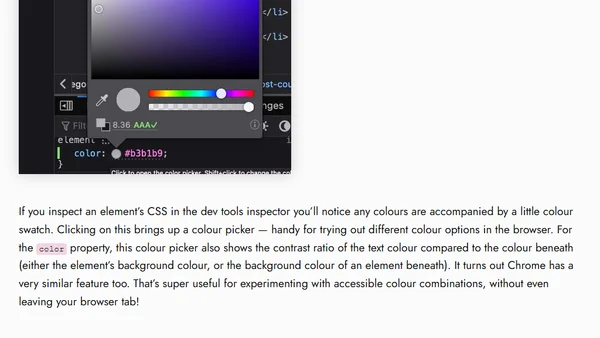
A guide to using browser developer tools, specifically in Firefox and Chrome, to test and ensure color contrast meets web accessibility standards (WCAG).
A guide to setting up a screen reader testing environment for accessibility testing, covering software, configurations, and browser combinations.
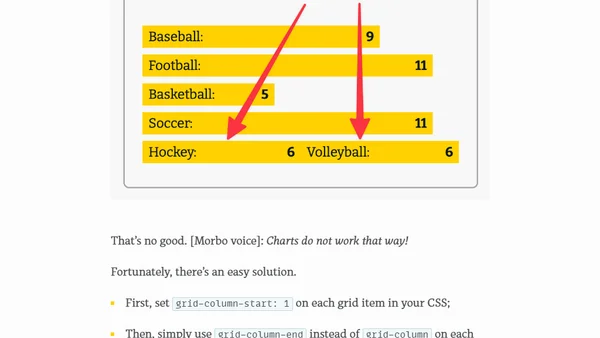
A tutorial on building responsive bar charts using CSS Grid, with no external libraries required.
Critiques the narrow developer view of accessibility as just ARIA/WCAG compliance, arguing for a broader, user-centered design philosophy.
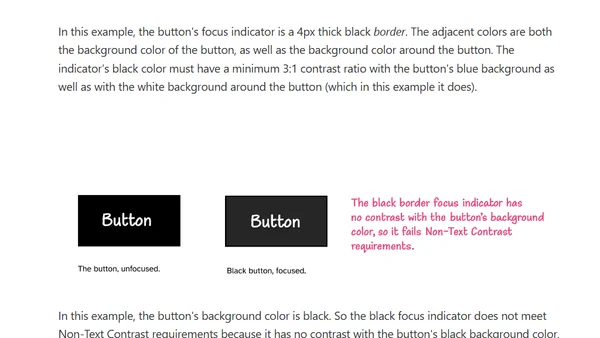
A guide to designing and implementing accessible focus indicators for keyboard and assistive technology users, covering WCAG compliance.
A guide to finding web accessibility jobs, comparing roles in specialized accessibility firms versus mainstream tech companies.
Explains how to make web animations accessible according to WCAG guidelines, covering strategic UX and tactical implementation.
A freelance accessibility consultant discusses the unique advantages and challenges of being an outsider when advocating for web accessibility within organizations.
Argues for a global web accessibility law to enforce standards, citing poor compliance and lack of developer incentives.
Explains semantic HTML, its importance for accessibility and SEO, and provides examples of semantic tags and best practices for document structure.