The <time> element should actually do something
The HTML <time> element is widely used but lacks practical browser or assistive tech support, making it a semantic but underutilized feature.
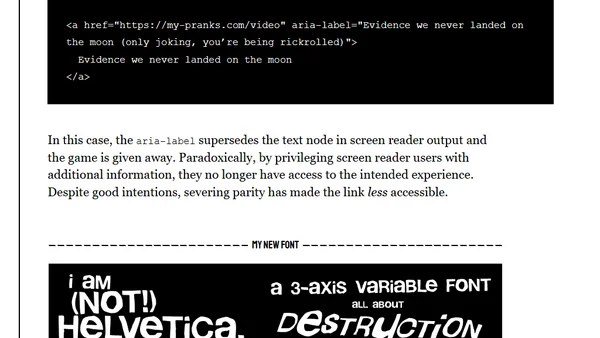
Explores web accessibility principles through the lens of rickrolling, arguing that parity of experience is more important than descriptive labels.
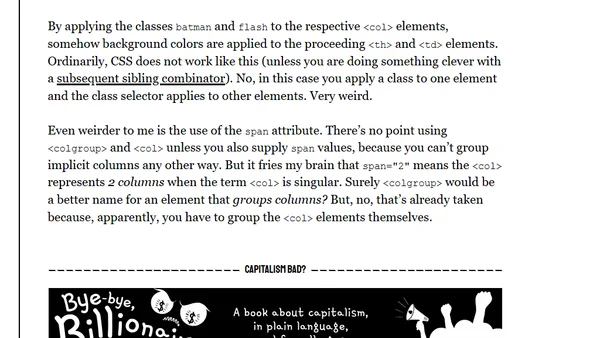
An article exploring the HTML <col> element, its purpose, usage with <colgroup>, and its quirks in web development.
Explains the HTML <caption> element for labeling tables, contrasting it with closed captions and emphasizing accessibility best practices.
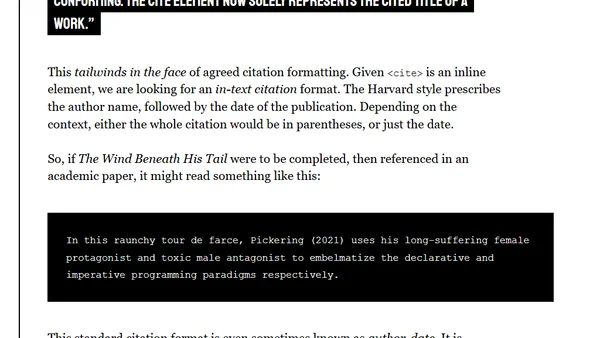
Explains the HTML5 <cite> element's proper use for citing work titles, contrasting it with HTML4 and academic citation styles.
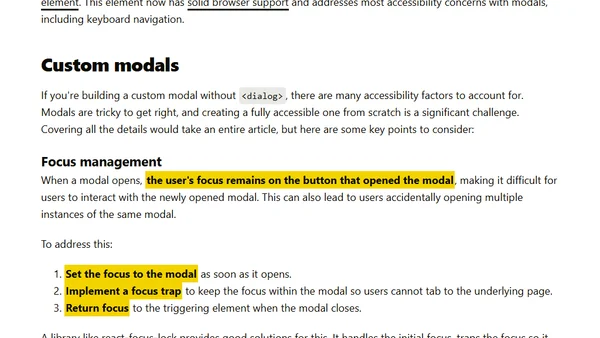
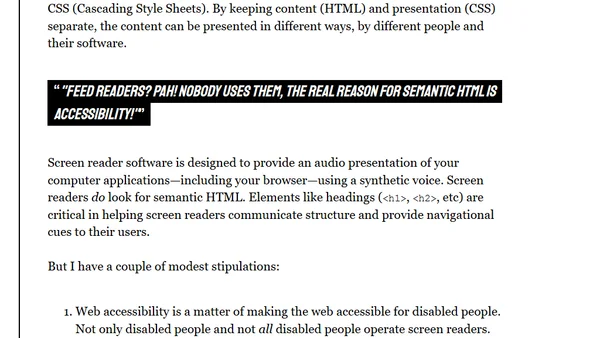
Essential front-end accessibility practices for developers, covering semantic HTML, keyboard navigation, ARIA, and more to improve UX for all users.
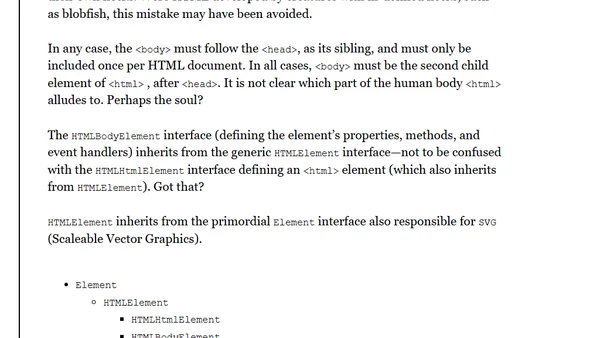
A whimsical exploration of the HTML <body> element, its structure, and its relationship to the <head> element, using analogies to human anatomy.
A web developer reflects on common HTML mistakes, specifically the misuse of the <blockquote> element for pull-quotes and incorrect citation placement.
Explores the HTML <blockquote> element, its semantic purpose, historical usage, and why it's unsuitable for pull quotes in web design.
Explains the HTML <aside> element, its role as a sectioning element and landmark, and its relationship to ARIA's complementary role.
Explores the HTML5 <article> element, its purpose for document structure, and its importance for web accessibility and semantics.
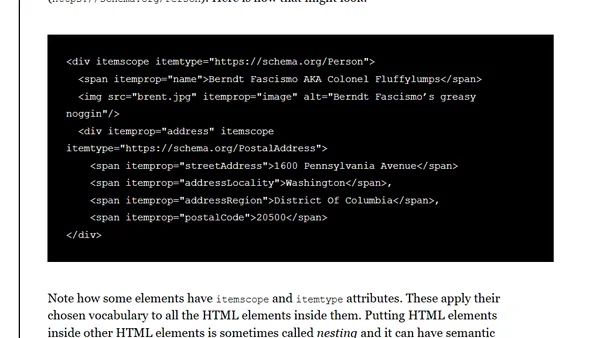
Explains the HTML <address> element's semantic meaning and demonstrates how to correctly mark up contact information using Microdata and schema.org.
An article explaining the HTML <abbr> element, its purpose for marking abbreviations, and a discussion on semantic HTML.
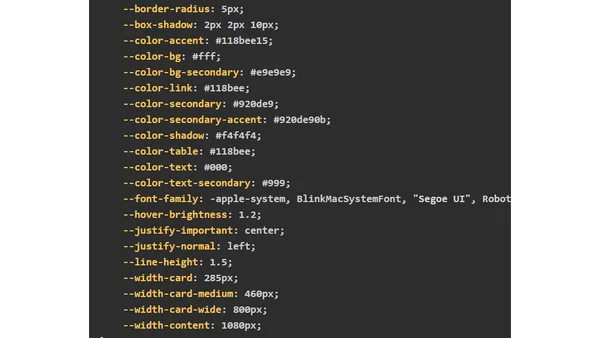
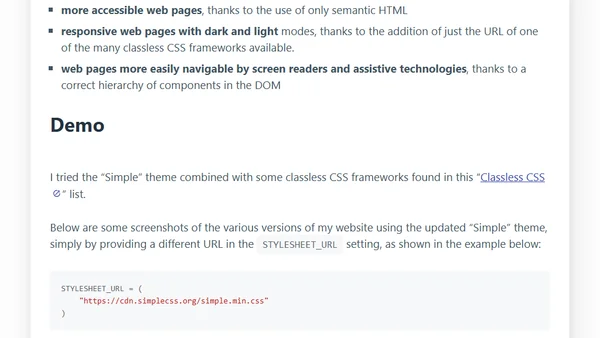
Explores no-class CSS frameworks like MVP.CSS, which style semantic HTML without extra classes for faster, cleaner web development.
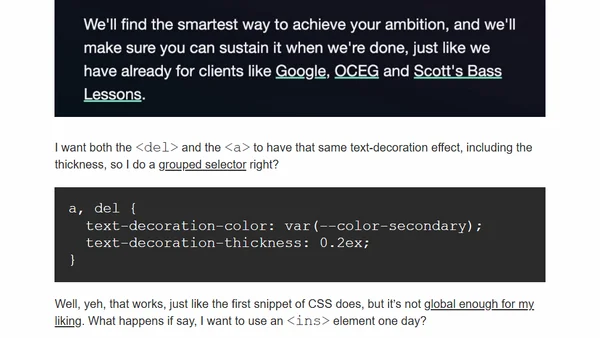
A web developer explains how using a universal CSS selector for text-decoration properties can reduce code and improve styling efficiency.
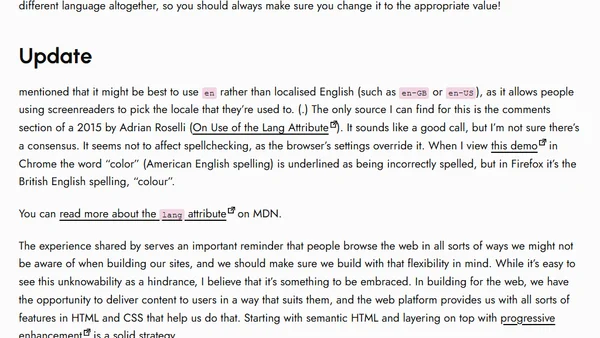
Explains the importance of the HTML 'lang' attribute for accessibility, screen readers, and localization.
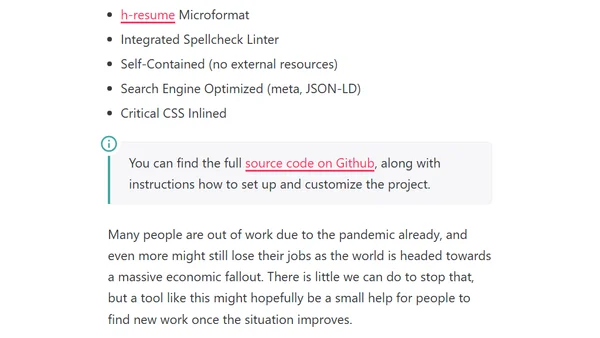
A developer created an open-source, accessible résumé template using Eleventy, focusing on semantic HTML and print styles.
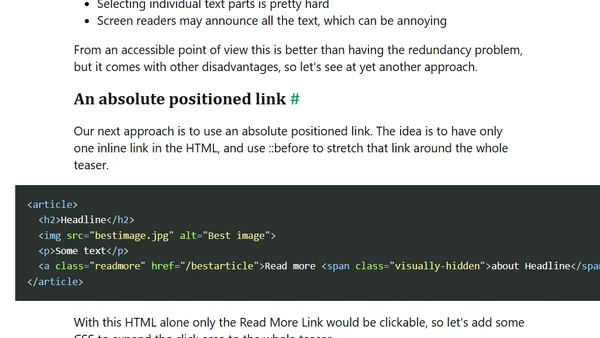
Explores accessible HTML patterns for teaser/card components, comparing multiple link approaches and their pros/cons.
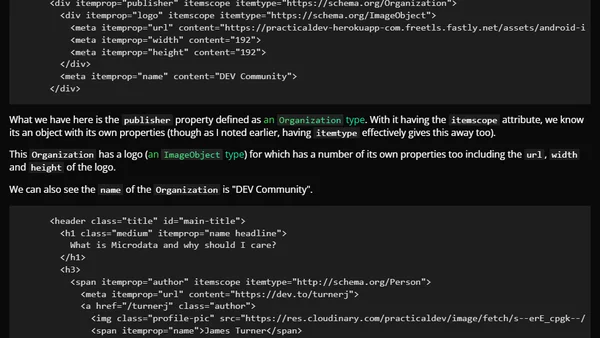
Explains Microdata, a format for describing web page content for SEO and structured data, comparing it to RDFa and JSON-LD.
A developer shares lessons learned from a year of studying and teaching web accessibility, emphasizing semantic HTML as the foundation.