Teaching Tech Together Book Summary
A summary of the book 'Teaching Tech Together', highlighting key methods for effective technology education like live coding and learner personas.
A guide on writing effective RFCs (Request for Comments) for engineers to improve communication and technical planning within teams.
An experienced interviewer shares what they look for in junior software engineering candidates, focusing on mindset over technical skills.
A developer critiques the blind adoption of Scrum, arguing it's often misapplied and becomes a rigid, unproductive ritual rather than a useful framework.
A developer argues for minimal, strategic code commenting, using examples to show how clear naming and structure can often replace verbose comments.
Argues that deploys and releases are distinct concepts and that relying on deploys to change user experience is problematic.
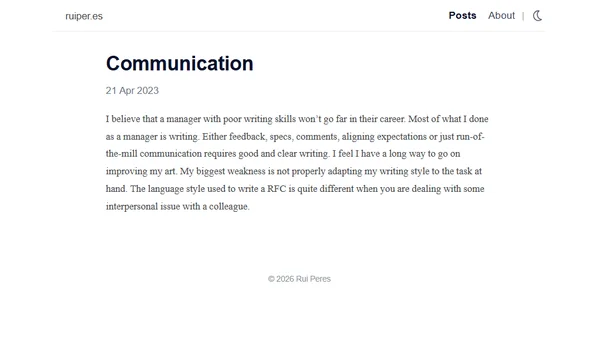
Senior engineers must excel at communication and problem articulation, not just technical skills, to be truly effective.
Discusses the importance of user-centric thinking in software engineering and how RFCs can prevent common pitfalls like building the wrong thing or over-engineering.
A childhood baking failure leads to reflections on patience, productivity, and the pitfalls of rushing in software development.
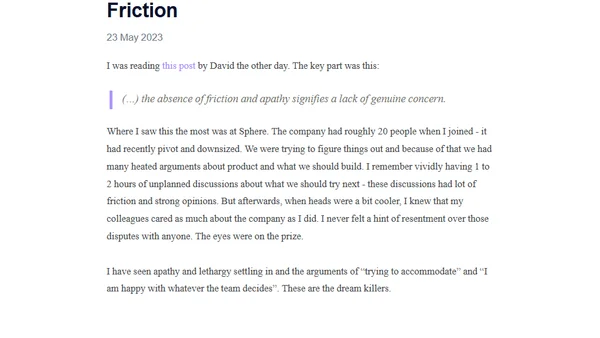
A tech manager argues that team problems are often human issues, not process flaws, using a PR example to advocate for direct communication.
A developer shares their favorite online tech communities for connection, learning, and contributing, including Virtual Coffee, OpenSauced, and dev.to.
A developer reflects on the compounding benefits of consistent practice, comparing long-term Haskell learning to physical training adaptations.
A hiring manager outlines key traits of ideal tech candidates, including assertiveness, ambition, and full-stack versatility.
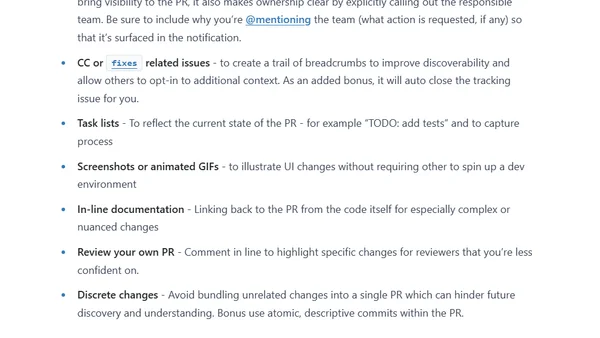
A guide to improving code reviews by focusing on constructive, non-personal feedback and providing clear, actionable comments.
A programmer's reflection on their six-week, self-directed learning experience at The Recurse Center, highlighting projects and community.
A manager outlines four key areas for aligning with team members on performance: Focus, Baseline Expectations, Opportunities, and Risks.
A developer details building a blog using Gatsby and AWS, focusing on DevOps principles, performance, SEO, and professional certification goals.
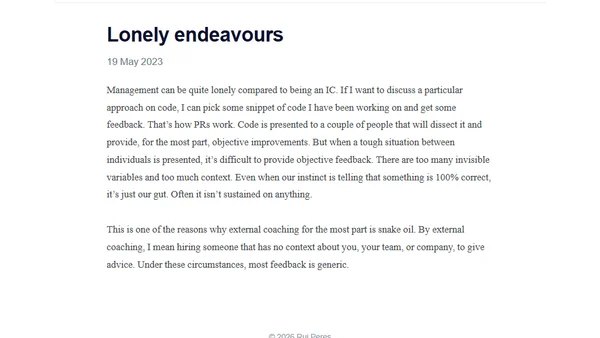
Explores the importance of over-communication and information sharing to combat isolation and information gaps in remote work environments.
Explores practical team mechanisms like end-of-week debriefs and monthly learning sessions to boost productivity and collaboration in technical teams.
Explains the difference between case-sensitive and case-insensitive string comparisons in programming, with examples and language-specific implications.