Choosing an LLM for Enterprise RAG: Retrieval Fit Beats Model Hype
A guide to choosing LLMs for enterprise RAG, emphasizing retrieval fit over model hype, with practical selection criteria.
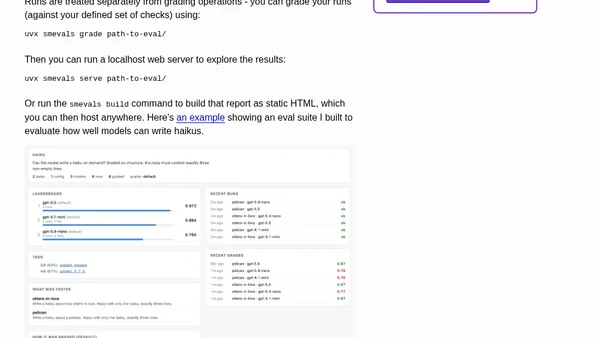
Introducing smevals, a small eval suite for evaluating models, prompts, and harnesses, built with Jesse Vincent's lab.
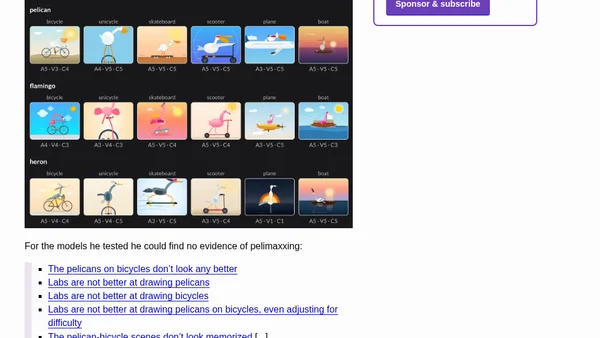
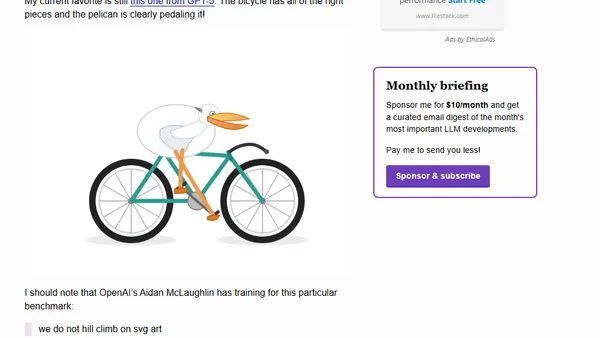
Analysis of whether AI labs train models to draw pelicans on bicycles, with no evidence found.
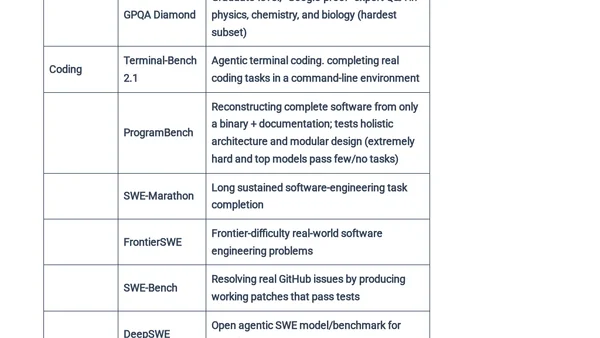
Explains key LLM benchmarks like ARC-AGI-2, GPQA Diamond, and SWE-Bench, helping evaluate model capabilities beyond hype.
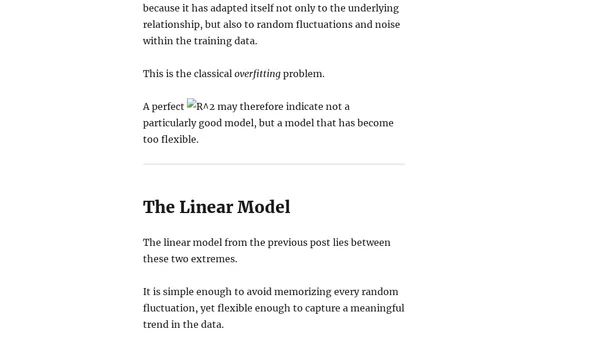
Explains why a high R-squared can be misleading in regression models, using examples like mean and polynomial models to illustrate overfitting.
A humorous look at AI model benchmarking using the challenge of generating an SVG of a pelican riding a bicycle, and the risks of labs 'gaming' the test.
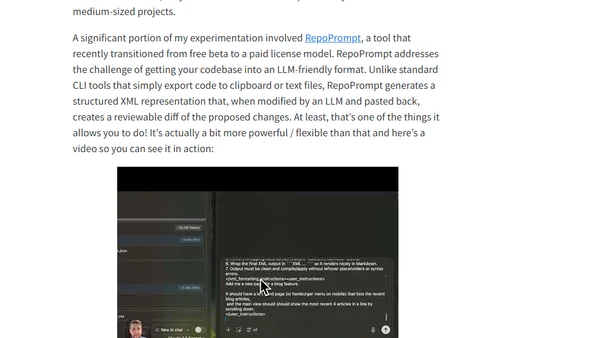
A developer shares insights and practical tips from a week of experimenting with local LLMs, including model recommendations and iterative improvement patterns.
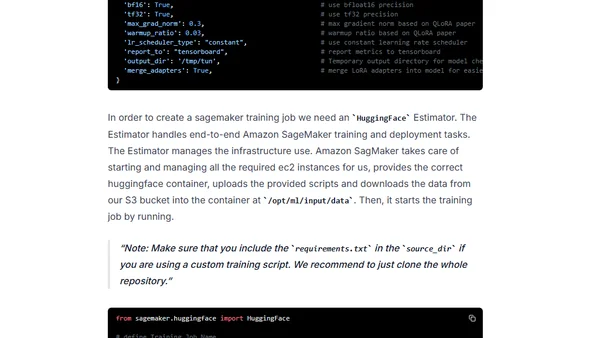
A technical guide on fine-tuning and evaluating open-source Large Language Models (LLMs) using Amazon SageMaker and Hugging Face libraries.
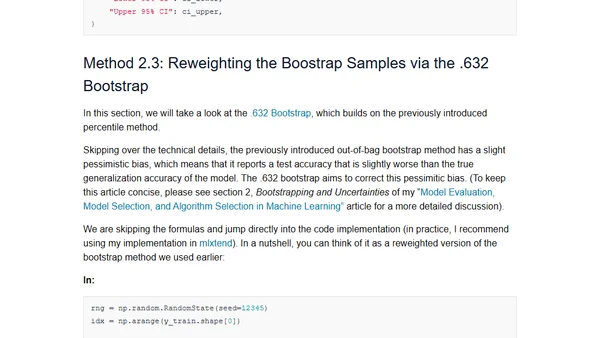
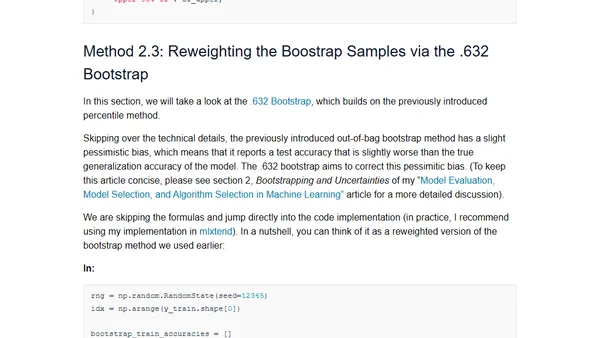
A guide to creating confidence intervals for evaluating machine learning models, covering multiple methods to quantify performance uncertainty.
A technical guide explaining methods for creating confidence intervals to measure uncertainty in machine learning model performance.
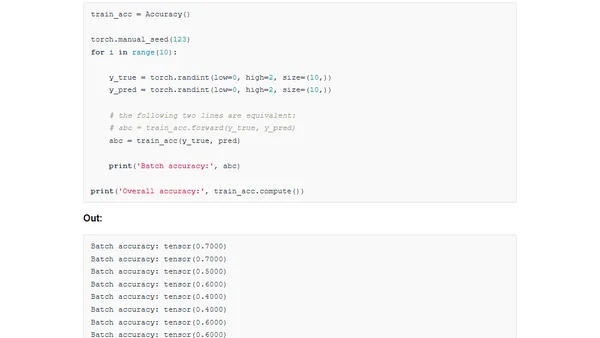
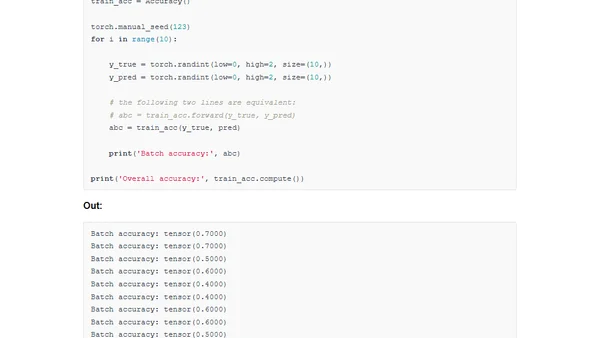
Explains the difference between .update() and .forward() in TorchMetrics, a PyTorch library for tracking model performance during training.
Explains the difference between .update() and .forward() methods in the TorchMetrics library for evaluating PyTorch models.
Final part of a series proposing a research agenda for ML monitoring, focusing on data management challenges like metric computation and real-time SLI tracking.
A technical exploration of Mean Squared Error, breaking it down into bias and variance to understand model performance and irreducible uncertainty.
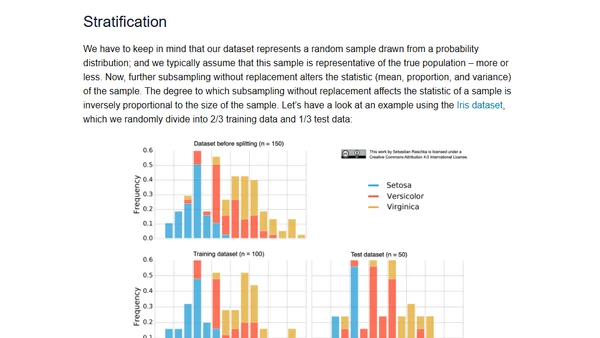
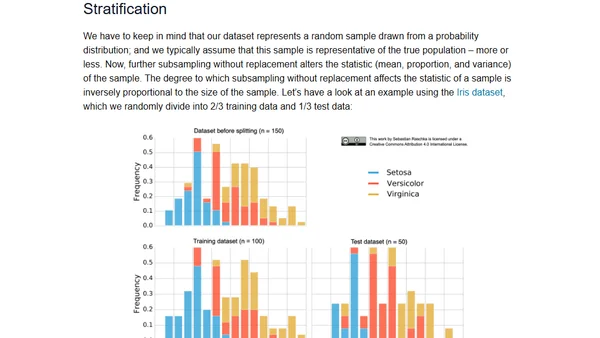
A guide to model evaluation, selection, and algorithm comparison in machine learning to ensure models generalize well to new data.
A guide to evaluating machine learning models, selecting the best models, and choosing appropriate algorithms to ensure good generalization performance.