Product Categorization API Part 3: Creating an API
Final part of a series on building a product classification API, covering the creation of a custom Python class and web app for categorizing product titles.
A 2017 tech trends analysis focusing on AI/ML advancements in cloud platforms and the rise of hybrid cloud/hyperconverged infrastructure.
A tutorial for artists on using a pre-trained recurrent neural network with Javascript and p5.js to generate interactive handwriting and vector artwork.
A researcher's 2016 highlights: AI mapping to human vision, brain-based autism prediction, and fast matrix factorization algorithms for neuroimaging.
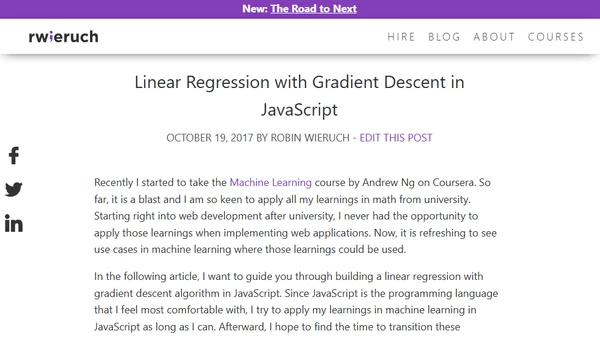
Critique of the classic iris dataset as a misleading example in modern machine learning education, exploring its original scientific purpose.
Part 2 of a series on building a product classification API, focusing on data cleaning, preparation, and measuring data purity for machine learning.
A presentation on Lazada's machine learning framework for ranking products in catalog and search results to improve user experience.
A detailed review and explanation of key research papers in the field of Reinforcement Learning, part of a deep learning series.
A wrap-up of Velocity NY 2016, covering trends in Real User Monitoring (RUM), synthetic monitoring, and the importance of WebPageTest for web performance.
First post in a series on building a product classification API, covering the process of sourcing and formatting open-source Amazon product data for machine learning.
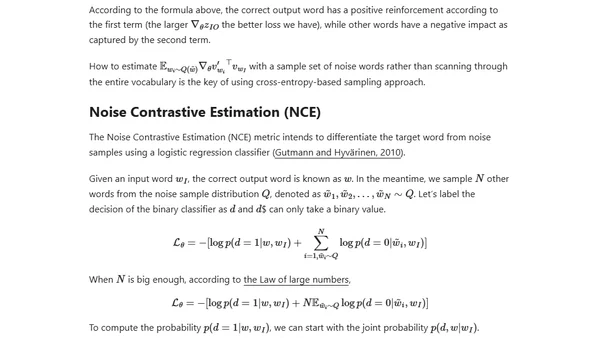
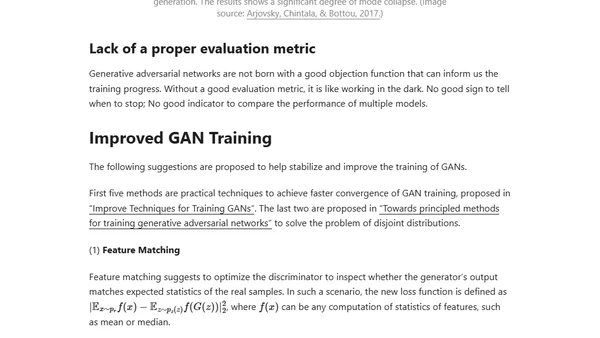
A deep dive into Generative Adversarial Networks (GANs), summarizing and explaining key research papers in the field.
Explains stride and padding parameters in Convolutional Neural Networks (CNNs), building on Part 1 of the beginner's guide.
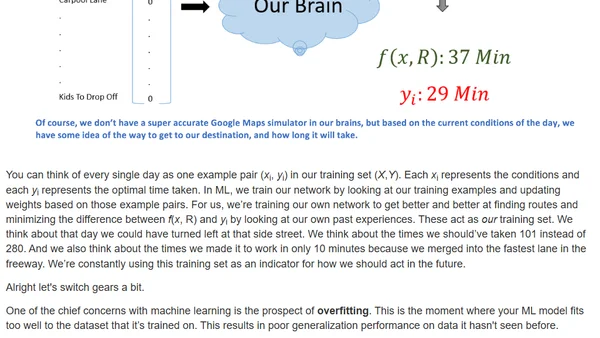
A guide to model evaluation, selection, and algorithm comparison in machine learning to ensure models generalize well to new data.
A guide to evaluating machine learning models, selecting the best models, and choosing appropriate algorithms to ensure good generalization performance.
A humorous take on solving the classic Fizz Buzz coding interview problem using an unnecessarily complex TensorFlow neural network.
Explores why modern neural networks succeed where older ones failed, emphasizing the critical role of massive computational power and data size.
A Python script called csv2vw converts CSV data into Vowpal Wabbit's input format for machine learning, with examples for label handling.
A guide for academics with math/physics backgrounds transitioning into data science, covering skills, learning paths, and practical advice.
Explores the importance of reproducible science in computer science, focusing on reproducibility, replicability, and reusability of software and data.
A former PhD scientist shares his positive transition to data science freelancing, detailing the freedom and variety of his new career.