Your agents should learn for the organization
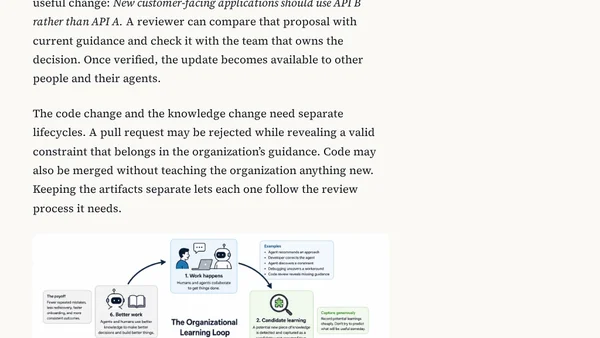
Explores how AI agents can capture organizational knowledge from work interactions, proposing a review process to update guidance.
Explores how AI agents are changing organizational knowledge management, shifting from search to reasoning and requiring teams to maintain high-quality, current documentation.
This article explains how to build an IT AI insight engine that connects operational signals like tickets and incidents into a governed context layer for better decisions.
A decision framework for IT teams to identify enterprise RAG use cases that survive production, focusing on governed, narrow applications over broad chatbots.
Explores the limitations of atomic notes in note-taking systems, arguing that not all notes can be atomic and proposing folder-based organization.
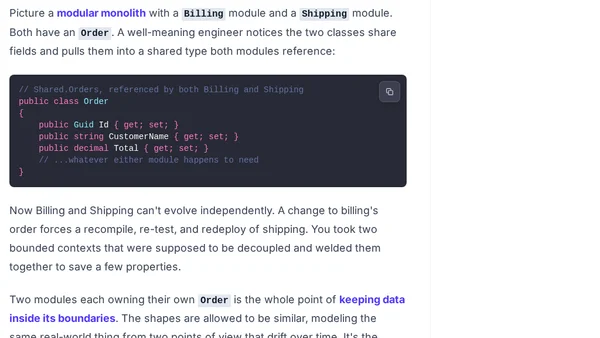
Explores the common misunderstanding of the DRY principle in programming, emphasizing knowledge over code duplication.
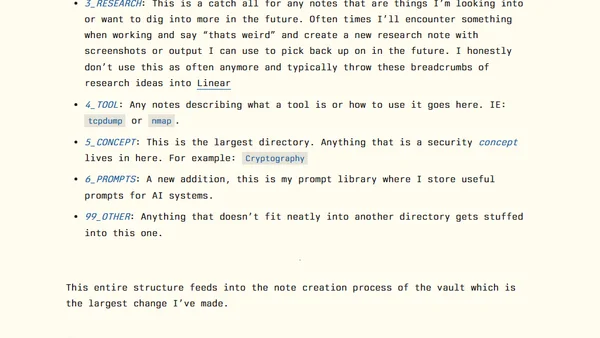
An update on using Obsidian for knowledge management, focusing on vault structure, custom plugins, and AI integration for cybersecurity research.
Explains the concept of a 'Second Brain' as a dynamic, interconnected digital knowledge base for ideas and notes.
A developer shares his simple system using plain text files and a Python script for knowledge management and time tracking.
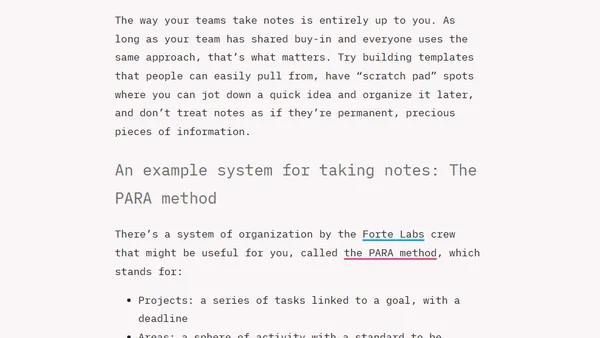
Strategies for managing and documenting team knowledge to improve collaboration, decision-making, and onboarding of new members.
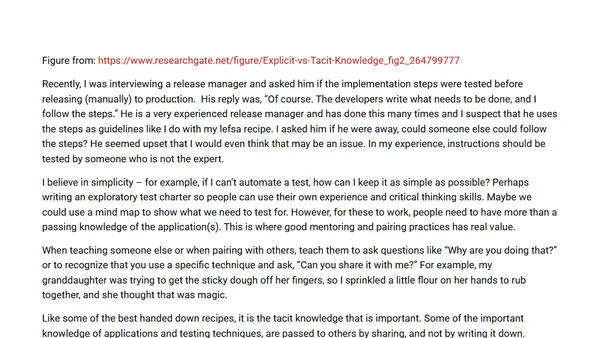
Explores the difference between tacit (experience-based) and explicit (documented) knowledge, using a cooking analogy to discuss implications for software development and knowledge sharing.
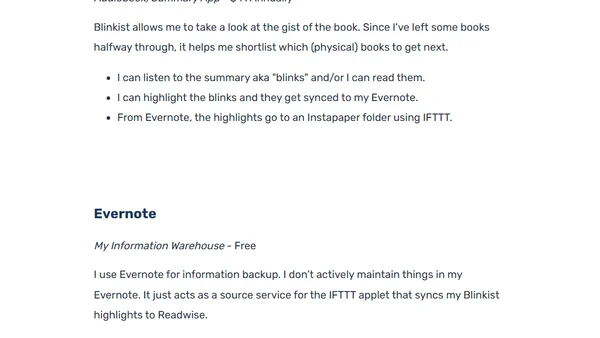
A developer shares their personal system for managing knowledge, including tools for note-taking, read-it-later, and audiobook summaries.
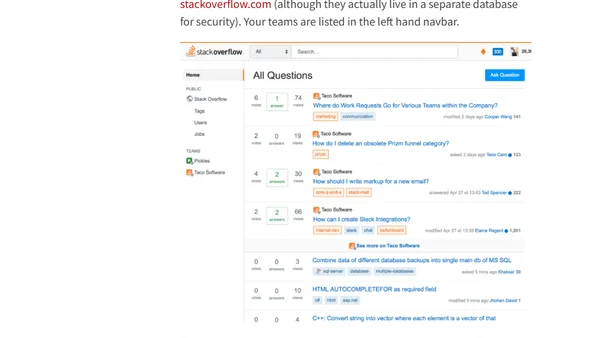
Stack Overflow launches Teams, a paid private Q&A service for companies to share internal knowledge securely.
Explores the crucial distinction between raw information and applied knowledge, especially within Information Systems and data management.