DOM2Texture: Abusing Arcane APIs
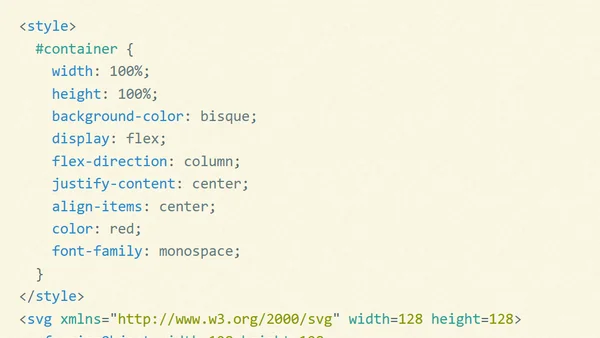
A technical exploration of using SVG's <foreignObject> and canvas to render interactive DOM elements as textures in WebGL, bypassing manual font/layout work.
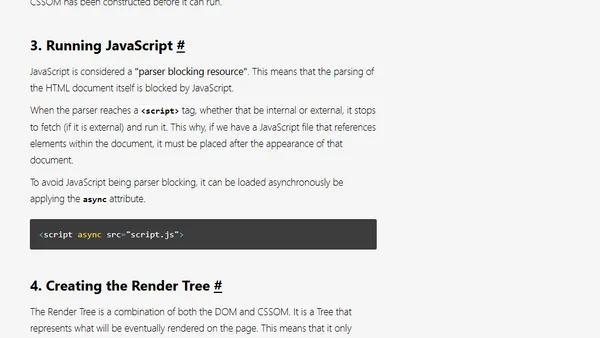
Explains the six stages of the browser's Critical Rendering Path (CRP) and how understanding it is key to improving website performance.
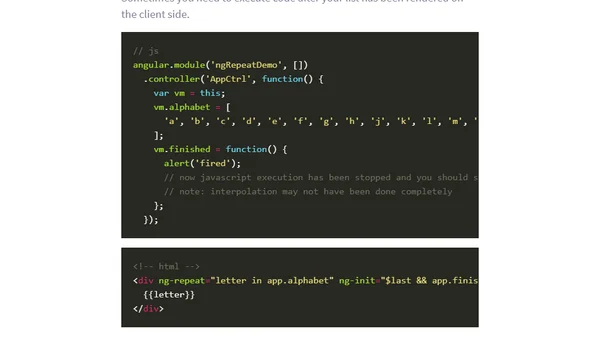
Explains how to execute code after AngularJS's ng-repeat directive finishes rendering a list using the $last property.
Exploring a method to extend native DOM prototypes safely by using a single namespace property to avoid collisions in JavaScript libraries.
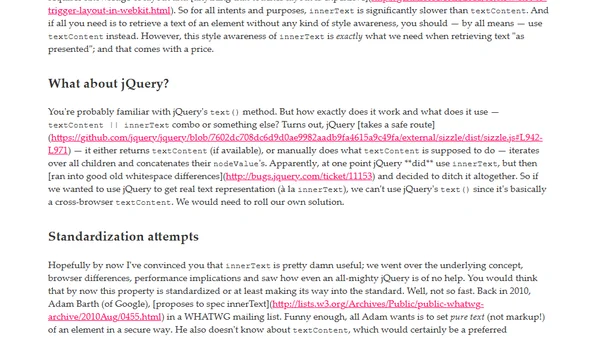
Explains the innerText property's behavior and algorithm for extracting text from HTML nodes, focusing on CSS and whitespace handling.
Explains how a project's version control history, especially commit messages, serves as crucial documentation for understanding code changes and developer intent.
A technical tutorial for creating a lightweight, animated scroll-to-top plugin for Zepto.js, aimed at mobile web and Cordova apps.
Explains how to pass server-generated JSON data to the front-end when Content Security Policy (CSP) blocks inline scripts, comparing performance impacts.
The author expresses excitement for Web Platform Docs, a collaborative project by browser vendors to create unified web development documentation.
Introduction to RoboHornet, a community-driven browser benchmark focused on real-world web performance pain points like DOM and canvas.
A call for contributors to help create a modern, streamlined fork of jQuery that removes legacy browser code and uses native JavaScript.
Explains using the HTML5 `oninput` event with `onkeydown` as a fallback for older browsers, including a jQuery plugin example.
A technical exploration of how to use CSS without any HTML markup, demonstrating implied elements and HTTP headers.
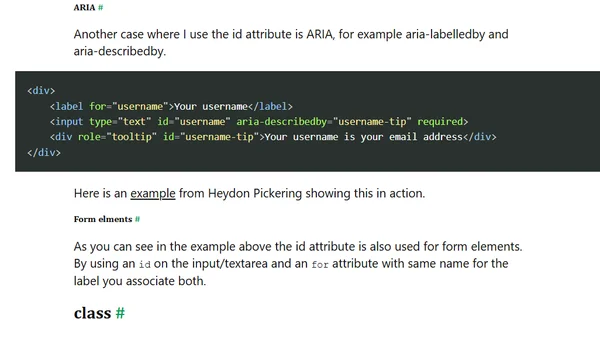
HTML5 removes restrictions on the `id` attribute, allowing it to use the same wide range of characters as the `class` attribute.
Analyzes the HTML and CSS generated by Safari's Reader mode, exploring its structure and how developers can interact with it.
Explains the HTML5 `document.head` property, its benefits over traditional DOM access, and provides polyfill code for cross-browser support.
A technical guide on using CSS and JavaScript to override browser defaults and display hidden HTML elements like <head>, <title>, and <meta> tags.
An experimental JavaScript approach to creating elastic textareas that auto-adjust height without hidden divs, discussing browser compatibility.
Explains how to build a stronger, more semantic DOM using underutilized HTML elements like fieldset, q, cite, and dfn for better structure and accessibility.
Explores native multiple file uploads in browsers using the 'multiple' attribute and feature detection for cross-browser compatibility.