How to style the found search / "find in page" substrings (#tilPost)
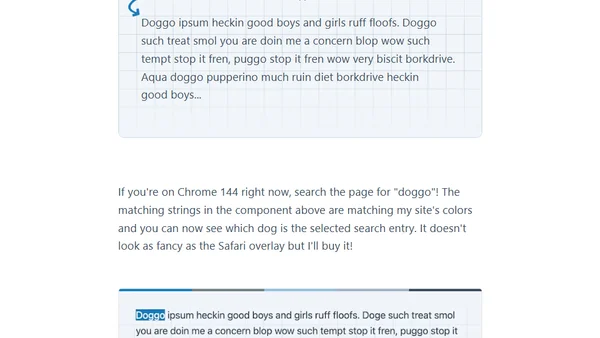
Learn how to use the new CSS ::search-text and ::search-text:current pseudo-elements to style 'find in page' search results in Chrome.
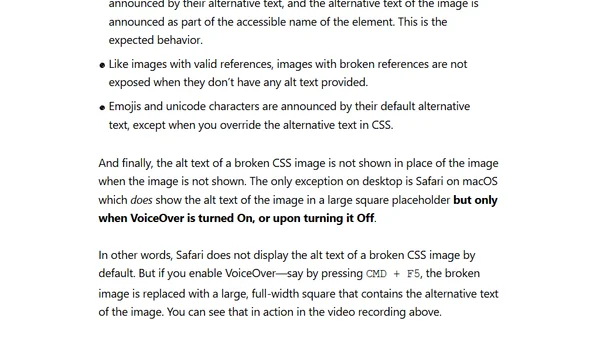
Explains how to use CSS's slash syntax to provide alternative text for CSS-generated content, improving web accessibility for screen readers.
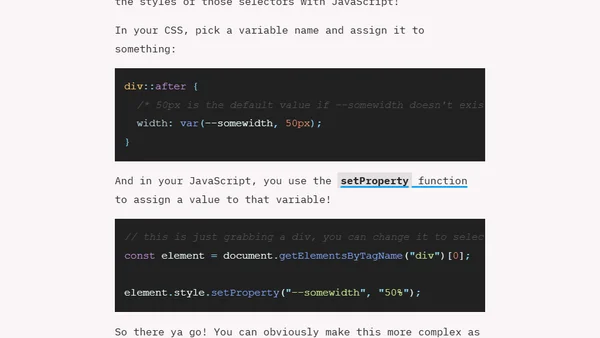
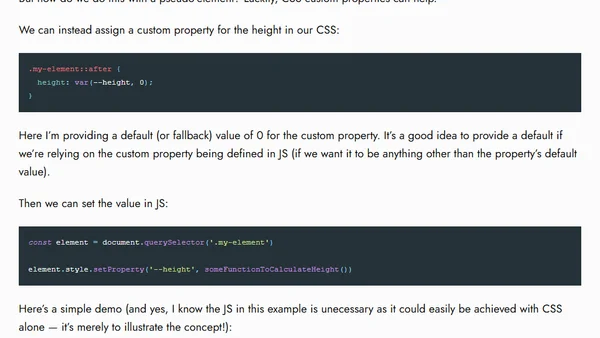
Learn how to dynamically style CSS pseudo-elements like ::after using JavaScript and CSS custom properties (variables).
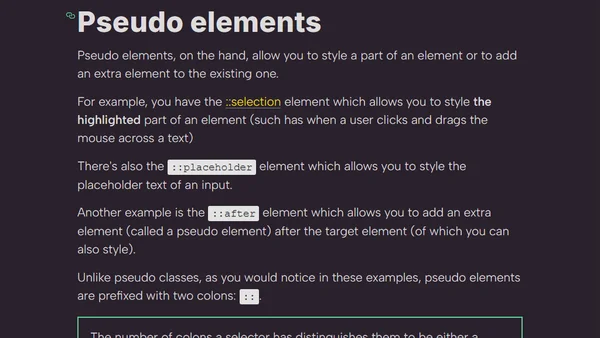
Explains the key differences between CSS pseudo-classes (like :hover) and pseudo-elements (like ::before), including syntax and use cases.
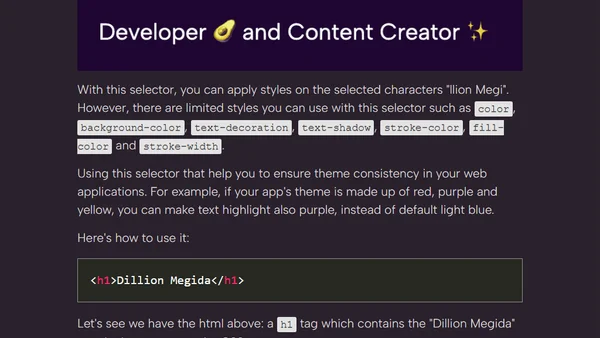
Explains how to use the CSS ::selection pseudo-element to style highlighted text, including supported properties and limitations.
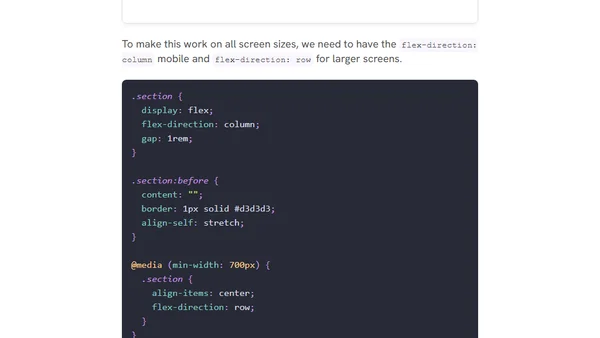
A CSS tutorial on creating a dynamic line separator between flexbox items that adapts to screen size, using pseudo-elements and flexbox properties.
Learn how to dynamically style CSS pseudo-elements like ::after using JavaScript and CSS custom properties (CSS variables).
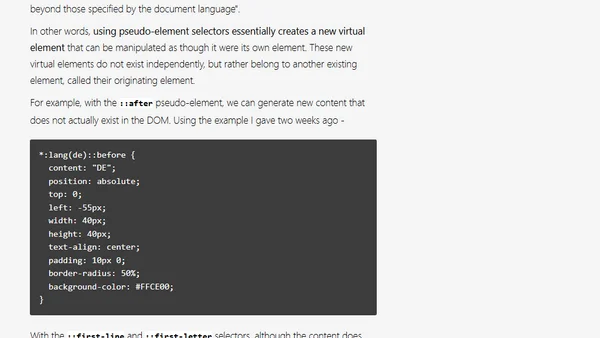
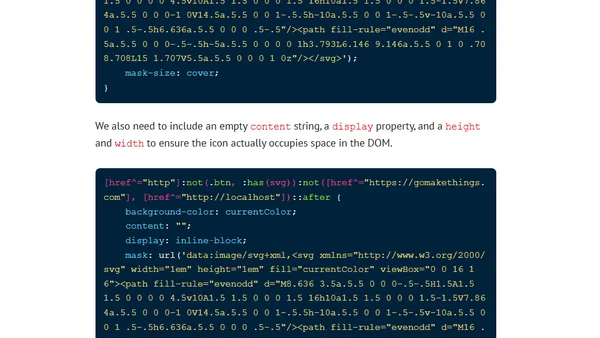
Explores creative and lesser-known applications of CSS pseudo-elements, such as hover effects and expanding clickable areas, with practical code examples.
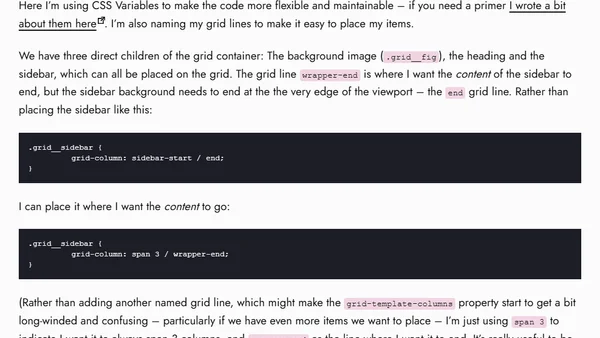
A tutorial on using CSS pseudo-elements as child items within a CSS Grid layout to create complex designs like hero sections with aligned sidebars.
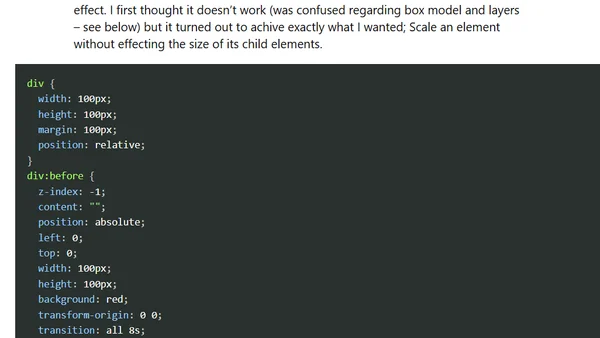
A CSS tutorial explaining how to use transform:scale() on a parent element without affecting the visual size of its child elements.
Explains the difference between CSS pseudo-classes and pseudo-elements, and clarifies the correct single vs. double colon syntax to use for each.
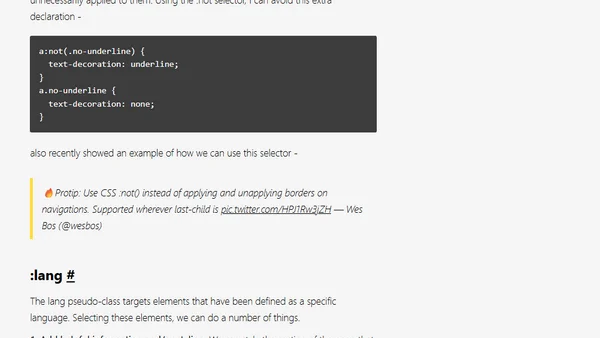
Explores five underused CSS selectors like :empty, ::first-letter, and :not(), with practical examples for web developers.
A tutorial on creating slanted, 3D-looking tabs using CSS transforms and pseudo-elements, with graceful degradation for older browsers.
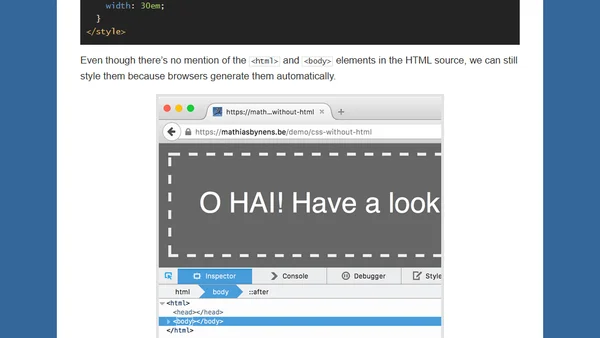
A technical exploration of how to use CSS without any HTML markup, demonstrating implied elements and HTTP headers.
A technique for creating custom checkboxes and radio buttons using CSS sprites, improving on an existing method for better image control.