Questions I asked as .NET interviewer
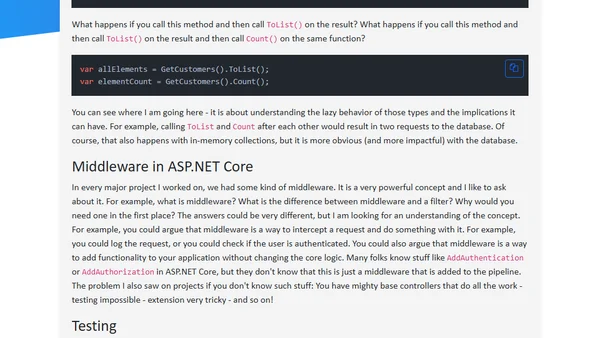
A .NET developer shares technical interview questions focused on C#, SOLID principles, async/await, and database queries to assess problem-solving skills.
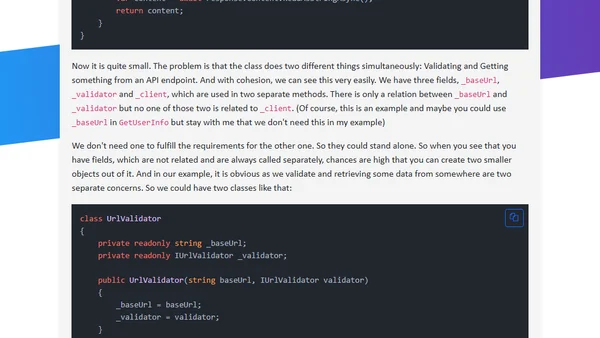
Explains software cohesion as a metric for refactoring, with a C# example showing how to split a low-cohesion class.
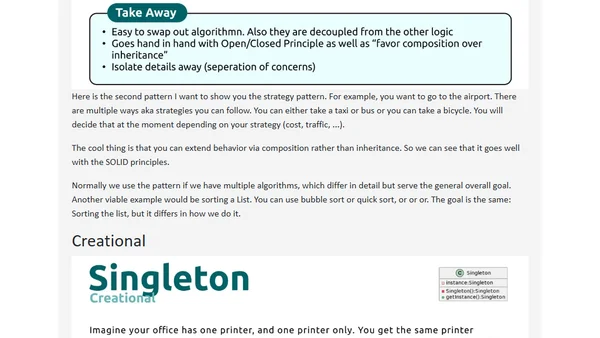
Explains software design patterns like Mediator, Strategy, Singleton, and Proxy using simple sketches and real-world analogies.
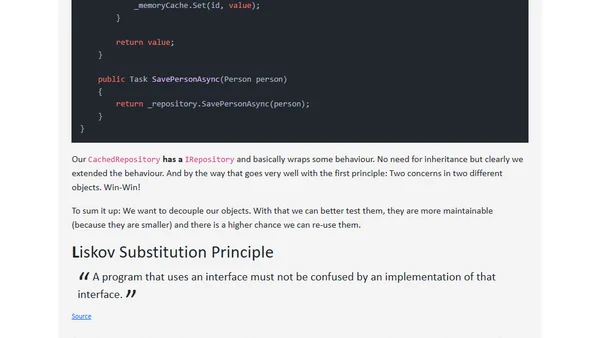
A detailed guide to SOLID principles in C#, explaining each principle with code examples to improve code readability, maintainability, and flexibility.
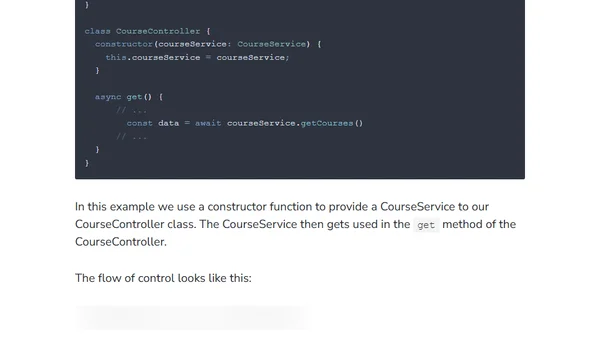
Explains the Dependency Inversion Principle (DIP) from SOLID, showing how to implement it in JavaScript/TypeScript to decouple high-level and low-level modules.
Explains SOLID design principles to write maintainable OOP code and avoid common anti-patterns (STUPID code) that harm software quality.
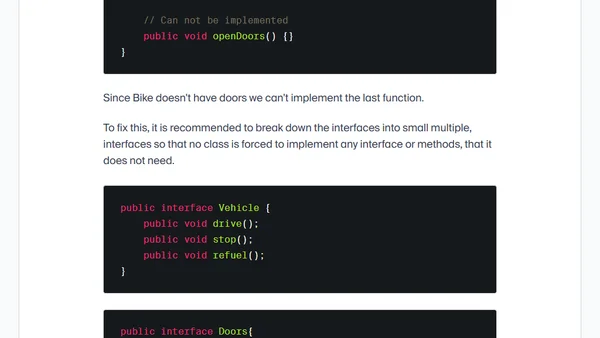
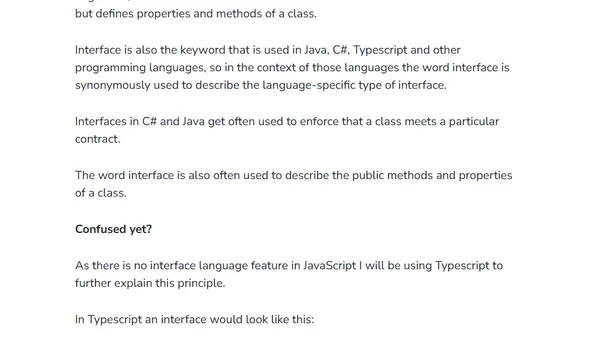
Explains the Interface Segregation Principle (ISP) from SOLID, demonstrating its application in JavaScript and TypeScript with code examples.
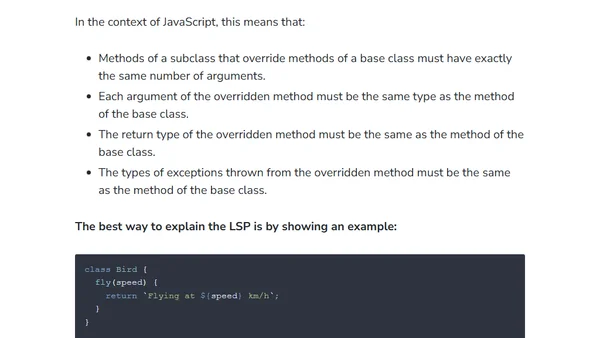
Explains the Liskov Substitution Principle (LSP) in SOLID, demonstrating correct and incorrect implementations in JavaScript/TypeScript with class examples.
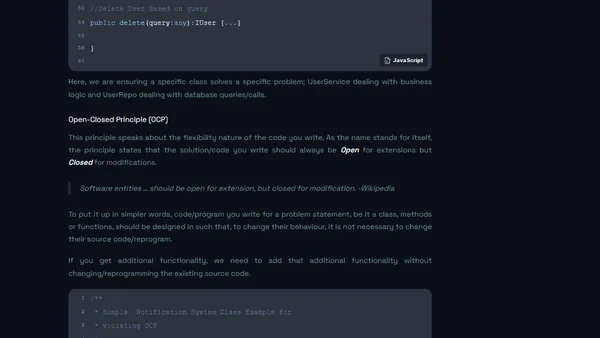
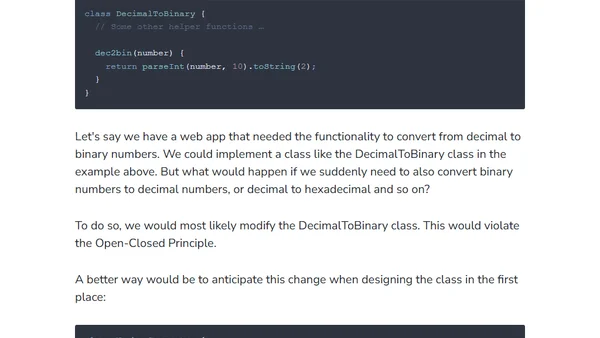
Explains the Open-Closed Principle (OCP) from SOLID, demonstrating its implementation in JavaScript/TypeScript with code examples.
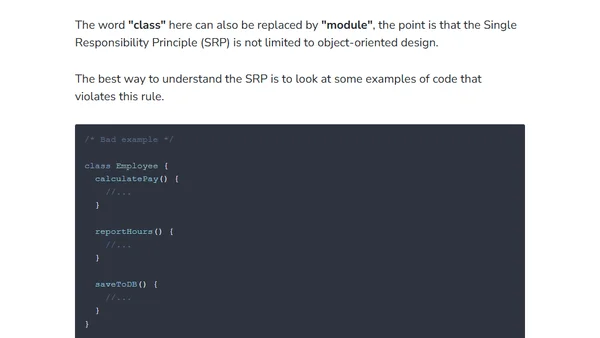
Explains the Single Responsibility Principle (SRP) in JavaScript with code examples, part of a series on SOLID design principles.
Article argues that code quality directly impacts user experience by enabling faster feature delivery and fewer bugs.
A podcast episode discussing how using 'final' in code can improve maintainability, part of a series on SOLID principles and interfaces.
A review of Robert C. Martin's 'Clean Architecture' book, covering its core principles, structure, and insights on software design.