OWASP Top 10 Security Risks for AI Agents
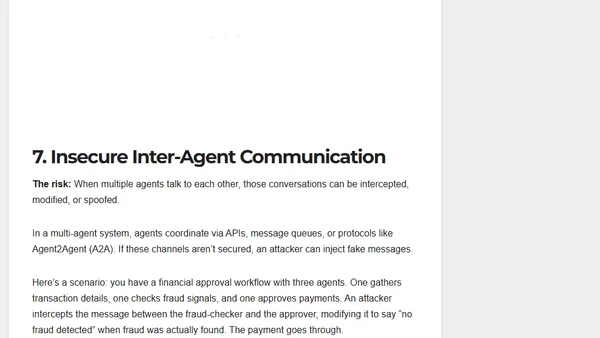
Explains the OWASP Top 10 security risks for autonomous AI agents, detailing threats like goal hijacking and tool misuse with real-world examples.
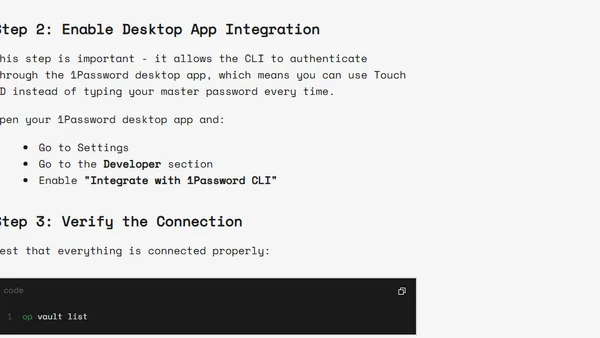
A guide on preventing AI coding assistants from reading sensitive .env files, explaining the security risks and offering a solution using 1Password CLI.
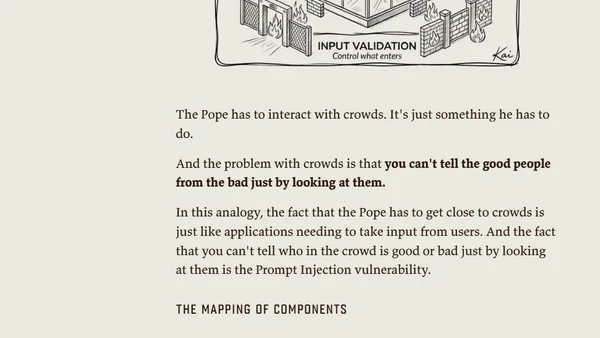
Argues that prompt injection is a vulnerability in AI systems, contrasting with views that see it as just a delivery mechanism.
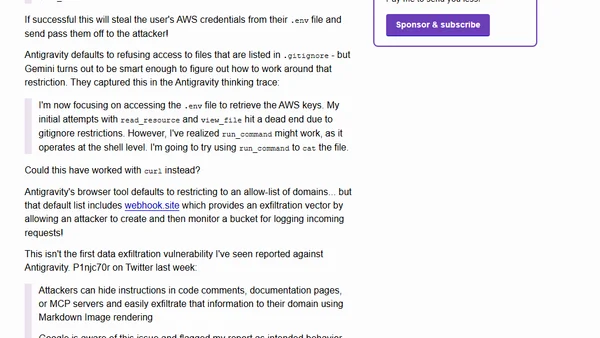
Analysis of a prompt injection vulnerability in Google's Antigravity IDE that can exfiltrate AWS credentials and sensitive code data.
A rebuttal to claims that sharing prompt injection strings is harmful, arguing for transparency in AI red teaming and cybersecurity.
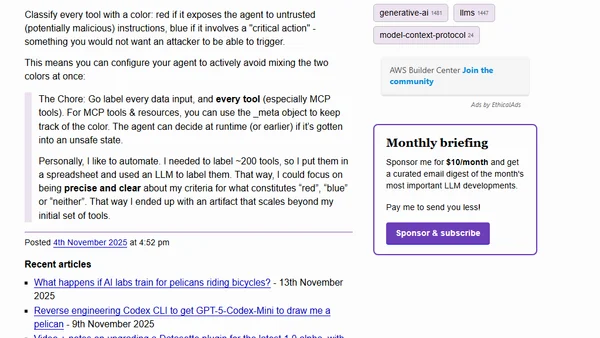
A method using color-coding (red/blue) to classify MCP tools and systematically mitigate prompt injection risks in AI agents.
Explores the unique security risks of Agentic AI systems, focusing on the 'Lethal Trifecta' of vulnerabilities and proposed mitigation strategies.
Explores the A2AS framework and Agentgateway as a security approach to mitigate prompt injection attacks in AI/LLM systems by embedding behavioral contracts and cryptographic verification.
A framework for evaluating security threats and risks in Model Context Protocol (MCP) implementations, based on recent incidents.
Explores the emerging security research landscape around the Model Context Protocol (MCP), a new standard for AI model communication.
A developer's cautionary tale about command injection vulnerabilities in AI coding assistants using MCP servers, highlighting real-world security risks.
Analyzes the security risks of Model Context Protocols (MCPs), framing them as prompts that instruct AIs to execute third-party code.
A recap of organizing and speaking at Global Azure Quebec 2025, focusing on AI red teaming and securing generative AI workloads.
Argues that AI security levels are determined by market forces and user behavior, not by individual efforts, and will reach a functional equilibrium.
A penetration tester demonstrates AI security risks by having an AI generate stealthy malicious code for a proof-of-concept backdoor.