Enterprise MCP SSO With Microsoft Entra and Agentgateway
A guide to securing enterprise MCP servers using Microsoft Entra ID for Single Sign-On (SSO) via the Agentgateway open-source gateway.
Christian Posta is Field CTO at solo.io, an author, and expert in building scalable, resilient distributed systems. He writes on microservices, cloud-native architectures, DevOps, and service meshes, contributing to open-source projects like Kubernetes, Envoy, and Istio.
19 articles from this blog
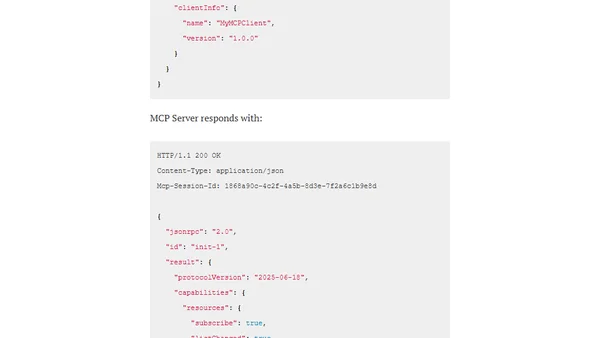
A guide to securing enterprise MCP servers using Microsoft Entra ID for Single Sign-On (SSO) via the Agentgateway open-source gateway.
Explores how OAuth delegation and 'On Behalf Of' flows apply to AI agents, discussing authorization challenges in agentic systems.
Argues that enterprises should use remote MCP servers instead of local stdio servers for better security, governance, and scalability with AI agents.
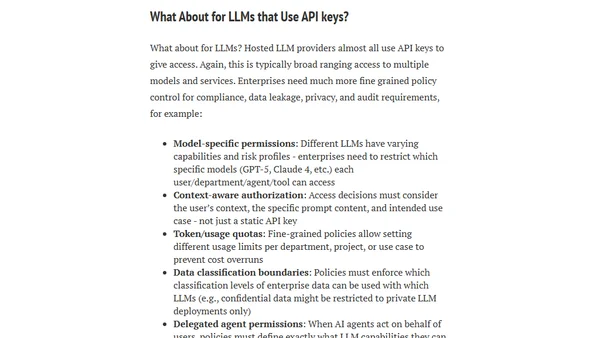
Argues against using API keys for securing enterprise AI tools like LLMs and agents, highlighting security flaws and recommending better alternatives.
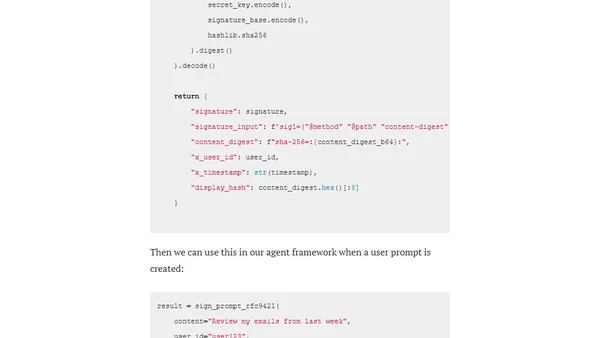
Explores the A2AS framework and Agentgateway as a security approach to mitigate prompt injection attacks in AI/LLM systems by embedding behavioral contracts and cryptographic verification.
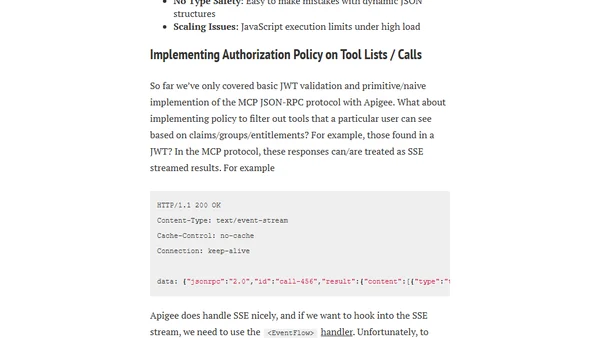
Explores using Apigee API Gateway to govern and secure MCP (Model Context Protocol) servers for AI agents, including JWT validation and JSON-RPC parsing.
Explores the concept of sessions and context management in Agent-to-Agent (A2A) communication for enterprise AI systems, focusing on state, auditability, and protocol details.
Explores five authorization patterns for MCP servers to securely call external APIs like GitHub or Slack on behalf of users across different trust domains.
Explains how to use SPIFFE and Keycloak for secure, non-anonymous dynamic client registration in MCP authorization, addressing enterprise security concerns.
A technical guide on configuring OAuth 2.0 token delegation for an A2A (Agent-to-Agent) system using Python, FastAPI, and security schemes.
Analyzes key enterprise challenges in adopting MCP servers for AI agents, focusing on security, governance, and authorization complexities.
A technical guide on implementing MCP client authorization using Dynamic Client Registration (RFC 7591) and OAuth 2.1, following the MCP Authorization specification.
Explores the critical but underdeveloped components of Agent-to-Agent (A2A) protocols: dynamic discovery, naming, and resolution for scalable AI agent ecosystems.
Final part of a series on implementing MCP Authorization, focusing on integrating a production Identity Provider (Keycloak) for OAuth.
A technical guide implementing OAuth 2.1 authorization for an MCP server, part two of a three-part series with practical code examples.
A technical guide to implementing the latest MCP Authorization specification for securing HTTP-based MCP servers, starting with building a compliant server using FastAPI.
Explores using SPIFFE workload identity for AI agents, highlighting technical gaps in current Kubernetes implementations for non-deterministic agent behavior.
AI agents' autonomous and probabilistic nature forces stricter security and authorization models, breaking traditional microservice assumptions.
Explores the challenges of delegating authority to AI agents due to fragmented user identities and ungoverned authorization systems in enterprises.