Process Philosophy for AI Agent Design Using a Whiteheadian Framework
Proposes a new AI agent architecture based on Alfred North Whitehead's process philosophy, treating agents as dynamic processes rather than static entities.
Introduces Agent-Matrix, an open-source OS for managing autonomous AI agents as living systems, aiming to eliminate maintenance.
A developer shares their experience building a Winter Wishlist app using the MCP-UI framework and Goose AI agent, focusing on UI integration and iframe sizing challenges.
Explores using .goosehints files and the TODO extension with the Goose AI agent to plan and structure a festival countdown web app project.
A software engineer shares practical strategies for effectively using AI coding agents like Claude Code, emphasizing setup and feedback loops.
Explores using Goose AI agent's sub-recipes to automate multi-platform social media content generation from a single workflow.
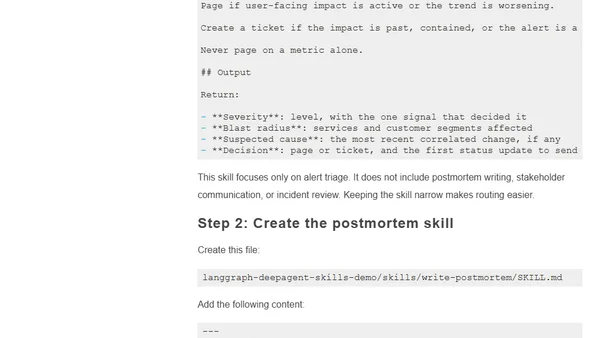
Explores the open standard for AI agent skills, detailing how tools like Goose use SKILL.md files to provide contextual expertise automatically.
Anthropic's Agent Skills specification becomes an open standard, detailing its lightweight design and current industry adoption.
Explores integrating the Goose AI agent directly into your terminal for ambient, on-demand assistance without explicit sessions.
A technical walkthrough of using the Council of Mine AI extension for MCP sampling to resolve a fictional committee debate, part of an AI advent series.
Explores the technical implementation of subagents in the Goose AI agent framework, focusing on their architecture and how they manage context.
A technical guide on integrating two distinct AI agent systems (BMAD and PAI) using a layered architecture to combine their strengths.
A developer shares key engineering lessons learned from building AI agents in .NET, focusing on state management, orchestration, and observability.
Explains how to use arguments and conditional Jinja templating in Goose AI recipes to create dynamic, reusable AI workflows for generating themed content.
Explains the OWASP Top 10 security risks for autonomous AI agents, detailing threats like goal hijacking and tool misuse with real-world examples.
Explores how OAuth delegation and 'On Behalf Of' flows apply to AI agents, discussing authorization challenges in agentic systems.
Using AI to transform messy, unstructured vendor notes into clean JSON and a styled HTML website, highlighting the importance of examples.
A developer creates a reusable AI agent recipe using Goose to transform messy lost and found data into organized web applications.
Analysis of a realistic AI voice agent demo, highlighting key design principles for bridging the gap between demos and real-world systems.
Major tech companies launch the Agentic AI Foundation under the Linux Foundation to promote open, collaborative standards for AI agent development.