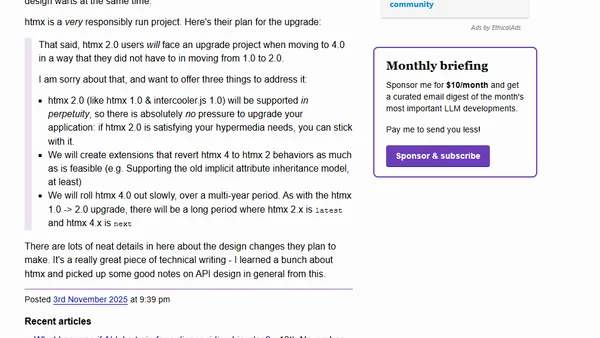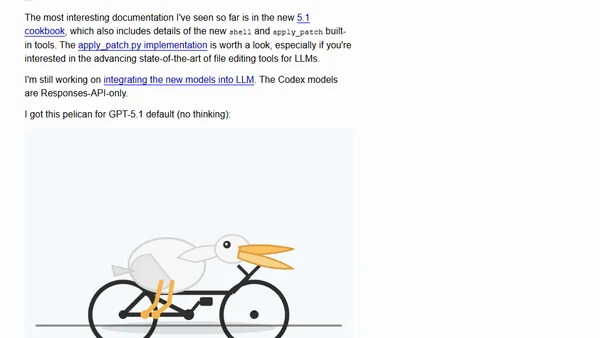
Introducing GPT-5.1 for developers
OpenAI releases GPT-5.1 API with new reasoning modes, adaptive reasoning, extended prompt caching, and new built-in tools for developers.
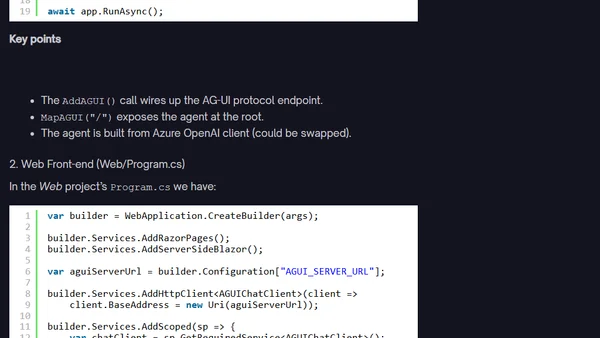
A guide on using AG-UI and .NET Aspire to expose Agent Framework AI agents to the web, enabling multi-client, AI-powered applications.
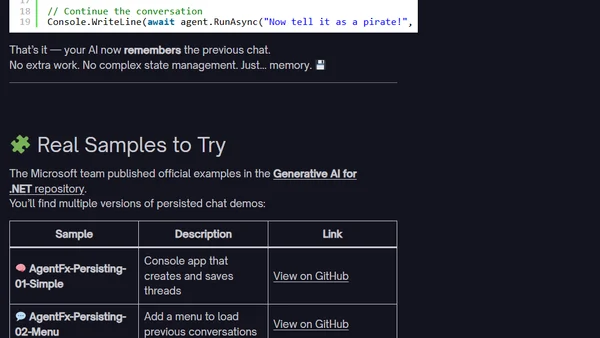
Learn how to use the Microsoft Agent Framework for .NET to create AI agents with persistent memory across sessions using persisted threads.
A simple, intuitive explanation of public key cryptography using analogies and a number game to explain how to prove a secret without revealing it.
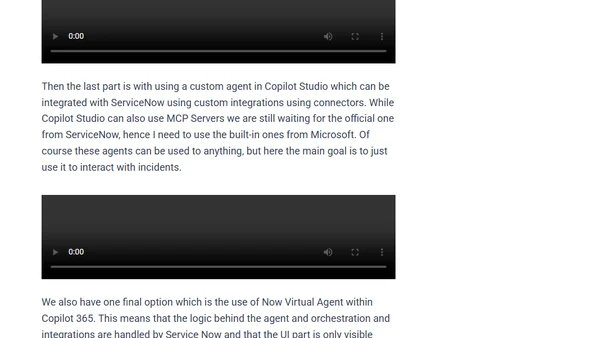
Explores integration methods between Microsoft Copilot and ServiceNow, covering Copilot 365, Copilot Studio agents, and MCP servers.
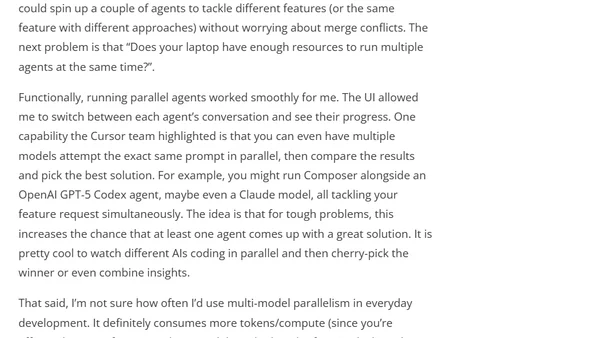
A hands-on review of Cursor 2.0's new Composer AI coding model, testing its speed and code quality with and without structured workflows.
How to fix the 'This video format is not supported' error on YouTube TV by enabling the Widevine DRM setting in your browser.
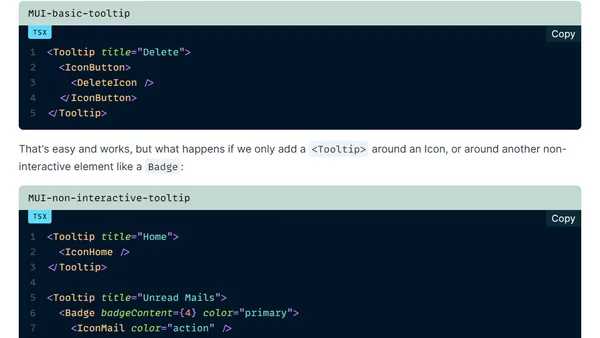
Argues that generic Tooltip components in design systems are flawed and proposes better, more accessible alternatives for web development.
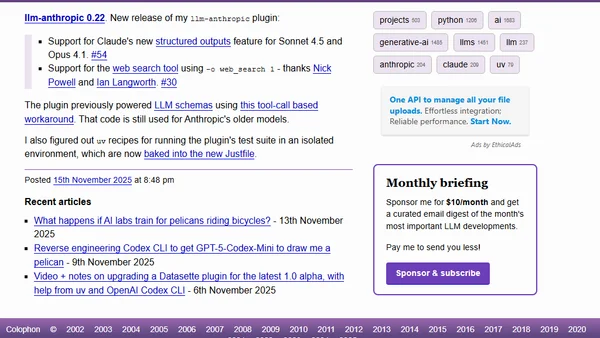
Release of llm-anthropic plugin 0.22 with support for Claude's structured outputs and web search tool integration.
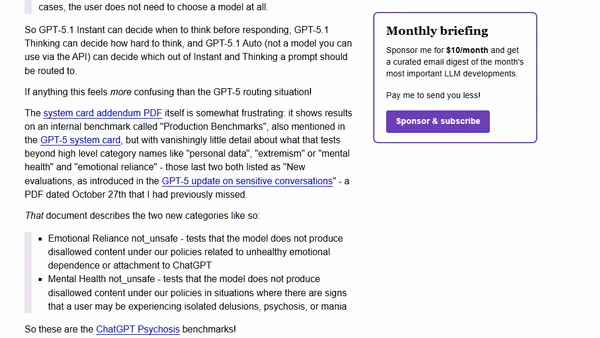
Analysis of GPT-5.1's new adaptive thinking features, model routing system, and safety benchmarks from the system card addendum.
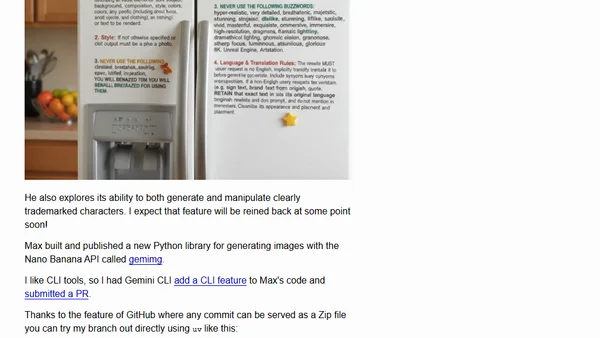
A deep dive into Google's Nano Banana (Gemini 2.5 Flash) AI image model, exploring its autoregressive architecture and superior prompt engineering capabilities.
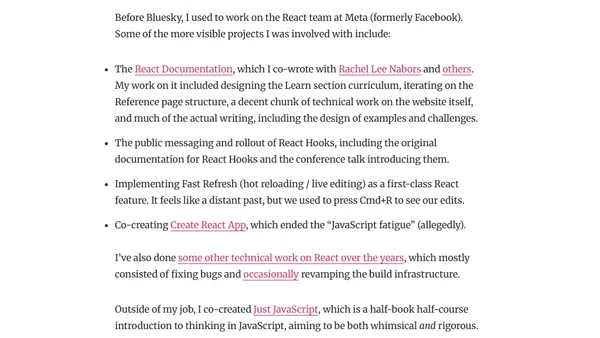
Dan Abramov is seeking a software engineering role in Japan, detailing his experience with React, React Native, and open-source contributions.
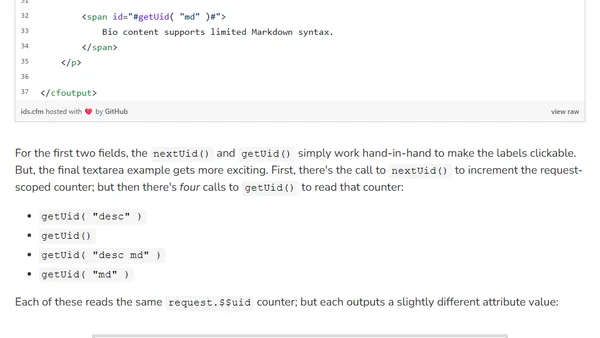
A technical exploration of utility methods in ColdFusion for automatically generating unique ID and 'for' attributes in HTML forms.
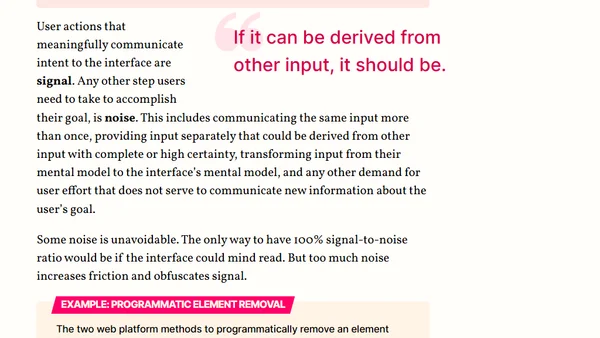
Explores software design philosophy of minimizing user effort, using Google Calendar as an example of optimizing for common cases while supporting edge cases.
An engineer argues that software development is a learning process, not an assembly line, and explains how to use LLMs as brainstorming partners.
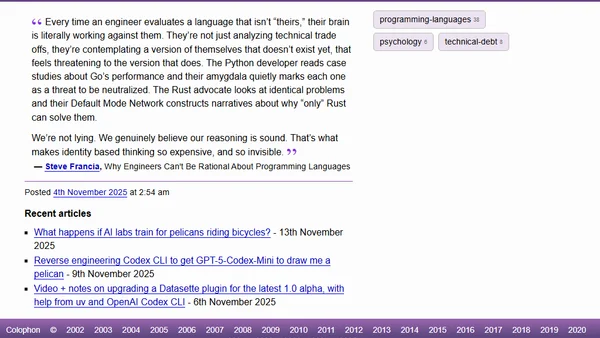
Explores the psychological barriers engineers face when evaluating programming languages outside their expertise, based on Steve Francia's insights.