Artificial intelligence Blogs

Page 4 of 5 (90 Blogs)
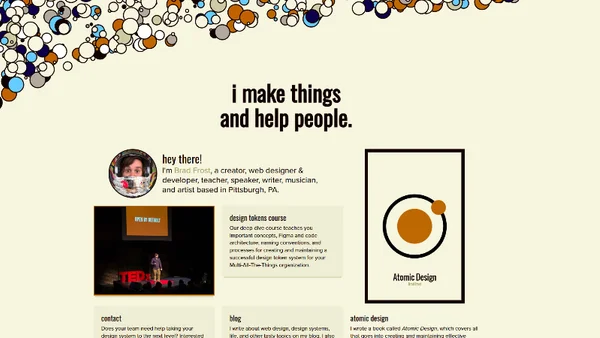
Brad Frost
1/1/2026 EN

Brad Frost

Brad Frost — Web designer, author, and design systems advocate best known for Atomic Design, writing and speaking about design systems, CSS, frontend workflows, creativity, and the human side of building user interfaces.

Zack Kanter
1/1/2026 EN

Zack Kanter

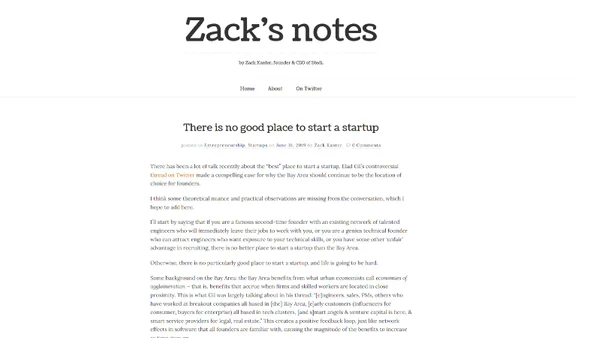
Zack Kanter — Founder & CEO of Stedi and former founder of Proforged, sharing thoughtful essays on startups, entrepreneurship, Amazon’s business model, and founder mindset, grounded in real operating experience and long-term reflections on building companies.

Brent
1/1/2026 EN

Brent

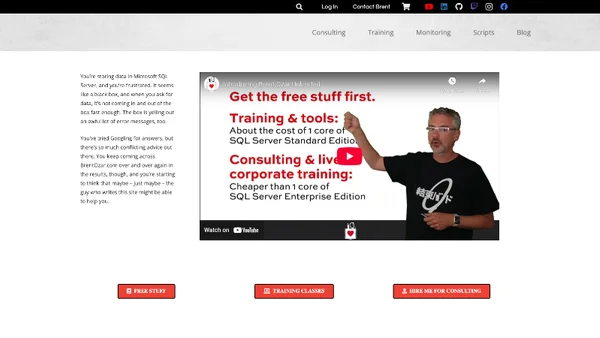
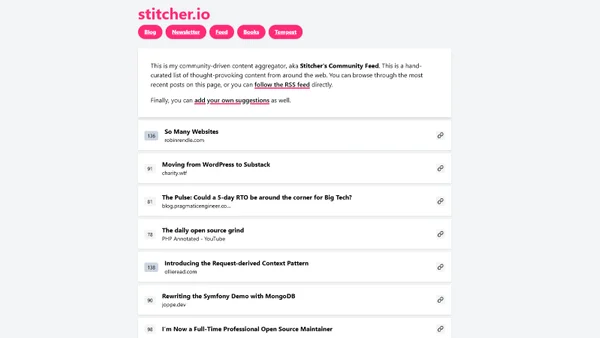
Brent — Curator of Stitcher’s Community Feed, a community-driven, hand-curated content aggregator highlighting thoughtful, high-quality writing from across the web. The feed focuses on software engineering, open source, web development, infrastructure, and the human side of building technology. Readers can browse recent picks, follow via RSS, or contribute their own suggestions.

Cassidy Williams
11/29/2025 EN

Cassidy Williams

Cassidoo.co is the personal blog of Cassidy Williams, a well known developer, speaker, and educator who writes about JavaScript, React, career growth, web development, dev tools, and learning in public. Her posts mix technical insights with approachable explanations, covering topics like UI patterns, coding tips, productivity workflows, and the human side of software engineering. Cassidy is known for her weekly newsletter, open-source work, and community involvement.

Sebastian Raschka
11/29/2025 EN

Sebastian Raschka

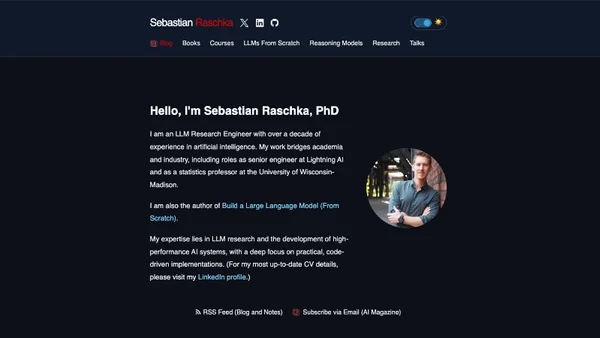
SebastianRaschka.com is the personal blog of Sebastian Raschka, PhD, an LLM research engineer whose work bridges academia and industry in AI and machine learning. On his blog and notes section he publishes deep, well-documented articles on topics such as LLMs (large language models), reasoning models, machine learning in Python, neural networks, data science workflows, and deep learning architecture. Recent posts explore advanced themes like “reasoning LLMs”, comparisons of modern open-weight transformer architectures, and guides for building, training, or analyzing neural networks and model internals.