DRY might be wrong for agent documentation
Discussion on why DRY principle may be wrong for agent-facing documentation, advocating workflow-focused denormalized docs.
Waldek Mastykarz – Insights on Microsoft 365 Development and Community Practices Waldek Mastykarz is a Developer Advocate at Microsoft who helps developers get the most out of the Microsoft 365 platform. On his blog, he shares hands-on guidance, tips, and real-world examples for building apps, automations, and extensions for Microsoft 365. As a core contributor to Microsoft 365 Patterns & Practices, he collaborates with the global developer community to create open-source tools, reusable templates, and best-practice documentation that make extending Microsoft 365 easier and more consistent. Before joining Microsoft, Waldek spent years working with partners across the Microsoft ecosystem and earned the title of Microsoft MVP twelve times for his community work. His writing reflects both deep technical knowledge and a passion for sharing practical insights that help other developers succeed.
44 articles from this blog
Discussion on why DRY principle may be wrong for agent-facing documentation, advocating workflow-focused denormalized docs.
Explores why AI prompts can be bad, emphasizing reliability across runs over occasional success, and how to judge prompt quality.
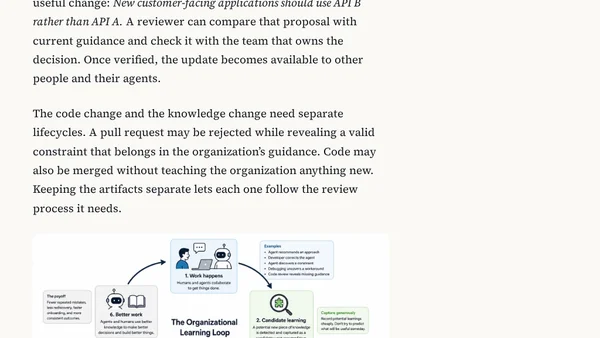
Explores how AI agents can capture organizational knowledge from work interactions, proposing a review process to update guidance.
AI accelerates software development, shifting bottleneck from building to deciding which solutions to adopt, risking fragmentation.
Explores how AI agents are changing organizational knowledge management, shifting from search to reasoning and requiring teams to maintain high-quality, current documentation.
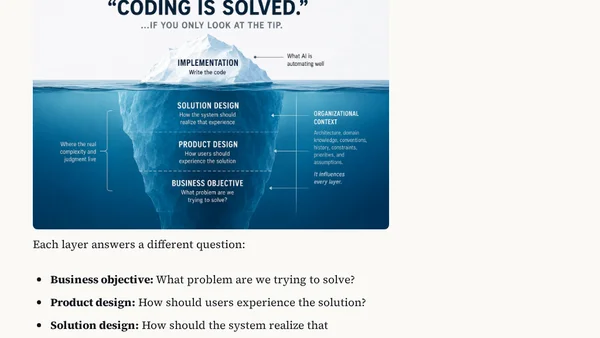
This article argues that AI solving coding doesn't mean software engineering is solved, as organizational context and higher-level design remain critical.
Explores inference efficiency in AI, focusing on preserving attention by reducing unnecessary reasoning steps and improving tooling design.
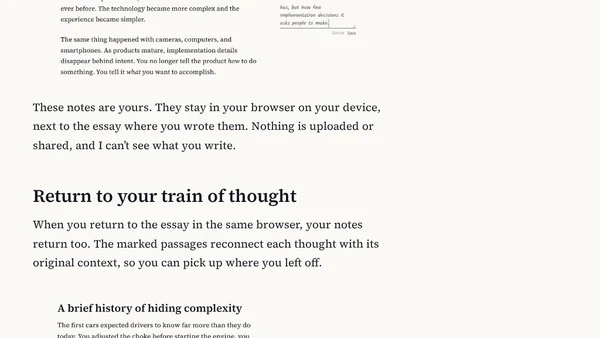
A blog introduces marginalia, a feature for taking notes while reading, storing them locally in the browser and exporting to PDF.
Analyzes why measuring AI productivity by individual time savings is flawed, focusing on collective time costs.
Explores how excessive configuration options in AI tools reveal immaturity, arguing that mature tech hides complexity behind user intent.
Explains why externalizing judgment is the key skill for using LLMs effectively, beyond prompt engineering.
Explains why judging AI coding agents requires knowing the task's value, not just the cost.
ProxyStat, a tool for monitoring system proxy settings, is now available for Windows to help developers avoid connectivity issues.
ProxyStat v1.2.1 for macOS adds quick access to system proxy settings and is now notarized by Apple for easier installation.
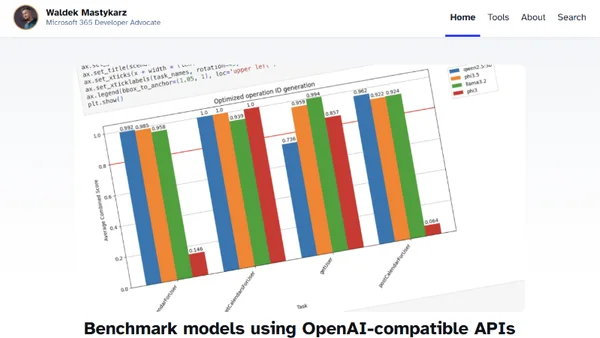
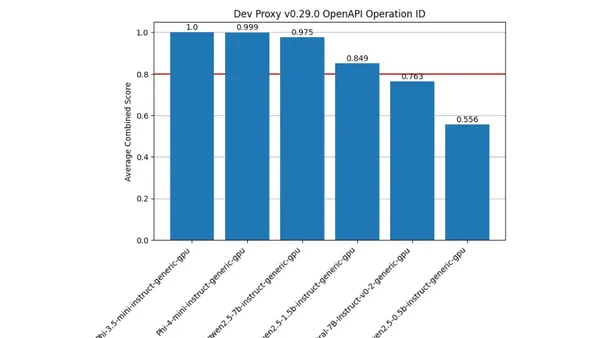
A guide to benchmarking language models using a Jupyter Notebook that supports any OpenAI-compatible API, including Ollama and Foundry Local.
Explains why standard language model benchmarks are insufficient and how to build custom benchmarks for specific application needs.
Explains the importance of specifying charset=utf-8 in API request headers to properly handle special characters and emojis in JSON payloads.
Guide on integrating Prompty with Microsoft's Foundry Local for managing AI prompts and running models locally for development.
Guide on integrating Microsoft 365 Copilot agents with Azure AI Search for enhanced knowledge retrieval using RAG, offering more control than basic options.
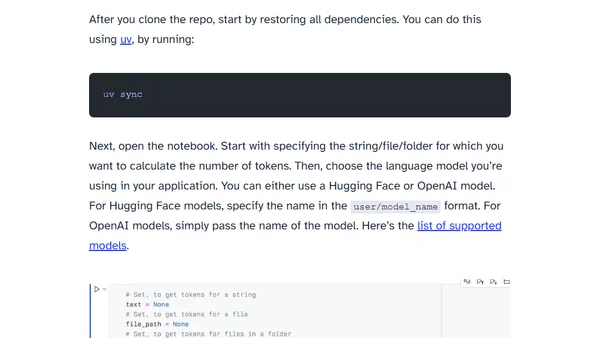
Learn how to accurately calculate token counts for strings using language models with a provided Jupyter Notebook tool.