5 Pillars of Augmented Agentic Software Development
Explores five key pillars for optimizing AI-powered agentic coding workflows, including system instructions and spec-driven development.

A software engineer argues that technical blogging remains valuable, inspired by a book on writing effective posts and using AI as an editorial tool.
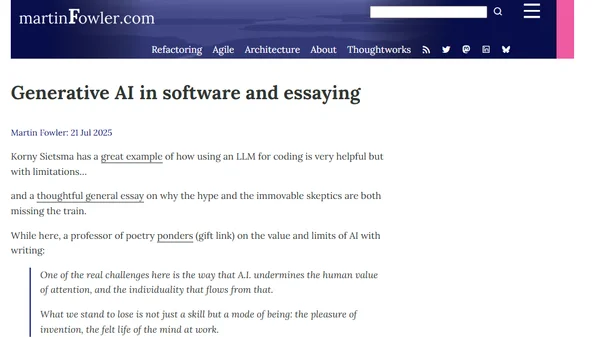
Martin Fowler shares insights on AI coding assistants, highlighting productivity gains and the importance of development philosophy and code durability.
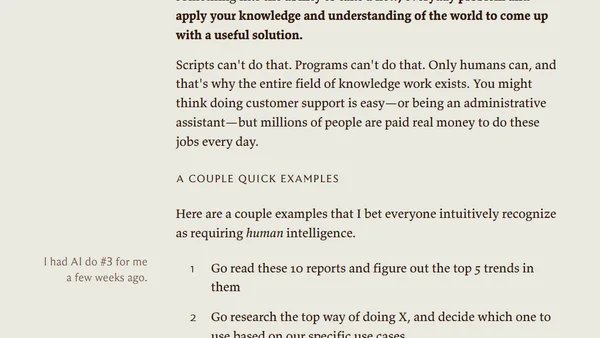
A rebuttal to Marcus Hutchins' critique of AI, arguing that his definition of intelligence as 'novel discovery' wrongly devalues most knowledge work.
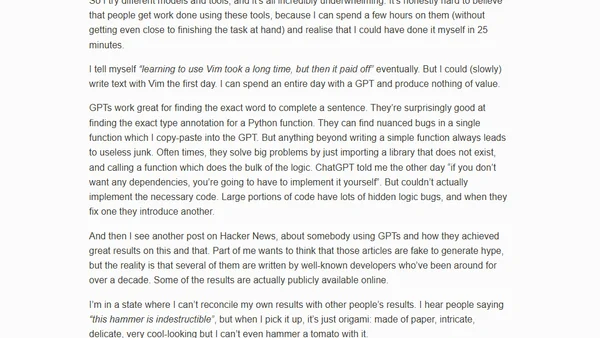
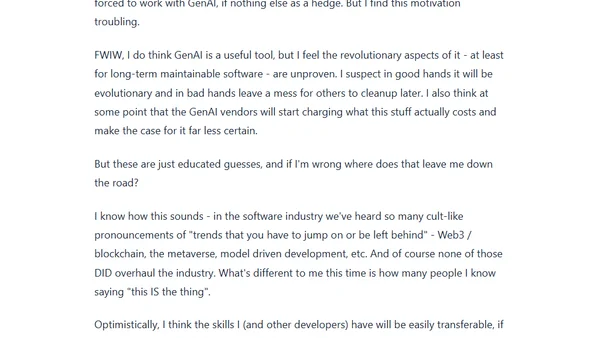
A developer's personal reflection on struggling to integrate AI coding tools effectively, feeling left behind despite the hype.
A software engineer's reflection on why buggy software is released, using personal anecdotes about frustrating apps and websites.
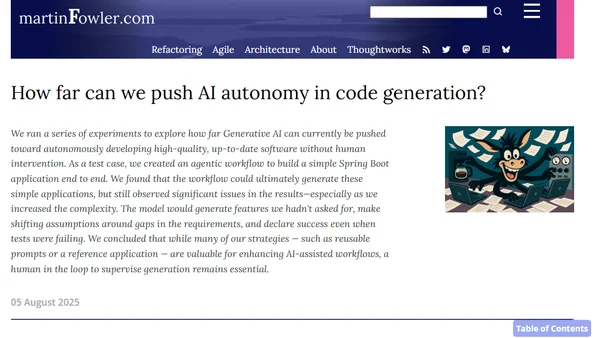
An experiment testing the limits of autonomous AI code generation for a Spring Boot app, revealing current limitations and the need for human oversight.
Author discusses their blog being banned from Lobste.rs for using AI agents to assist in writing, sparking a debate on AI's role in content creation.
A developer shares how AI tools helped reverse-engineer and optimize a slow API endpoint, moving from a complex transaction script to a domain model.
Explores Claude Code as a transformative AI-powered programming interface, comparing its potential impact to Smalltalk-80's historical influence on software development.
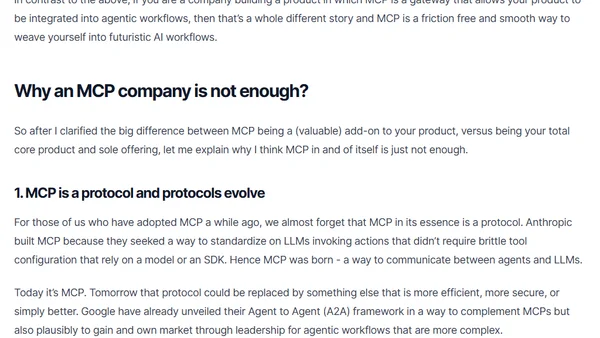
Argues that companies built solely on the Model Context Protocol (MCP) are unlikely to succeed, while those using MCP as an integration layer have a better chance.
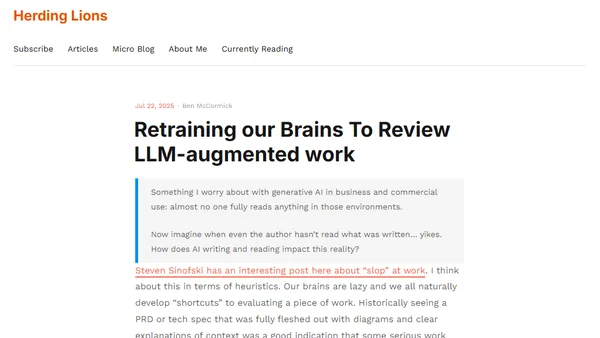
Explores how AI-generated content challenges traditional work review heuristics and the need for new evaluation methods.
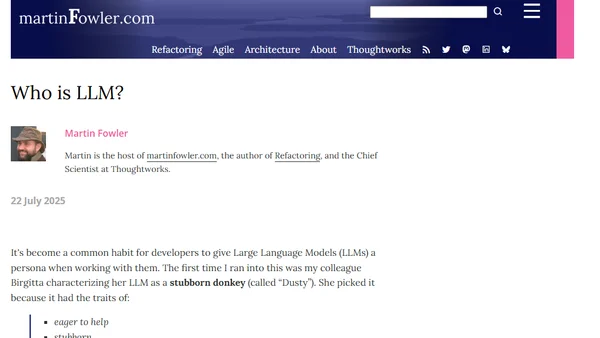
Explores the common practice of developers assigning personas to Large Language Models (LLMs) to better understand their quirks and behaviors.
An analysis of Generative AI's impact on coding and writing, exploring its benefits, limitations, and potential consequences for human creativity.
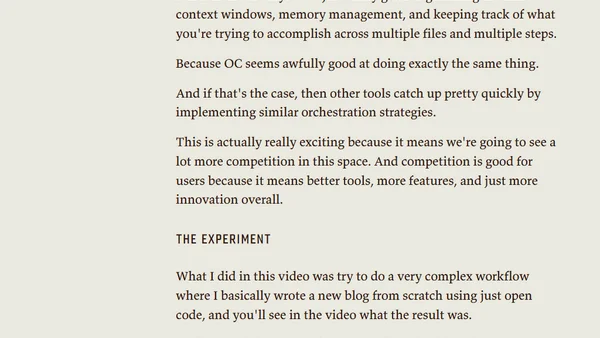
A comparison of AI coding assistants OpenCode and Claude Code, analyzing their capabilities in managing complex coding workflows and context.
A developer's personal crisis about the impact of Generative AI on software engineering careers, ethics, and the future of the industry.
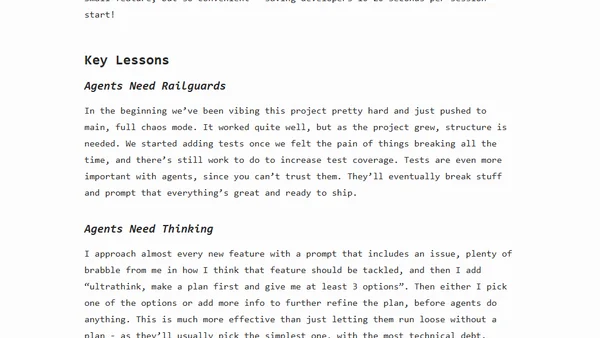
A developer reflects on the first month of VibeTunnel, a terminal app for running AI agents, detailing rapid growth, key technical milestones, and lessons learned.
An engineer critiques the misapplication of OKRs in tech teams, arguing for simple, outcome-focused plans over rigid quarterly rituals.
Discusses how AI tools like GitHub Copilot are changing developer work, arguing they act as powerful assistants rather than replacements.
A software engineer shares practical advice on mentoring, focusing on patience, framing advice, and navigating leadership growth within tech teams.