Two cheers for ugly code
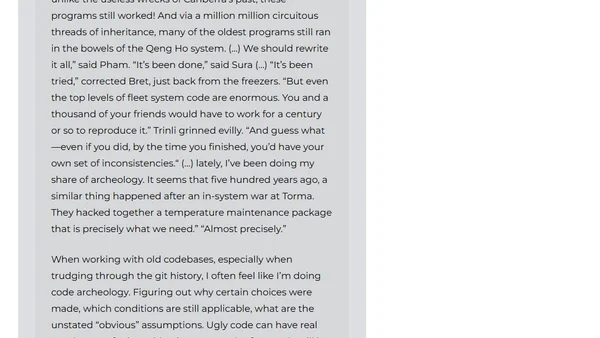
Argues that ugly, legacy code can hold valuable domain knowledge and be more practical to refactor than to rewrite from scratch.
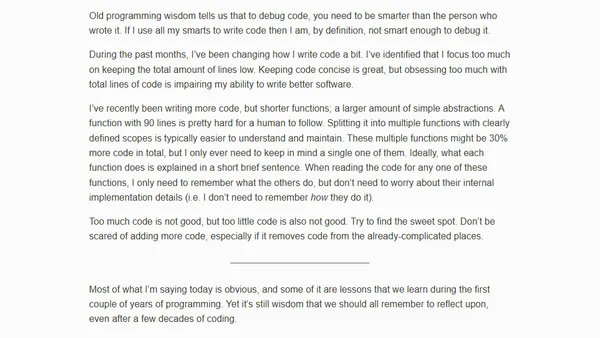
A developer reflects on the balance between concise and clear code, arguing that too little code can be as harmful as too much.
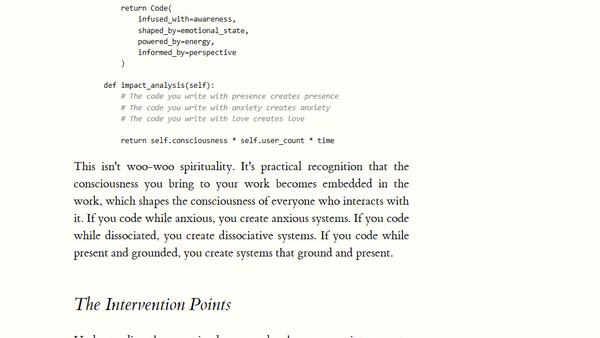
A programmer's philosophical reflection on how coding and technology create recursive feedback loops that shape human consciousness and cognition.
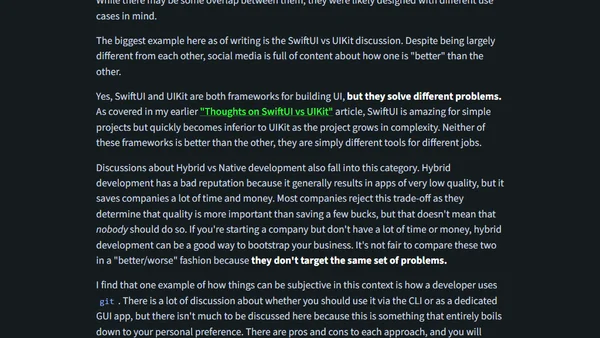
The article argues against rigid 'right vs wrong' thinking in software engineering, emphasizing context, trade-offs, and subjectivity in technical decisions.
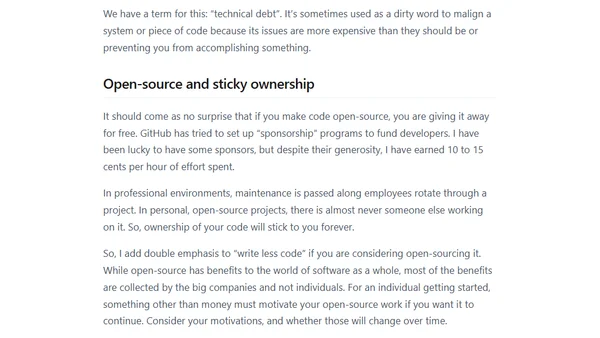
A senior engineer explains why writing less code is often better, focusing on long-term maintenance costs and technical debt.
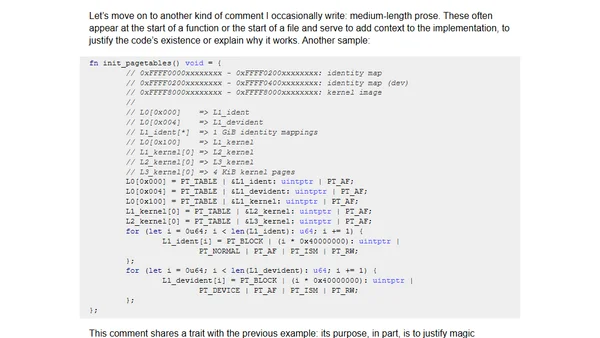
A developer argues for minimal, strategic code commenting, using examples to show how clear naming and structure can often replace verbose comments.
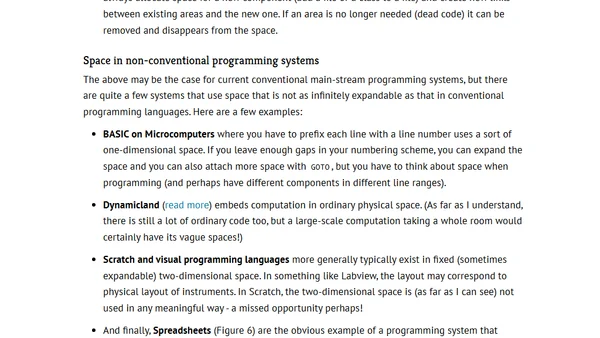
Explores the metaphor of 'terrain vague' (unused urban spaces) to understand unplanned and evolving structures in software systems and programming.
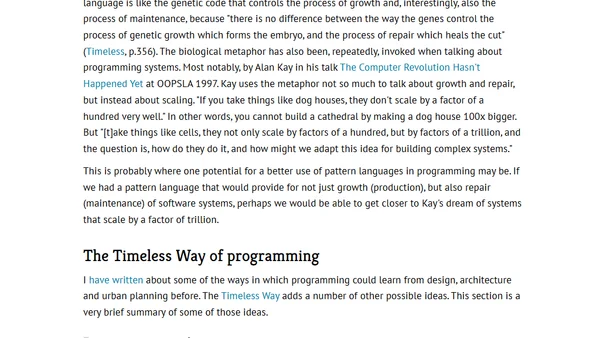
Explores architect Christopher Alexander's design philosophy and its profound, often misunderstood, application to software development and programming patterns.
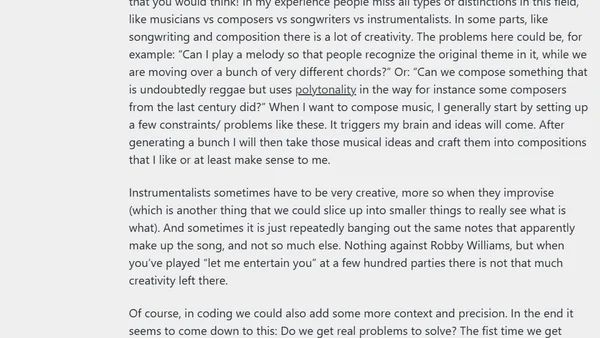
Explores the creative process in coding, comparing it to artistic fields like music, and argues that programming is fundamentally a creative problem-solving activity.
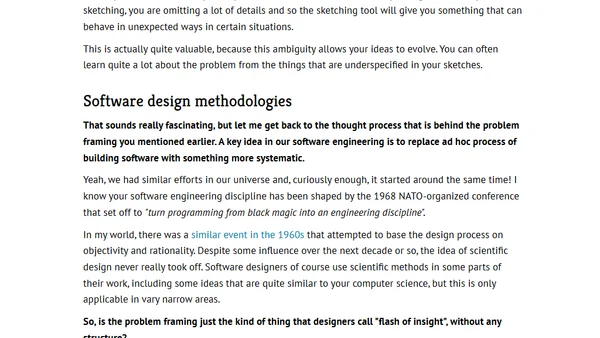
A fictional interview exploring an alternative universe where software creation is viewed as a design discipline, not engineering, and its cultural implications.
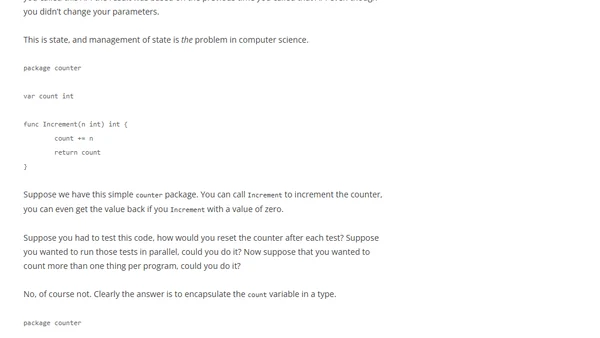
Explores the philosophy of writing good, idiomatic Go code, questioning common mantras and seeking better principles for the community.
A critique of blindly following software development 'best practices', arguing for more thoughtful discussion and application.
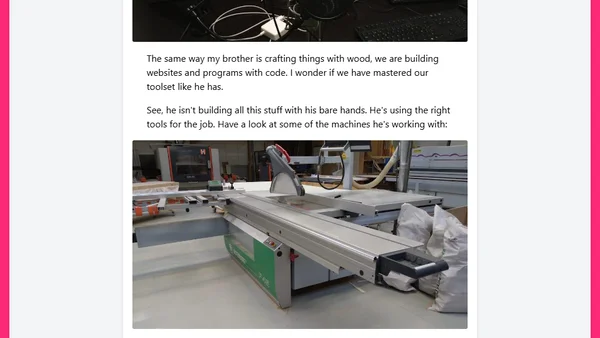
A programmer draws parallels between woodworking craftsmanship and software development, emphasizing the importance of mastering tools like IDEs and frameworks.
A software developer argues that writing less code is a key skill for creating maintainable, efficient systems and solving problems effectively.
A programmer reflects on the ethical responsibilities and unforeseen societal dangers of software development in the modern, hyper-connected world.
A philosophical look at JavaScript Fatigue, arguing software's purpose is solving business problems, not writing perfect code.
A critique of the common developer advice 'Don't reinvent the wheel,' exploring its psychological impact and arguing for the value of building from scratch.
A developer argues against being labeled a 'JavaScript Developer', advocating for a generalist approach to problem-solving across multiple languages and technologies.
Explains why deleting a non-existent key from a Python defaultdict should raise a KeyError to prevent silent bugs, aligning with Python's design philosophy.