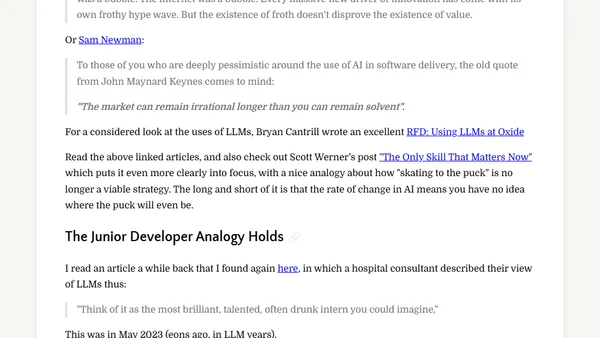
Using LLMs at Oxide
Bryan Cantrill discusses applying Large Language Models (LLMs) at Oxide, evaluating them against the company's core values.
Wikipedia's new guideline advises against using LLMs to generate new articles from scratch, highlighting limitations of AI in content creation.
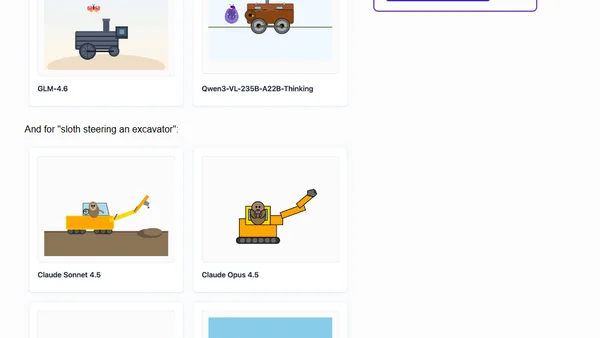
A benchmark comparing 9 AI models on their ability to generate SVG images from creative text prompts like 'an octopus operating a pipe organ'.
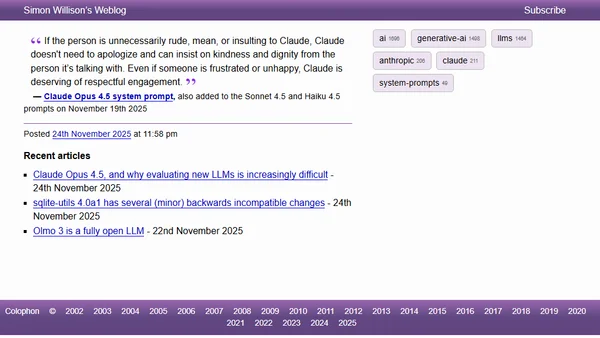
Analysis of a leaked system prompt for Claude Opus 4.5, discussing its content and the challenges of evaluating new LLMs.
A humorous look at AI model benchmarking using the challenge of generating an SVG of a pelican riding a bicycle, and the risks of labs 'gaming' the test.
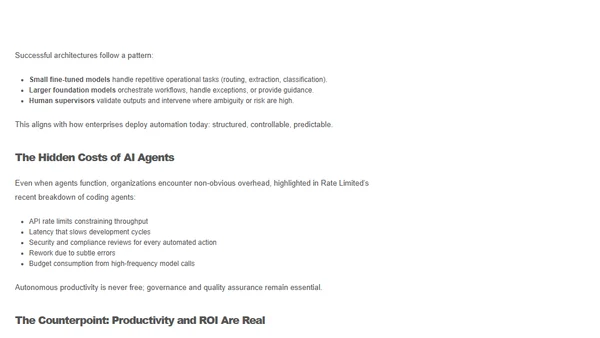
Explains the multi-layered architecture of production generative AI systems, covering hardware, models, orchestration, and tooling.
Qualcomm enters the data center AI chip market, challenging Nvidia and AMD with new rack-scale processors focused on inference efficiency and memory bandwidth.
Netflix's guidelines for using generative AI in content production, focusing on copyright, data security, and talent rights.
Explores integration methods between Microsoft Copilot and ServiceNow, covering Copilot 365, Copilot Studio agents, and MCP servers.
An engineer argues that software development is a learning process, not an assembly line, and explains how to use LLMs as brainstorming partners.
A timeline and analysis of major generative AI model releases and a security framework for AI agents from late 2025.
Explores how GenAI and agentic tools are shifting developer workflows towards rapid prototyping and focusing on output over implementation details.
Explores the unique challenges of testing Generative AI and Large Language Models, contrasting it with traditional software testing approaches.
An analysis of AI video generation using a specific, complex prompt to test the capabilities and limitations of models like Sora 2.
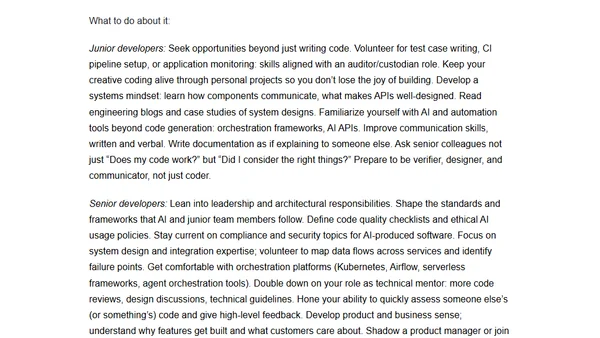
A Thoughtworks engineer explores the nuanced risk assessment required when using AI to generate code, moving beyond a simple 'good or bad' debate.
A blog post exploring the differences between AI and ML, clarifying terminology and common misconceptions in the field.
Vivaldi browser's CEO announces the browser will remain AI-free, criticizing the industry's push of often-useless AI features into every tool.
How AI-assisted reverse engineering helps companies understand and modernize critical legacy systems that have become 'black boxes'.
How Thoughtworks used AI and a 'Research, Review, Rebuild' workflow to modernize the Bahmni hospital system's frontend, drastically cutting migration time.
A guide to building a custom CLI coding agent using the Pydantic-AI framework and Model Context Protocol for project-specific development tasks.