De-Googling
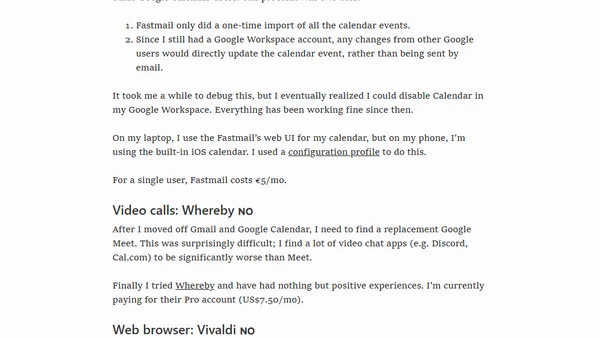
A personal account of reducing dependency on major US tech companies by switching to alternative services like Hetzner, Bunny, and Fastmail.
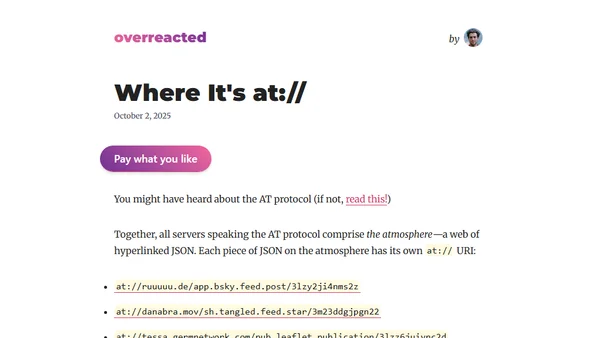
A technical guide explaining how to resolve at:// URIs and locate JSON data on the AT protocol's 'atmosphere' network.
The article argues that 'open social' platforms, like Bluesky's AT Protocol, are at a similar turning point as open source software was decades ago.
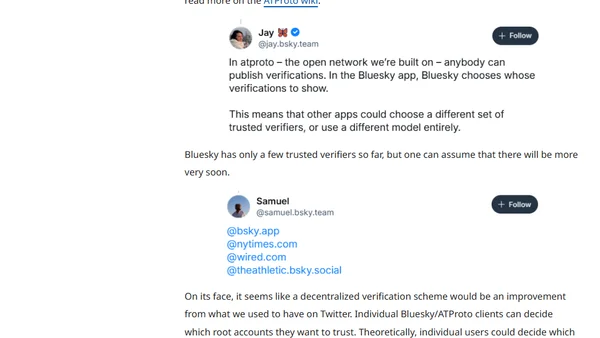
Bluesky introduces a new decentralized account verification system, analyzing its design, differences from X/Twitter, and potential impact.
A critique of Elon Musk's Twitter takeover, arguing centralized social media is harmful and advocating for decentralized alternatives like Mastodon.
Predictions for Twitter, Bluesky, and Mastodon's evolution over the next six months, focusing on relevance, growth, and user adoption trends.
A developer reflects on the fragmented social media landscape and explains his decision to return to blogging as his primary platform for sharing ideas.
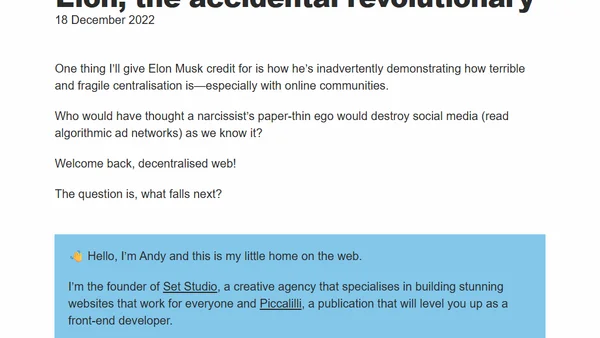
Elon Musk's actions highlight the fragility of centralized online communities and spark renewed interest in the decentralized web.
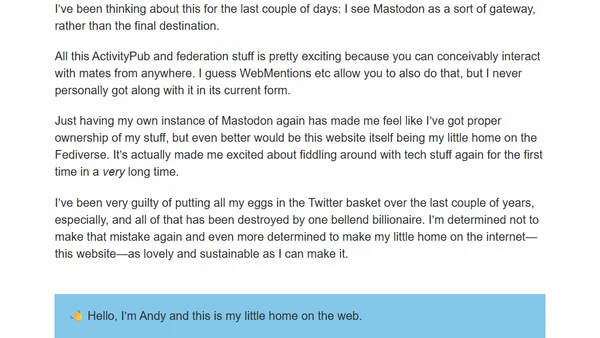
The author discusses Mastodon as a gateway to the Fediverse, emphasizing ownership and moving away from centralized platforms like Twitter.
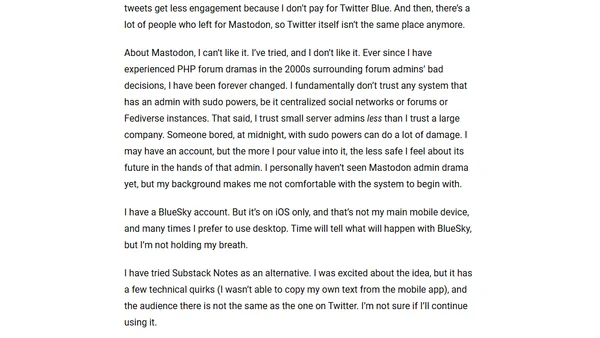
A developer shares their experience moving from Twitter to Mastodon, discusses the tech community exodus, and provides helpful resources for newcomers.
The article argues that the IndieWeb and decentralized platforms like Mastodon are confusing for non-technical users, and calls for a return to smaller, federated online communities.
A critique of Moxie's web3 article, arguing that some people do want to run their own servers, using data on self-hosting communities.
A critical analysis of the 4privacy Kickstarter project, examining its privacy promises, technology, and potential economic and trust challenges.
Explores user-built alternatives like Nitter and Invidious that reclaim the web from corporate platforms by offering ad-free, privacy-focused interfaces.
A critique of Signal's centralization and a proposal for a federated, protocol-based chat app with end-to-end encryption.
A critique of DuckDuckGo's privacy and technical flaws, arguing for a new, truly open-source search engine with its own crawler.
Explores federation as a scalable, decentralized alternative to centralized and P2P systems for internet communication and governance.
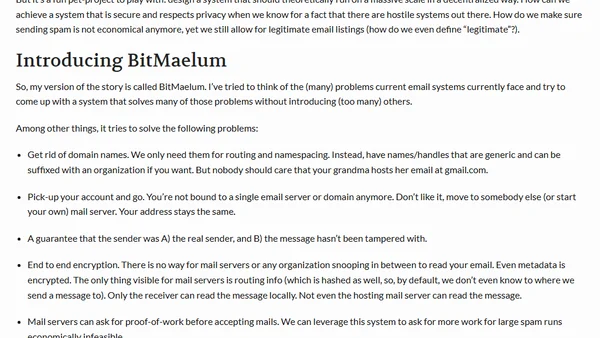
A conceptual proposal for BitMaelum, a decentralized, privacy-focused email system designed to replace legacy infrastructure.
A retrospective analysis of 2018 as a pivotal year where tech giants like Facebook and Google faced major scandals, public backlash, and declining trust.
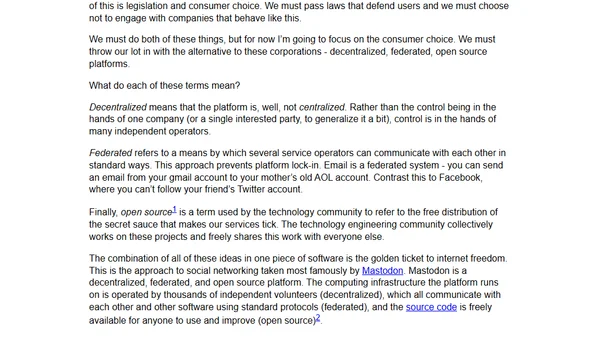
Argues for decentralized, open-source social platforms as the solution to privacy exploitation by centralized tech giants like Facebook and Google.