Schrödinger’s Cat and AI: Plausible Is Not Proven
Schrödinger's cat as a metaphor for AI uncertainty: why plausible outputs aren't proven, and how to separate generation, verification, and authorization.
How AI agents should verify before acting: targeted diagnostics, external limits, and separating evidence from execution authority.
AI agent verification: prove runtime outcomes, not just tool call success. Separate acceptance, config, convergence, and service results.
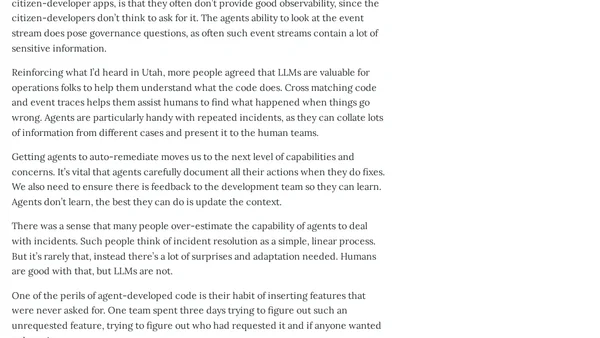
Martin Fowler discusses LLM risks, vibe-coding concerns, and the need for verification over code generation in software development.
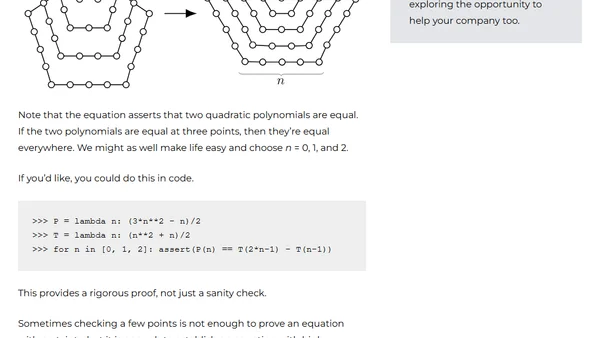
Explains how checking three examples can prove a polynomial identity, using pentagonal and triangular numbers.
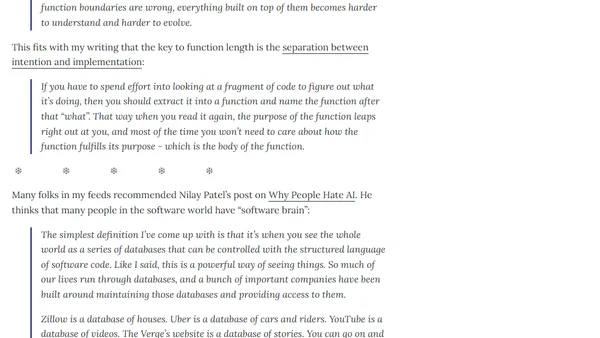
Martin Fowler discusses Chris Parsons' updated guide on using AI for coding, emphasizing verification and harness engineering in software development.
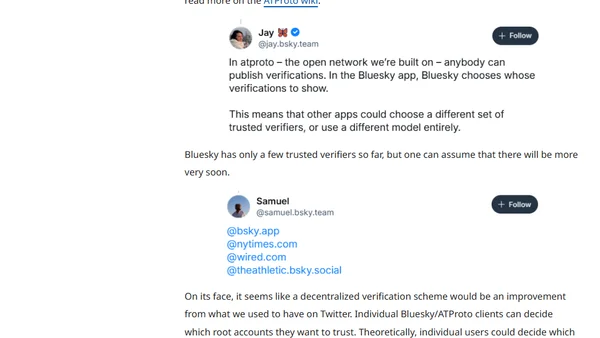
Bluesky introduces a new decentralized account verification system, analyzing its design, differences from X/Twitter, and potential impact.
Argues that cryptographic signatures, like backups, are only valuable if they can be reliably verified, not just created.
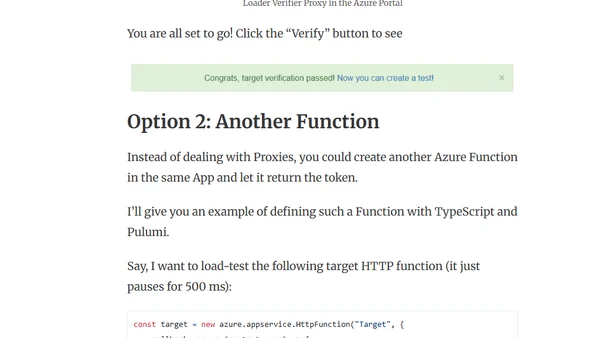
A tutorial on verifying and load-testing Azure Functions using the Loader.io tool, covering two verification methods.